
July 13, 2026
Can Roof Cleaning Improve Solar Panel Performance?
Written and reviewed by the Pressure Washing of Los Angeles team
Last reviewed:
| Key Takeaways: Roof cleaning can improve solar panel performance indirectly by reducing debris, moss, algae, and buildup around the solar array. A clean roof helps prevent blocked drainage, trapped moisture, and debris accumulation near panel edges and mounting systems. Roof cleaning and solar panel cleaning serve different purposes, but scheduling roof cleaning first can help keep panels cleaner for longer. In Los Angeles, roofs with solar panels should be inspected after Santa Ana winds, heavy rain, or visible debris buildup to protect long-term system performance. |
|---|
Solar panel performance depends on consistent exposure to sunlight, but the condition of the surrounding roof can also influence how efficiently the system operates over time. Dirt, moss, leaves, and other roof debris may create conditions that reduce energy production indirectly or increase maintenance needs.
This guide explains whether roof cleaning can improve solar panel performance and when it should be included in your maintenance routine.
Does Roof Cleaning Actually Improve Solar Panel Performance?
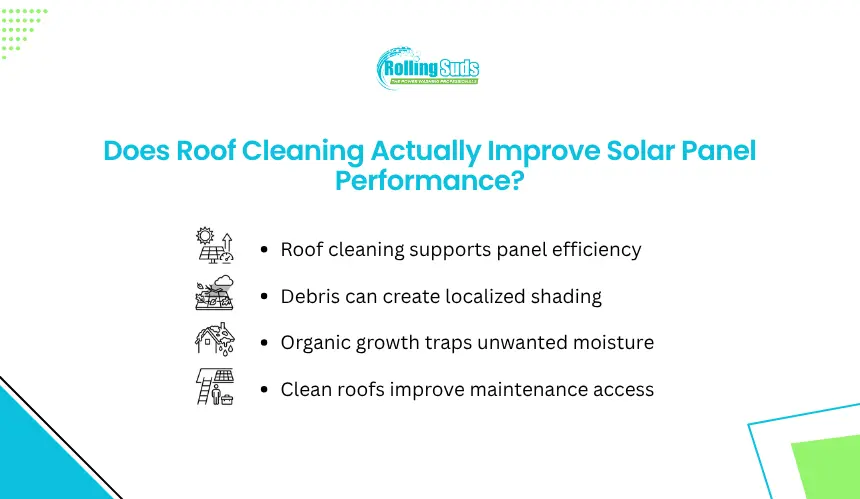
Roof cleaning can improve solar panel performance, but the effect is usually indirect rather than increasing energy production on its own. A roof covered with leaves, moss, algae, or accumulated debris creates an environment where dirt can collect around solar panels, increase localized shading, and make routine maintenance more difficult.
The greatest impact comes from preventing conditions that interfere with the solar array over time. Excessive organic growth and debris can trap moisture, obstruct drainage, and allow contaminants to spread onto the panels or around their mounting system. Keeping the roof clean helps maintain a clear surrounding area, making it easier for the panels to receive unobstructed sunlight and operate efficiently.
For the best results, roof cleaning should be viewed as part of a broader solar maintenance strategy rather than a replacement for cleaning the panels themselves. When both the roof and solar panels are properly maintained, the system is better positioned for consistent long-term performance.
Why Roof Condition Matters for Solar Panel Performance
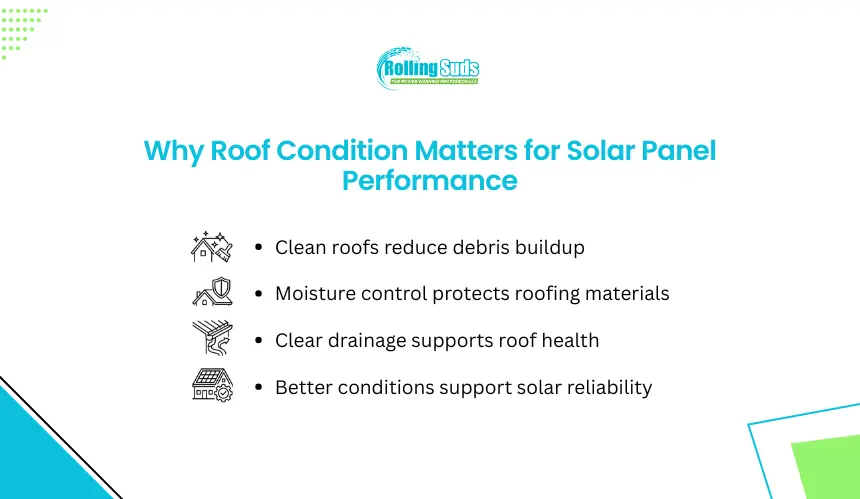
The roof does more than support a solar panel system. Its condition influences the environment around the installation, affecting maintenance requirements, system reliability, and long-term efficiency. A well-maintained roof reduces conditions that allow contaminants to accumulate around the array.
Preventing Debris Buildup Around Panel Edges and Mounting Systems
Solar panels are installed with a small gap between the modules and the roof surface. This space can collect leaves, dust, and organic debris, particularly around panel edges and mounting brackets. As debris accumulates, it can trap additional dirt and make inspections or maintenance more challenging.
Keeping the roof clean helps limit this buildup and reduces the likelihood of debris collecting in areas that are difficult to access once the panels are installed.
Managing Moisture, Moss, and Organic Growth
Organic growth retains moisture against roofing materials, creating conditions that can accelerate roof deterioration if left untreated. While this does not directly reduce the electrical output of solar panels, it can affect the surface supporting the installation and increase maintenance concerns over time.
In parts of Los Angeles where coastal humidity and shaded roof sections encourage moss or algae growth, periodic roof cleaning helps prevent these conditions from spreading beneath or around solar arrays.
Supporting Proper Drainage and Reducing Environmental Buildup
Effective roof drainage prevents standing water and carries away loose debris before it accumulates around solar panel mounting areas. Blocked drainage paths can leave organic material on the roof longer, increasing moisture retention and making future maintenance more difficult.
Routine roof cleaning keeps drainage pathways clear and creates a cleaner operating environment for the solar system, helping preserve both the roofing materials and the installation over the long term.
When Should Roof Cleaning Be Part of Solar Panel Maintenance?
Roof cleaning does not need to follow the same schedule for every home. The right timing depends on roof conditions, surrounding vegetation, local weather patterns, and visible signs of buildup that could affect the area around the solar array.
Signs Your Roof May Be Affecting Your Solar System
Visible moss, algae, leaf accumulation, or debris collecting around the edges of the solar panels are common indicators that roof cleaning may be needed. Overflowing gutters, blocked roof valleys, or debris trapped beneath the array can also signal that contaminants are accumulating faster than normal.
If your solar panels require frequent cleaning because debris repeatedly settles on the surface, the surrounding roof may be contributing to the problem.
Environmental Factors That Increase Cleaning Frequency
Local environmental conditions play a significant role in how often a roof should be cleaned. In Los Angeles, dry summers often leave fine dust on rooftops, while neighborhoods near the foothills can experience increased leaf litter, pine needles, and other windblown debris. These materials can accumulate around solar panel mounting areas if they are not removed periodically.
Seasonal events also affect maintenance needs. Strong Santa Ana winds can carry dust and debris onto roofs, and the region’s occasional winter rain may cause accumulated organic matter to retain moisture in shaded areas.
Inspecting the roof after these weather events helps prevent debris from collecting around the solar array and reduces the likelihood of maintenance issues over time.
Cleaning Before Inspections, Repairs, or Solar System Upgrades
Scheduling roof cleaning before a professional roof inspection, roof repair, or solar system upgrade provides better access to roofing materials and mounting components. A clean roof makes it easier to identify damaged shingles, flashing issues, or areas requiring maintenance before they develop into larger problems.
Addressing roof conditions before major solar work also reduces the likelihood of maintenance interruptions after the system has been serviced or expanded.
Roof Cleaning Vs. Solar Panel Cleaning: Understanding the Difference
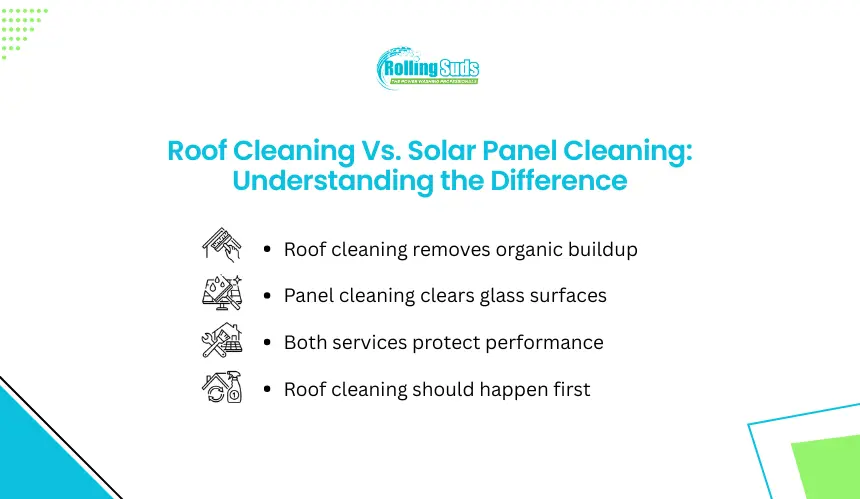
Although these services are often mentioned together, they address different maintenance needs. Knowing the difference helps homeowners choose the right service and avoid assuming that one replaces the other.
What Roof Cleaning Removes
Roof cleaning focuses on removing contaminants from the roofing surface, including moss, algae, lichen, leaves, branches, and accumulated debris. This process helps maintain the condition of the roof, keeps drainage paths clear, and reduces the buildup of organic material around the solar installation.
What Solar Panel Cleaning Focuses On
Solar panel cleaning is designed to remove dust, pollen, bird droppings, and surface grime from the glass panels. Even a clean roof cannot prevent these contaminants from settling directly on the panels, which is why the array may still require periodic cleaning to maintain optimal sunlight absorption.
When Both Services Should Be Scheduled Together
Scheduling roof cleaning and solar panel cleaning during the same maintenance visit can be the most practical approach when both the roof and the array show signs of buildup. Cleaning the roof first helps prevent loose debris from falling onto freshly cleaned panels, allowing both services to deliver longer-lasting results while reducing the need for repeat maintenance.
Best Practices for Protecting Solar Panel Performance Over Time
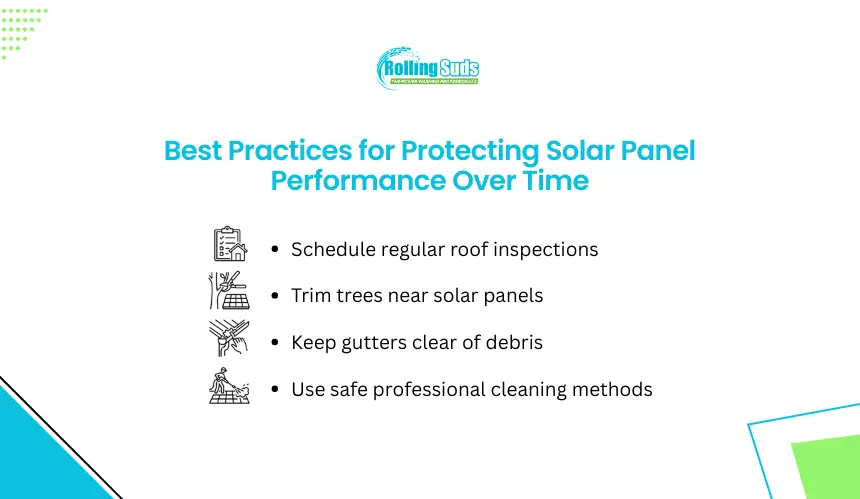
Maximizing solar panel performance requires more than occasional cleaning. A proactive maintenance routine helps minimize environmental buildup, protects the roof structure, and allows potential issues to be identified before they affect the system.
Schedule Routine Roof Inspections and Cleaning
Routine roof inspections can identify moss growth, accumulated debris, damaged shingles, or drainage issues before they become costly repairs. In Los Angeles, where roofs are regularly exposed to dust, seasonal winds, and prolonged sun exposure, scheduled cleaning helps maintain a cleaner environment around the solar array and reduces the buildup that can affect long-term system performance.
Keep Gutters and Surrounding Trees Under Control
Clogged gutters and overhanging branches contribute to debris accumulation on the roof. Regular gutter maintenance and trimming nearby trees reduce the amount of leaves, twigs, and organic material that can collect around solar panels, particularly after periods of high wind.
Choose Safe, Professional Cleaning Methods Around Solar Equipment
Solar panel mounting systems, roof flashing, and electrical components require careful handling during maintenance. Working with a provider experienced in professional house cleaning in Los Angeles that also understands exterior property care can help ensure surrounding roof areas are cleaned safely while protecting sensitive solar equipment. Using appropriate cleaning methods for the roofing material reduces the risk of accidental damage and supports reliable system performance.
A maintenance plan that combines roof care, solar panel cleaning, and routine inspections helps preserve both the roofing system and the long-term performance of the solar installation.
Keep your roof clean and your solar investment performing at its best with expert exterior cleaning services. Pressure Washing of Los Angeles powered by Rolling Suds of Beverly Hills provides professional residential and commercial pressure washing throughout the Greater Los Angeles area, helping property owners maintain cleaner roofs, protect exterior surfaces, and support long-term property value. Contact our team today to schedule a professional cleaning service.
Sources
Frequently asked questions
How can I tell if roof debris is affecting my solar output?
Check your solar monitoring app for unusual drops in kilowatt-hour production after ruling out weather, shading changes, or inverter issues. If output declines while debris is visible around panel edges, roof valleys, gutters, or mounting areas, the surrounding roof may be contributing to reduced system performance or recurring panel contamination.
Can pressure washing a roof damage solar panels?
High-pressure washing can damage roofing materials, loosen flashing, disturb mounting hardware, or push water near electrical components. Around solar panels, controlled low-pressure cleaning or soft washing is generally safer when matched to the roof type. The method matters more than the cleaning itself, especially near wiring, sealants, and panel brackets.
Should roof cleaning be done before or after solar panel cleaning?
Roof cleaning should usually be completed before solar panel cleaning. Cleaning the panels first may be less effective if loose roof debris, moss, or dirty runoff later moves onto the panel glass. A roof-first approach creates a cleaner surrounding surface and helps the final panel cleaning deliver longer-lasting results.
Do solar panels need to be removed before cleaning the roof?
Solar panels usually do not need to be removed for routine roof cleaning. Removal is generally considered only when there is severe moss growth beneath the array, roof damage, leaks, or planned roof replacement. Most routine cleaning can be performed safely around the existing solar installation.
Can roof cleaning help prevent solar panel warranty issues?
Roof cleaning may support warranty protection indirectly by reducing conditions that contribute to roof leaks, trapped moisture, or maintenance-related damage around the installation. Solar panel warranties typically cover equipment performance, while roof warranties often depend on proper maintenance. Keeping maintenance records can also support future warranty claims.
How often should a roof with solar panels be inspected in Los Angeles?
A roof with solar panels in Los Angeles should generally be inspected once or twice a year, with additional inspections after Santa Ana winds, heavy rainfall, or significant tree debris. Because environmental conditions vary by neighborhood, inspection frequency should be based on roof exposure, surrounding vegetation, and visible debris accumulation rather than a fixed schedule.