
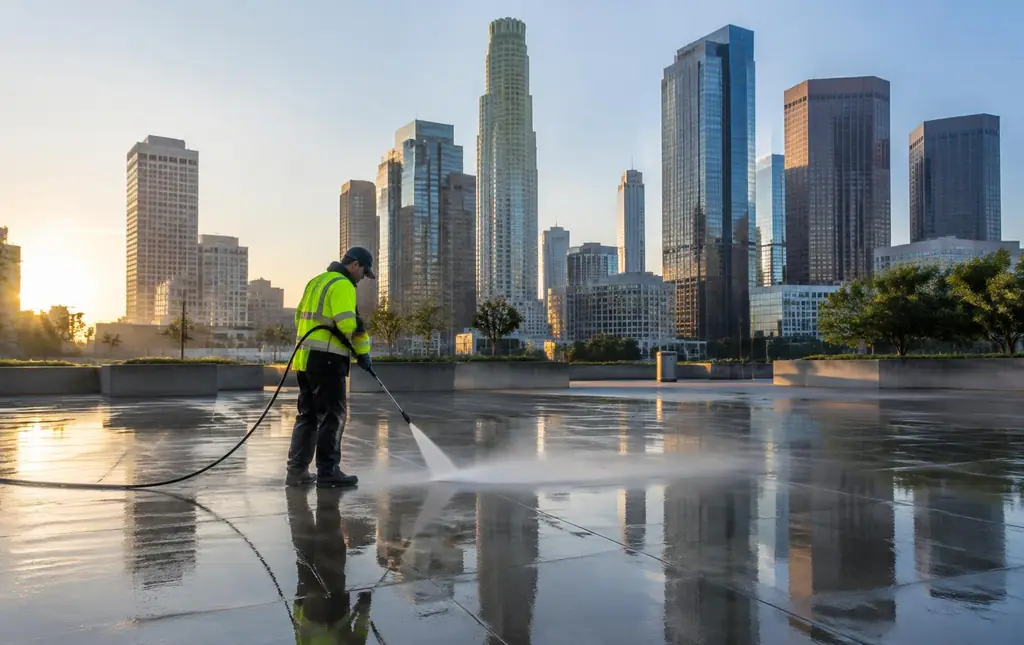
Commercial · Los Angeles, CA
Graffiti Removal in Los Angeles
Gone, without damaging what's underneath.
Call (424) 324-3888Request a property quote
The service
Graffiti Removal
How is graffiti removed from walls and concrete?
Graffiti is removed by first identifying the paint or marker and the surface underneath, then choosing the solution and pressure for that pairing. Block, brick, stucco, concrete and metal doors each react differently. On porous masonry a faint shadow can remain, and the options are discussed with you.
Graffiti on walls, roll-up doors and concrete sends the wrong message about a property. Removing it well depends on two things: the type of paint or marker, and the surface it's on. Porous masonry and painted walls behave very differently.
The surface and graffiti type are assessed, then removed with appropriate solutions and pressure. On porous surfaces a faint shadow can remain; where that happens, options are discussed.
Problems addressed
- Spray paint on block and stucco
- Marker on doors and signage
- Tags on concrete and sidewalks
- Shadowing from previous removal
Surfaces
- Block and brick walls
- Stucco
- Concrete and sidewalks
- Metal doors and utility boxes
Property types
- Retail and commercial buildings
- Warehouses
- Multifamily properties
- Municipal property
What graffiti removal removes
Graffiti removal clears spray paint from block, brick and stucco, marker ink from doors and signage, tagging on concrete and sidewalks, and layered paint from repeat tagging in the same spot. It also addresses grime that's built up around the tagged area so the cleaned section doesn't stand out against a dirtier wall.
What cleaning can't fix
On porous surfaces like unsealed block or stucco, a faint shadow can remain after the paint itself is gone, since some pigment works its way into the material rather than sitting on top of it. Removal from a painted wall carries a real risk of lifting the paint along with the graffiti, which can leave a patch that needs repainting rather than cleaning. Deeply set tags that have been painted over and re-tagged multiple times are the hardest to fully clear and are assessed individually rather than quoted blind.
How we do it, and why this method
Every job starts with identifying what's underneath — spray paint, marker, and different paint formulations all respond to different removal approaches, and matching the wrong method to the surface risks damage or an incomplete result. Porous masonry can often handle stronger solutions and more pressure than finished or painted surfaces, which call for a gentler, more controlled approach.
Work proceeds from least aggressive method upward: if a lighter treatment clears the tag, there's no reason to push harder pressure or stronger chemicals than necessary. On surfaces where graffiti has happened before, matching the surrounding wall's current condition matters so the cleaned patch doesn't look newer than everything around it.
What affects the cost
- The square footage of the tagged area is the first factor in any estimate.
- Porous surfaces like block and stucco often need more time than smooth metal or glass.
- Multiple layers of paint from repeat tagging add removal time.
- Marker ink and certain paint types require different, sometimes slower, treatment.
- Height and access for roll-up doors or upper wall sections affect labor.
- Whether the surrounding wall needs a general clean to blend the patch adds scope.
More detail: pressure washing cost in Los Angeles.
When to schedule
Graffiti removal is almost always a respond-quickly job rather than a scheduled one, since fresh paint comes off more easily than paint that's had time to cure and bond with the surface. Properties in areas that see repeat tagging sometimes set up a standing arrangement so new graffiti is handled within a short window rather than sitting visible for weeks. Outside of urgency, there's no seasonal factor that affects this work.
What to expect on the day
The crew inspects the graffiti and surface before starting to judge what removal approach fits best, then tests a small section if the material or paint type is uncertain. Surrounding areas like doors, signage, and adjacent walls are protected before any chemical treatment begins. Once removal is complete, the area is rinsed and checked against the surrounding surface, and any remaining faint shadow on porous material is pointed out before the crew leaves.
Before and after from our crews
Real jobs, photographed by our team. Dates come from the original photo files.
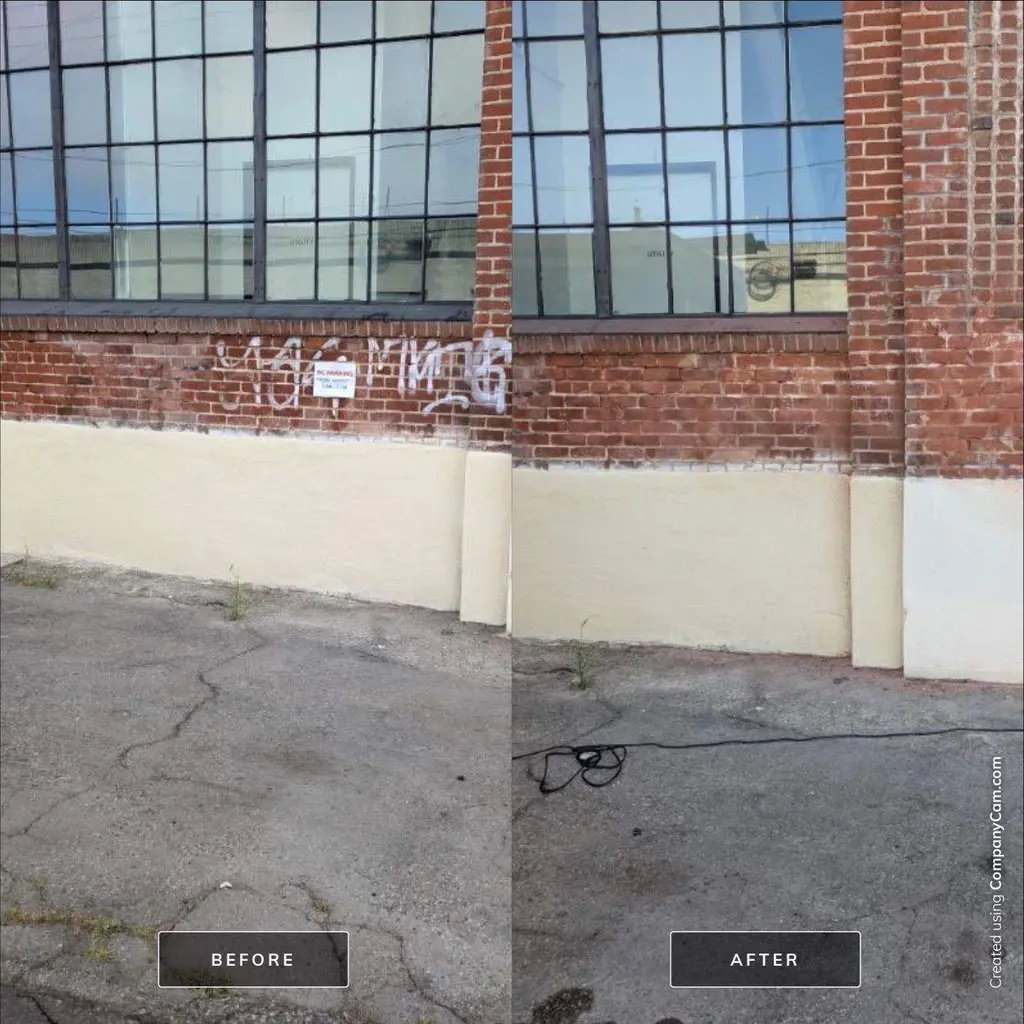
Graffiti removal · Nov 2025 · Company work
Questions
Graffiti Removal FAQ
Will graffiti come off completely?
Often, but not always. Porous surfaces can retain a faint shadow, which depends on the paint and surface.
Can you remove graffiti from painted walls?
Removal from painted walls risks lifting the paint underneath. These areas are assessed individually.
How quickly can you respond to new graffiti?
Response time depends on scheduling availability, but fresher paint is generally easier and faster to remove than graffiti left for weeks.
Will you match the color if repainting is needed?
We don't offer repainting services; if a painted wall is damaged during removal, that repair would need a separate painting contractor.
Can you remove graffiti from glass or metal roll-up doors?
Yes, metal and glass surfaces are generally easier to fully clear than porous masonry.
Do you offer an ongoing plan for properties that get tagged repeatedly?
Some properties set up a standing arrangement for quick response; ask about this when requesting a quote.
Related services
Where we offer graffiti removal
Let's talk about your property.
Tell us what needs cleaning and where the property is located.