
Residential · Los Angeles, CA
Paver Cleaning in Los Angeles
Clean the pavers. Keep the joints.
Call (424) 324-3888The service
Paver Cleaning
How are pavers cleaned without losing joint sand?
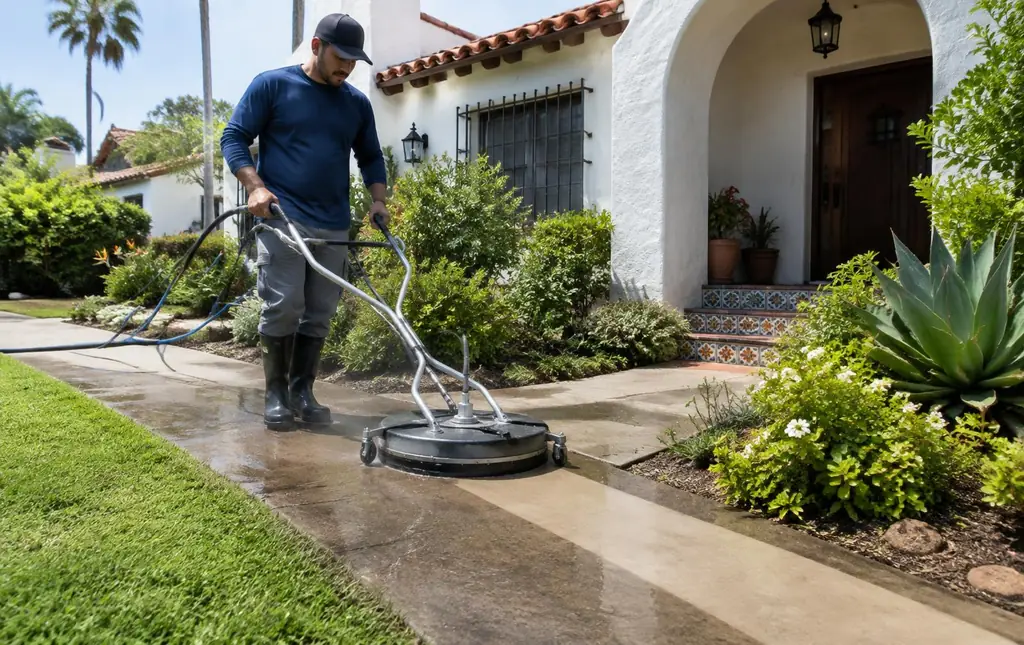
Pavers are cleaned with controlled pressure and a surface cleaner so the joints stay intact. That lifts dark staining, efflorescence, oil and growth in the joints from concrete, brick, stone and permeable pavers. If joint sand was already low, re-sanding can be discussed.
Pavers look great until dirt, weeds and organic staining settle into the surface and joints. The challenge is cleaning the face of each paver without blasting out the joint sand that holds them in place.
Pavers are cleaned with controlled pressure and a surface cleaner to protect joints. Where joint sand is lost or was already depleted, re-sanding can be discussed separately.
Problems addressed
- Dark, dirty paver faces
- Weeds and moss in joints
- Efflorescence and haze
- Oil and food stains
Surfaces
- Concrete pavers
- Clay brick pavers
- Natural stone pavers
- Permeable paver systems
Property types
- Single-family homes
- Motor courts
- HOA common areas
What paver cleaning removes
Cleaning lifts the dark grime coating individual paver faces, weeds and moss rooted in the joints between them, and the white, chalky efflorescence that can form as minerals migrate to the surface. It also clears oil drips, food stains, and the general haze that builds up on a paver surface used for parking, entertaining, or daily foot traffic. Motor courts and pool-adjacent paver areas, which see more vehicle fluids and sunscreen residue respectively, often show the biggest visible change.
What cleaning can't fix
Cleaning won't fix pavers that have shifted, settled unevenly, or cracked from ground movement — that's a hardscape repair issue, not a cleaning one. Efflorescence can return after cleaning if the underlying moisture source causing it isn't addressed, since it's a mineral process rather than surface dirt. Joint sand that was already eroded or washed out before cleaning won't be replaced by the cleaning process itself; that requires a separate re-sanding step. Pavers that have sunk or heaved unevenly due to base erosion will still show that unevenness after cleaning, since the underlying grade issue is untouched by surface work.
How we do it, and why this method
The biggest technical challenge with pavers is cleaning the hard surface of each paver without blasting the joint sand out from between them, since that sand is what keeps the pavers locked in place and prevents shifting. A surface cleaner is used at controlled pressure, moving evenly across the field of pavers rather than concentrating pressure on any one spot or joint line.
Efflorescence and oil or food staining are treated differently from general dirt because they respond to different cleaning agents — mineral deposits need a different approach than organic grime, so these are identified before cleaning begins rather than treated with a single blanket method. Where joints already show sand loss going into the job, that's flagged separately since re-sanding is typically handled as its own step after cleaning and drying.
What affects the cost
- Total paver square footage is the main driver of time on site.
- Joint sand condition affects how much pressure can safely be used without additional sand loss.
- Natural stone pavers sometimes need different cleaning agents than concrete or clay brick.
- Heavier oil or rust staining in specific areas may require targeted pre-treatment beyond the general clean.
- Permeable paver systems can require a gentler approach to protect the system's drainage function.
- Re-sanding joints, if needed, is typically a separate step added after the cleaning is complete.
More detail: pressure washing cost in Los Angeles.
When to schedule
Paver areas used for parking or heavy foot traffic tend to need cleaning more often than ornamental walkways, so usage is often a better guide than the calendar. Many homeowners time paver cleaning ahead of outdoor gatherings or alongside other hardscape work like pool deck or patio cleaning, since all three often share connected surfaces. If joint sand is already visibly low, addressing that during the same visit as cleaning can save a second trip later.
What to expect on the day
The crew reviews the paver layout, checks joint condition, and notes any staining that may need separate treatment before starting the main clean. Vehicles, furniture, and potted plants on or near the paver surface should be cleared ahead of time. Water access is set up on-site, and the surface cleaner passes evenly across the pavers in sections, with hand-detailing along edges and borders. Pavers will be wet and can be slick immediately afterward, so foot traffic should be limited until the surface dries, and any planned re-sanding typically happens once the area is fully dry.
Before and after from our crews
Real jobs, photographed by our team. Dates come from the original photo files.
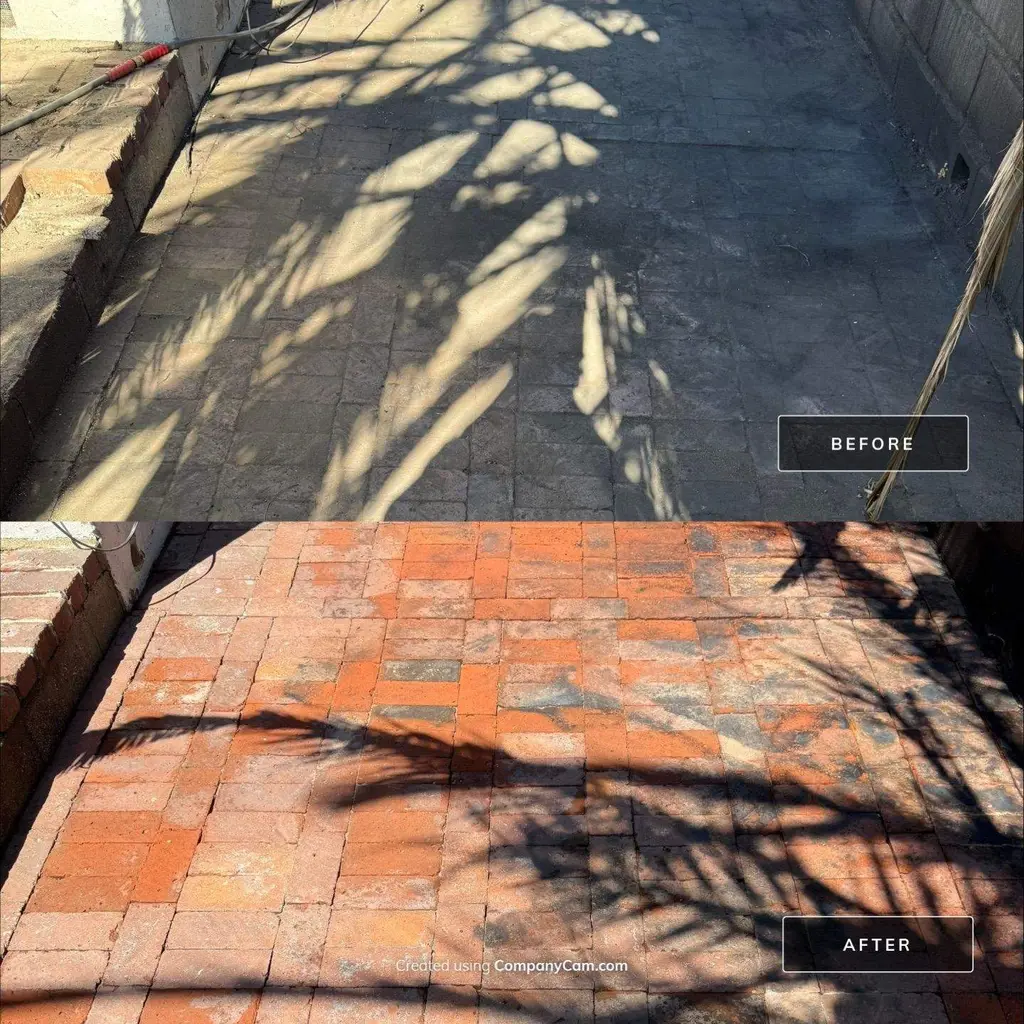
Paver cleaning · Nov 2025 · Company work 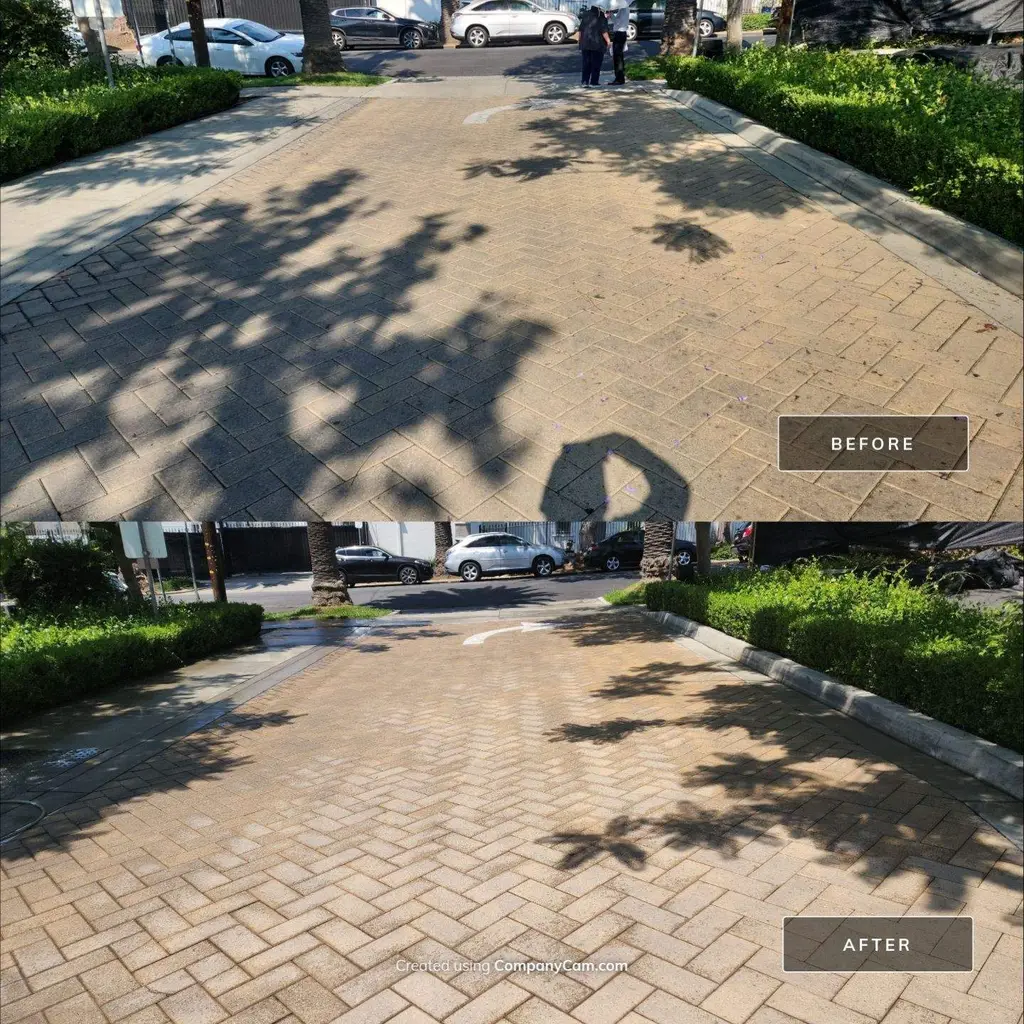
Paver cleaning · Nov 2025 · Company work 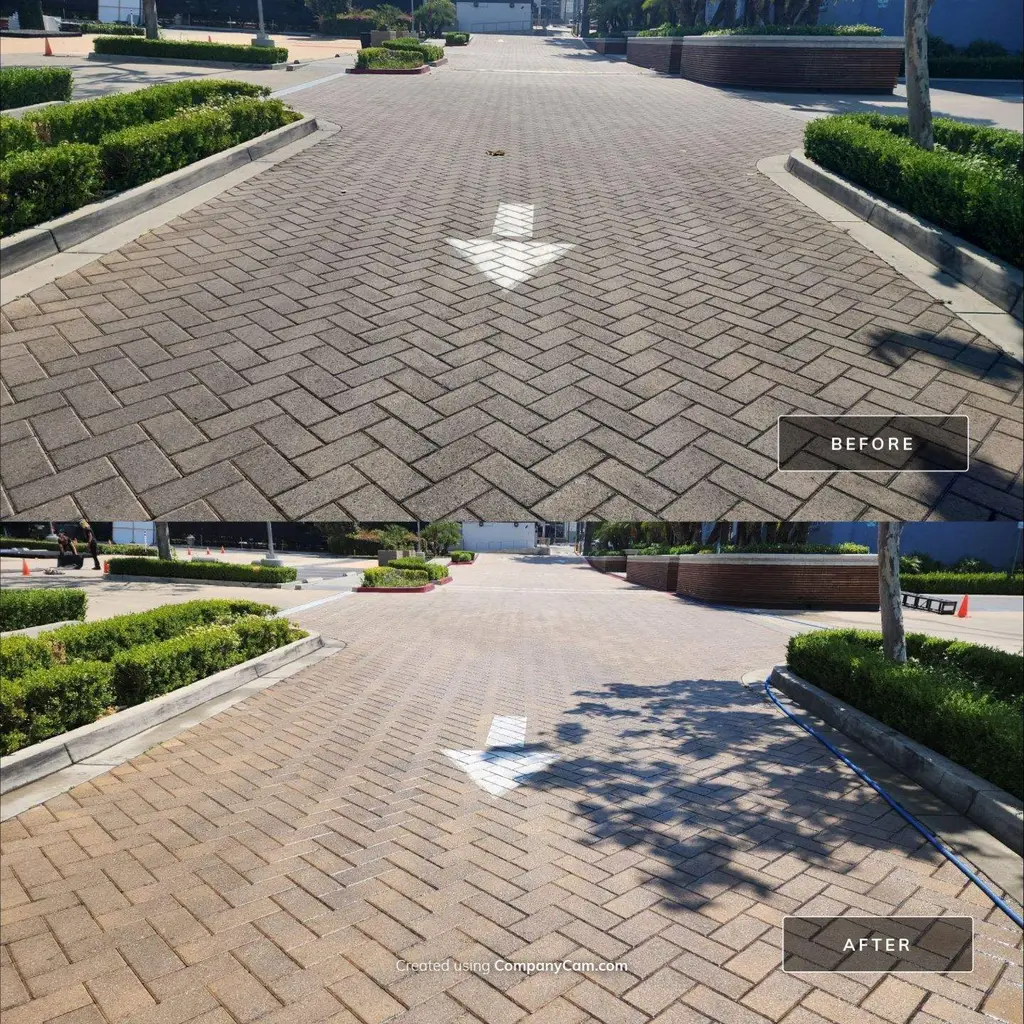
Paver cleaning · Nov 2025 · Company work
Questions
Paver Cleaning FAQ
Will cleaning wash out the joint sand?
Controlled pressure and surface cleaners limit sand loss. Joints that were already depleted may need re-sanding after cleaning.
Can white haze on pavers be removed?
White haze is often efflorescence, a mineral deposit. It is assessed first because it needs a different treatment than dirt.
Do pavers need to be re-sanded after every cleaning?
Not necessarily. Re-sanding is only needed if joint sand was already low or was disturbed during the cleaning process.
Can you clean pavers with weeds growing in the joints?
Yes, cleaning typically removes surface growth, though persistent weeds with deep roots may need separate treatment.
Will cleaning fix uneven or sunken pavers?
No, that requires re-leveling or resetting the pavers, which is a hardscape repair rather than a cleaning task.
Is efflorescence a sign of a bigger problem?
Not always, but recurring efflorescence can point to a moisture source worth investigating separately.
Ready for a cleaner property?
Tell us what needs cleaning and where the property is located.