
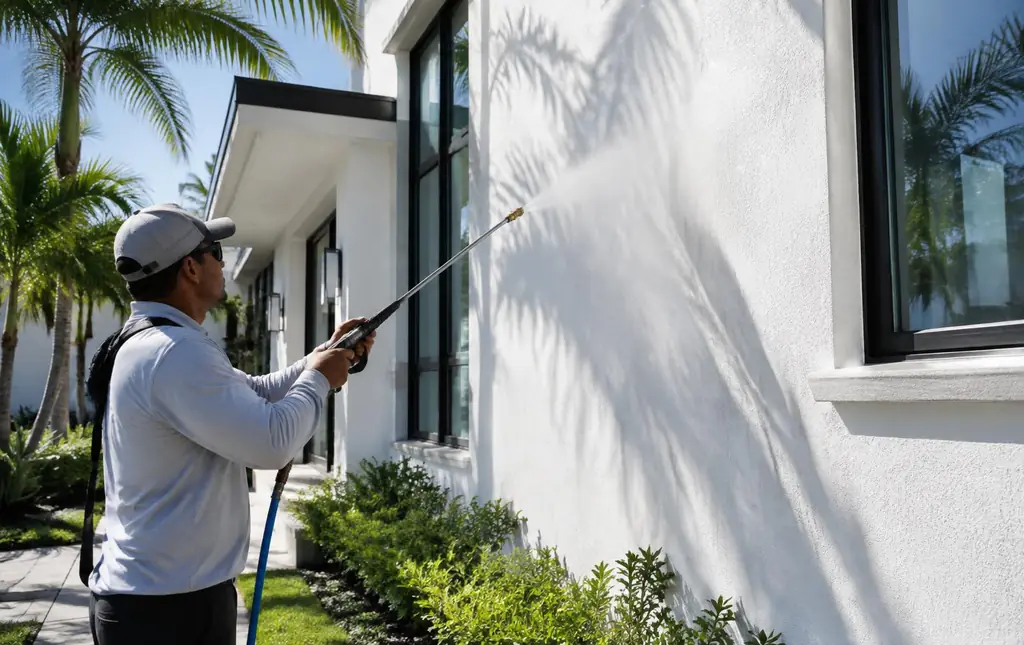
Residential · Los Angeles, CA
Fence Cleaning in Los Angeles
Property lines, cleaned up.
Call (424) 324-3888The service
Fence Cleaning
Can fences and garden walls be pressure washed?
Yes, at the right pressure for each material. Wood and vinyl fences get low pressure with a cleaning solution to remove greying and mildew. Block and masonry walls take controlled pressure for algae and hard-water marks, and stucco garden walls are cleaned gently for dust film.
Fences and garden walls frame the whole property. Wood fences grey and mildew, block walls collect sprinkler staining, and stucco walls hold dust. Cleaning them restores a crisp edge to the yard.
Pressure is matched to the material: low pressure and solution for wood and vinyl, controlled pressure for durable masonry.
Problems addressed
- Greyed or mildewed wood
- Sprinkler and hard-water staining
- Dirt and algae on block walls
- Dust film on stucco garden walls
Surfaces
- Wood fences
- Vinyl fences
- Block and masonry walls
- Stucco garden walls
Property types
- Single-family homes
- HOA perimeters
- Multifamily properties
What fence cleaning removes
Fence cleaning clears the grey, weathered look and mildew spotting that builds up on wood over time, along with sprinkler overspray and hard-water staining on block and masonry. It also removes dirt and algae that collect on shaded sections of block walls and the dust film that settles into textured stucco garden walls facing the yard.
What cleaning can't fix
Cleaning can't reverse wood that has already started to warp, split, or rot at the base from ground contact and moisture. Hard-water staining from years of sprinkler overspray on block walls is mineral buildup, not dirt, and some of it may require a different treatment than standard washing to fully lift. Faded paint or stain on wood fencing won't regain its original color from cleaning alone — that calls for refinishing, not washing.
How we do it, and why this method
Wood and vinyl fencing are cleaned at low pressure with a cleaning solution doing most of the actual work, since wood grain splinters easily and vinyl can crack or discolor under too much direct force. The solution breaks down mildew and grime first, and the rinse that follows is more about removing loosened residue than scrubbing anything off by force.
Block and masonry walls can handle more pressure because the material itself is far more durable, so a controlled pressure wash is used there to cut through algae and dirt that's worked into the surface texture. Sprinkler and hard-water marks are a separate category — those are mineral deposits sitting on or in the surface rather than organic dirt, so they sometimes need their own treatment pass rather than responding to a standard wash. Treating fence and wall sections by material, rather than one blanket setting for the whole property line, is what keeps wood intact while still getting masonry properly clean.
What affects the cost
- The length and height of fencing or wall being cleaned is the main driver of total time.
- Wood fencing in rougher condition needs a gentler, slower pass than newer or sealed wood.
- Block walls with heavy sprinkler staining may need a separate treatment step beyond the standard wash.
- Access along the property line — gates, locked sections, dense landscaping — affects how quickly a crew can move.
- Shaded sections with heavier algae or mildew growth take more time than sun-exposed runs.
- Combining fence cleaning with house washing or patio cleaning on the same visit often saves time overall.
More detail: pressure washing cost in Los Angeles.
When to schedule
Wood fencing often benefits from cleaning on a yearly basis, particularly if it's due for restaining or sealing soon after, since both of those need a clean, bare surface to bond properly. Block and masonry walls can usually go longer between cleanings unless sprinkler staining is a recurring issue, in which case more frequent attention keeps the marks from building up. It's also a good idea to clean fencing before any repair or repainting work so the contractor is working on a clear surface.
What to expect on the day
The crew will walk the fence line first to note any already-damaged boards, loose posts, or delicate landscaping running alongside it. Wood and vinyl sections are treated with solution and rinsed at low pressure, while block or masonry gets a firmer pressure pass. Expect some overspray near the base of the fence line, and allow wood sections time to dry fully before touching or leaning anything against them.
Before and after from our crews
Real jobs, photographed by our team. Dates come from the original photo files.
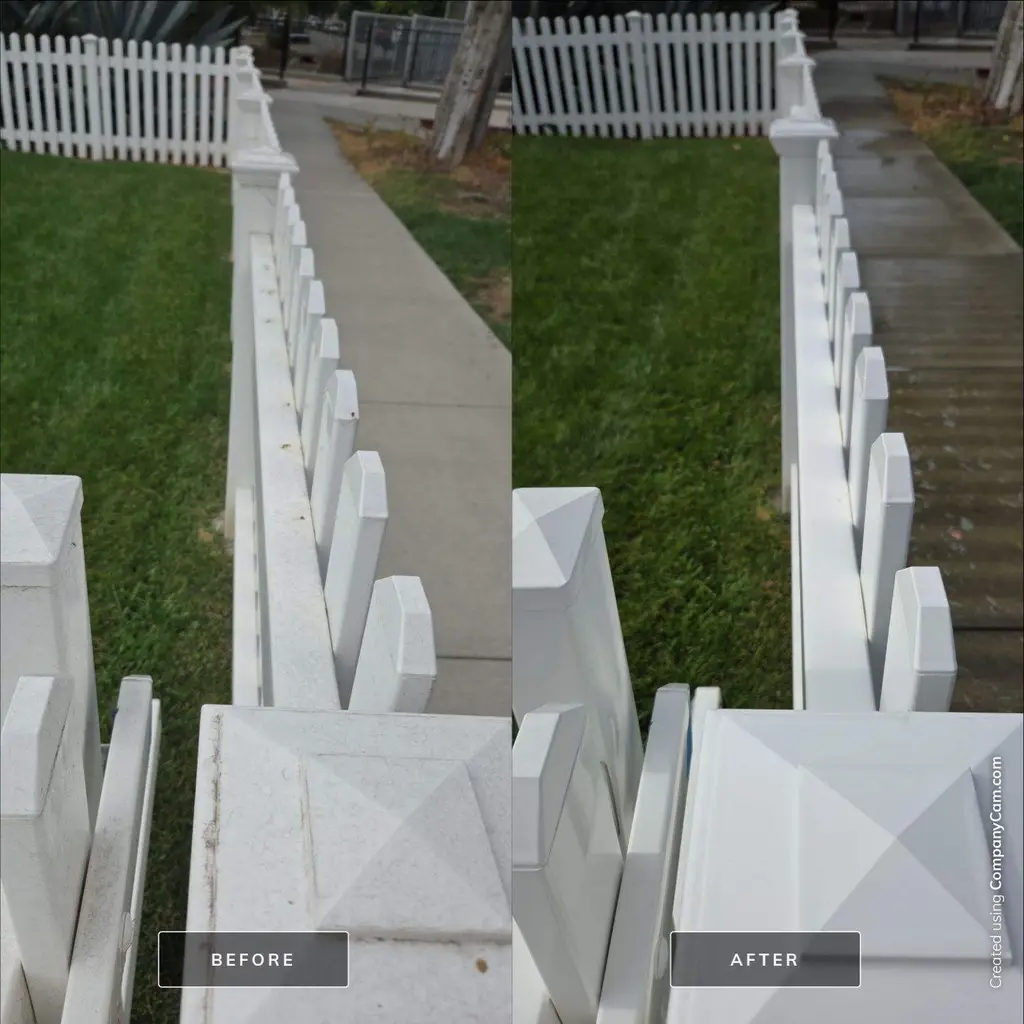
Fence cleaning · Nov 2025 · Company work
Questions
Fence Cleaning FAQ
Will washing damage my wood fence?
Wood is cleaned at low pressure to avoid splintering. Very weathered wood may show grain after cleaning.
Can you clean block walls with sprinkler stains?
Block walls can be cleaned; hard-water staining may need specific treatment and results vary.
Can you clean both sides of a shared fence?
Only the side on your property can be cleaned without coordinating with the neighbor for access to the other side.
Will cleaning loosen fence posts?
Low pressure on wood and controlled pressure on masonry are chosen specifically to avoid disturbing posts or fasteners.
Do you clean chain-link fencing?
Chain-link can be rinsed to clear dirt and debris, though it generally needs less work than wood or masonry.
Should I stain my fence right after cleaning?
Wood needs to dry fully before staining, so plan for a short gap between the cleaning and the staining work.
Related services
Where we offer fence cleaning
Ready for a cleaner property?
Tell us what needs cleaning and where the property is located.