
July 16, 2026
What Types of Roof Stains Are Common in Los Angeles?
Written and reviewed by the Pressure Washing of Los Angeles team
Last reviewed:
| Key Takeaways Black streaks usually come from algae, while green growth often indicates moisture-retaining moss or lichen that can gradually affect roofing materials. Rust-colored stains commonly originate from corroded flashing or fasteners, while white residue may result from minerals, coastal salt, or airborne deposits. Treat stains as a roofing concern when they appear with damaged shingles, damp attic insulation, ceiling marks, peeling paint, or persistent musty odors. Use roof-specific, low-pressure cleaning methods and reduce recurring stains by trimming branches, clearing debris, maintaining gutters, and scheduling periodic inspections. |
|---|
Dark streaks, green patches, rust-colored marks, and white residue can all appear on roofs in Los Angeles, but they do not have the same cause or level of concern. Some stains result from algae, moisture, or airborne pollutants, while others may point to deteriorating roofing components or water-related issues.
Correctly identifying the type of stain is the first step toward choosing the right solution and avoiding unnecessary damage or expense. This guide explains the most common roof stains found in Los Angeles, what causes them, and when they warrant professional attention.
How Los Angeles Conditions Contribute to Roof Stains
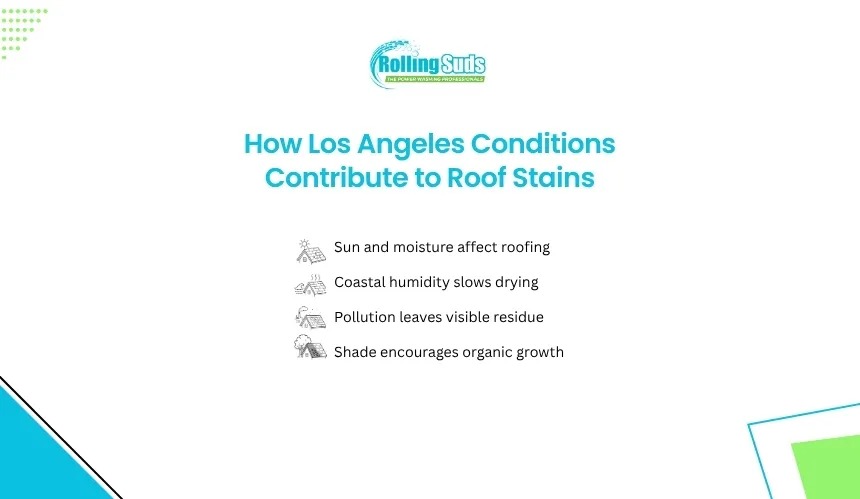
Roof stains develop because roofing materials are constantly exposed to environmental conditions that influence moisture levels, surface contamination, and biological growth. In Los Angeles, a combination of climate patterns, coastal influences, and surrounding landscape determines how quickly discoloration forms and where it appears first.
Climate, UV Exposure, and Seasonal Moisture
Although Los Angeles experiences long periods of sunshine, roofs are not constantly dry. Marine layers, overnight condensation, winter rainfall, and shaded morning moisture create conditions where algae, moss, and other organic growth can establish on roofing surfaces. While ultraviolet radiation slows biological growth in exposed areas, it cannot eliminate organisms that remain in consistently damp locations.
Coastal Humidity, Pollution, and Airborne Debris
Homes closer to the coast often experience higher humidity and salt-laden air, allowing moisture to remain on roofing materials for longer periods. Across the region, airborne dust, vehicle emissions, pollen, and industrial particles settle on roofs, creating visible discoloration and supplying nutrients that encourage certain types of biological staining. Over time, these deposits can make stains more noticeable even when the roof itself remains structurally sound.
Roof Orientation, Shade, and Surrounding Vegetation
The location and design of a roof significantly influence where stains develop. North-facing roof slopes generally receive less direct sunlight, allowing moisture to evaporate more slowly than on south-facing surfaces. Trees that overhang the roof contribute additional shade, leaf debris, and organic matter while limiting airflow. These conditions increase the likelihood of algae, moss, and lichen growth, particularly in areas where water drainage is less effective.
The Most Common Types of Roof Stains and What They Mean
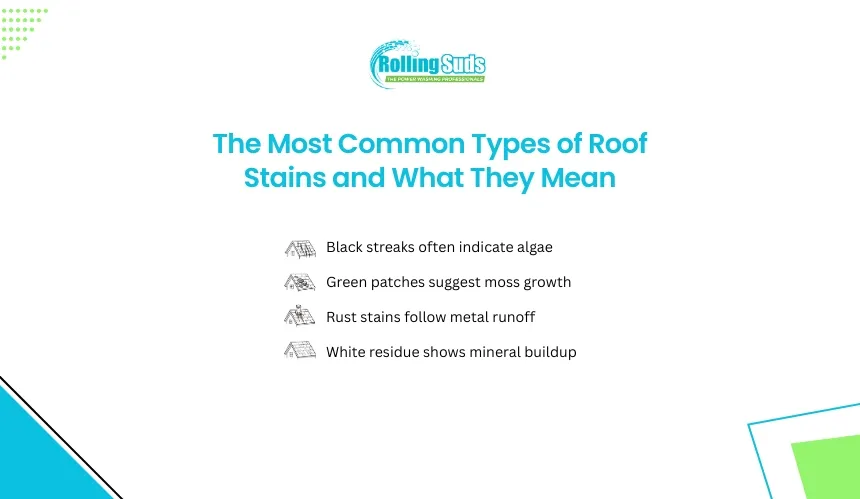
The appearance of a roof stain often reveals its underlying cause. Color, texture, and location provide valuable clues that help distinguish biological growth from mineral deposits, metal corrosion, or environmental buildup. Identifying the stain correctly reduces the risk of using the wrong cleaning method or overlooking a developing roofing issue.
What Causes Black Streaks on a Roof?
Black streaks are the most common roof stains found on asphalt shingle roofs. They are typically caused by Gloeocapsa magma, a type of airborne algae that feeds on the limestone filler used in many asphalt shingles. Once established, the algae spread across the roof through wind and rainwater.
These streaks usually begin on shaded or moisture-prone sections of the roof where evaporation occurs more slowly. In most cases, the discoloration is primarily cosmetic during its early stages. However, widespread algae growth can retain surface moisture and reduce the roof’s overall appearance, making routine inspection and proper cleaning worthwhile.
Green Moss and Lichen Patches
Unlike algae, moss and lichen are larger organisms that can affect the condition of roofing materials over time. Moss forms dense green patches that absorb and hold moisture against the roof surface, while lichen develops through a partnership between fungi and algae, creating firmly attached, crust-like growth.
Because both organisms remain attached to the roof for extended periods, they increase moisture exposure around shingles. Persistent moisture can accelerate granule loss, shorten shingle lifespan, and create conditions where minor roofing defects become more pronounced.
Rust-Colored and Brown Stains
Brown or reddish stains often originate from roofing components rather than biological growth. Corroding metal flashing, exposed fasteners, and aging roof vents can produce rust that washes onto surrounding shingles during rainfall.
Brown discoloration may also result from mineral-rich runoff or organic tannins released by leaves and tree debris that remain on the roof after storms. Unlike algae stains, these discolorations usually follow water flow patterns instead of spreading across large roof sections.
White Residue and Other Surface Discoloration
White stains typically form when minerals remain on the roof after water evaporates, leaving behind a chalky residue known as efflorescence. In some areas of Los Angeles, accumulated dust, construction particles, and coastal salt deposits can produce similar light-colored surface films.
These deposits generally sit on the roof rather than growing into it, which distinguishes them from algae, moss, and lichen. While they are often cosmetic, recurring mineral buildup may indicate drainage patterns that deserve closer evaluation, particularly if water consistently collects in the same areas.
Which Roof Stains Are Cosmetic and Which Signal a Roofing Problem?
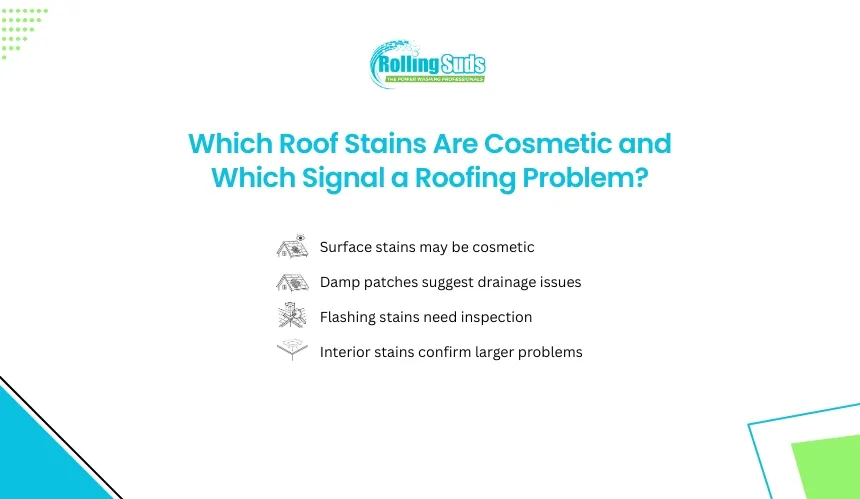
Not every roof stain requires repairs, but some indicate conditions that extend beyond surface discoloration. The key is determining whether the stain is limited to the roof’s exterior or reflects moisture intrusion, material deterioration, or failing roofing components. For homeowners across Los Angeles, Beverly Hills, Hollywood, and surrounding communities, early identification can prevent a minor issue from becoming a costly repair.
Signs a Stain Is Mostly Cosmetic
Cosmetic stains affect the appearance of the roof without immediately compromising its performance. Algae streaks, light mineral deposits, and pollution-related discoloration generally fall into this category when shingles remain intact and water is shedding properly.
Common indicators of cosmetic staining include:
- Discoloration without cracked, curled, or missing shingles
- Surface stains that remain confined to the outer layer of the roof
- No signs of interior water damage or attic moisture
- Stains that remain consistent rather than rapidly expanding
Although cosmetic staining does not always require immediate repairs, periodic inspections help confirm that the underlying roofing system remains in good condition.
Warning Signs of Underlying Roof Damage
Some stains develop because water repeatedly reaches areas it should not. Dark patches that remain damp long after rainfall, discoloration surrounding roof penetrations, or stains concentrated near flashing and roof valleys may indicate drainage problems or failing roof components.
When stains are accompanied by deteriorating shingles, exposed underlayment, loose flashing, or recurring biological growth, the focus should shift from cleaning the roof to identifying and correcting the source of moisture. Simply removing the visible stain will not resolve the underlying condition.
When Interior Symptoms Confirm a Larger Issue
Exterior staining becomes a more significant concern when it corresponds with symptoms inside the home. Water stains on ceilings, peeling paint, damp insulation, mold growth in the attic, or persistent musty odors suggest that moisture has moved beyond the roofing surface.
When interior and exterior symptoms appear together, the stain should be treated as evidence of a roofing problem rather than a cosmetic issue. A professional inspection can determine whether the source is a roof leak, deteriorated flashing, compromised underlayment, or another defect that requires repair before additional structural damage develops.
How Can Homeowners Prevent Black Streaks From Returning?
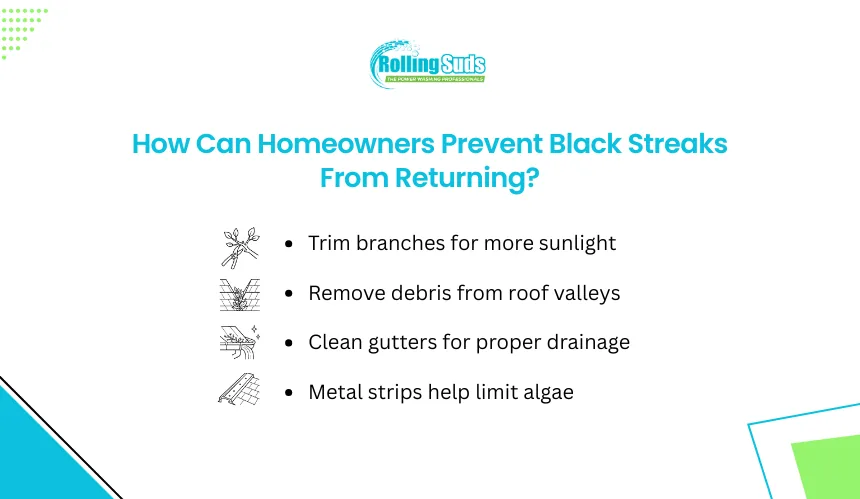
Removing black streaks does not prevent future algae growth. Long-term prevention focuses on reducing moisture retention and creating conditions that are less favorable for airborne algae spores.
Improving Sunlight Exposure and Reducing Shade
Roof areas that remain shaded for most of the day tend to stay damp longer after rain or morning condensation. Trimming overhanging tree branches can increase sunlight exposure and improve air circulation across the roof surface.
Better airflow helps shingles dry more quickly, reducing the amount of time moisture remains available for algae growth.
Keeping the Roof Free From Debris and Excess Moisture
Leaves, pine needles, and organic debris can trap water against the roof surface. Routine maintenance helps prevent moisture accumulation and reduces the likelihood of algae, moss, and other biological growth.
Homeowners can lower the risk of recurring stains by:
- Removing debris from roof valleys and low areas
- Cleaning gutters to maintain proper water drainage
- Addressing ventilation issues that contribute to excess moisture
- Scheduling periodic roof inspections to identify developing problems
Consistent maintenance helps preserve both the appearance and performance of the roofing system.
Installing Algae-Resistant Shingles or Zinc and Copper Strips
For homeowners planning a roof replacement, algae-resistant shingles provide added protection against black streak formation. Many modern asphalt shingles contain copper granules that inhibit algae growth and extend the roof’s clean appearance.
Some homeowners also install zinc or copper strips near the roof ridge. As rainwater flows over these metals, small amounts of metal ions are released across the roof surface. These ions help limit algae growth and reduce the frequency of future cleaning.
In Los Angeles, preventive maintenance is especially beneficial after the winter rainy season. Homes located near the coast or beneath mature tree canopies may experience recurring moisture exposure despite the region’s generally dry climate. Addressing these conditions early can reduce the need for repeated roof cleaning and help maintain long-term curb appeal.
Protect your roof’s appearance before black streaks turn into a bigger maintenance concern. For safe exterior cleaning and roof-friendly stain removal, trust pressure washing of Los Angeles powered by Rolling Suds of Beverly Hills. Get expert cleaning support that helps restore curb appeal without damaging your shingles.
How Roof Stains Should Be Treated Without Damaging the Roof
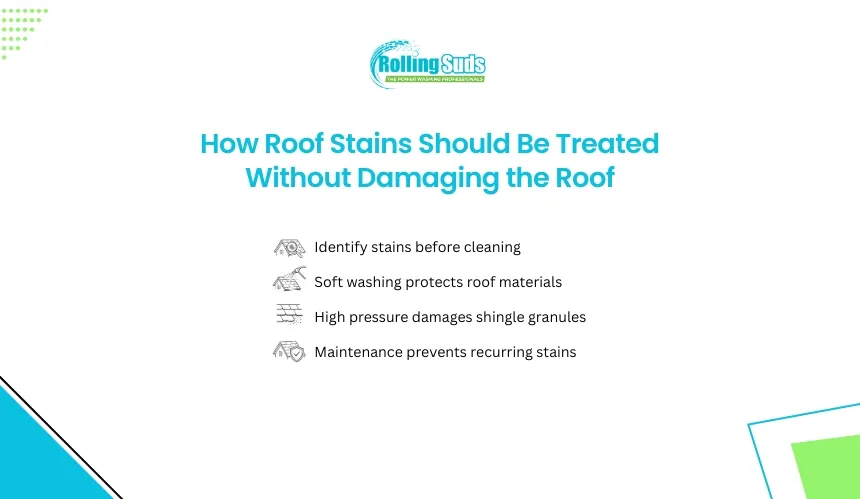
The effectiveness of stain removal depends on matching the cleaning method to the type of discoloration. Using aggressive techniques on roofing materials can shorten the roof’s lifespan, while the right approach removes contaminants without compromising shingles, flashing, or protective granules.
Safe Roof Cleaning Approaches
The safest way to treat most roof stains is to identify the source before selecting a cleaning method. Biological growth such as algae, moss, and lichen typically responds to low-pressure soft washing with cleaning solutions designed for roofing materials.
Mineral deposits and environmental residue may require different treatments depending on the roofing surface and the extent of the buildup.
Cleaning should always preserve the integrity of the roof rather than simply restore its appearance. Removing visible stains without addressing the underlying cause often leads to rapid recurrence.
Why High-Pressure Cleaning Can Damage a Roof
High-pressure water can strip away the protective mineral granules that shield asphalt shingles from ultraviolet exposure and weathering. Once these granules are removed, shingles become more vulnerable to premature aging, cracking, and reduced water-shedding performance.
While professional house washing in Los Angeles can safely restore siding, stucco, driveways, patios, and other exterior surfaces, roof cleaning requires specialized methods that protect roofing materials. Experienced exterior cleaning professionals understand when a roof should be cleaned using low-pressure techniques instead of equipment designed for harder surfaces.
Preventing Future Roof Stains
Long-term stain prevention focuses on reducing the conditions that allow moisture and contaminants to accumulate. Homeowners in areas such as West Los Angeles, Culver City, and the San Gabriel Valley can lower the risk of recurring stains by improving roof maintenance and moisture management.
Effective preventive measures include:
- Trimming tree branches to increase sunlight and airflow.
- Removing leaves and organic debris before they retain moisture.
- Keeping gutters and downspouts clear to promote proper drainage.
- Scheduling periodic roof inspections to identify drainage issues or early biological growth before stains become widespread.
Preventive maintenance not only reduces future discoloration but also helps extend the service life of the roofing system by limiting prolonged moisture exposure.
If roof stains are affecting your home’s appearance, trust Pressure Washing of Los Angeles, powered by Rolling Suds of Beverly Hills for professional exterior cleaning solutions. We provide residential and commercial washing services throughout the greater Los Angeles area, helping property owners keep their exteriors clean, well-maintained, and looking their best. Contact our team today to schedule your service.
Sources
Frequently asked questions
Can roof stains affect homeowners insurance or an HOA inspection?
Roof staining alone does not prove structural failure, but an insurer or HOA may flag the roof’s condition during an exterior inspection. Request the exact concern in writing, document the surface with dated photos, and obtain a professional assessment. Submit proof of cleaning or repairs rather than assuming appearance alone will satisfy the notice.
Could roof cleaning void my shingle warranty?
Cleaning can affect warranty eligibility when the method conflicts with the shingle manufacturer’s instructions. Before treatment, identify the roofing brand, review its maintenance guidance, and ask the contractor to document the products and application process. Some shingles also carry separate limited coverage for blue-green algae discoloration, subject to product-specific terms.
Can roof stains be cleaned if solar panels are installed?
A stained roof can usually be serviced with solar panels in place, but access around mounts, wiring, flashing, and drainage paths requires coordination. The roof surface and photovoltaic modules should be treated as separate systems. Confirm whether the solar installer must inspect the array afterward and whether panel cleaning is included or priced separately.
Do clay and concrete tile roofs need different stain treatment?
Clay, concrete tile, and asphalt shingles should not receive identical stain treatments. Tile roofs can contain brittle pieces, surface coatings, mortar, and underlayment details that require material-specific handling. Before cleaning a tile roof, identify whether the tiles are clay or concrete and check for cracked, slipped, or previously coated sections.
Will roof-cleaning chemicals damage plants or exterior finishes?
Roof-cleaning solutions can injure shrubs, lawns, and painted surfaces when runoff is not controlled. A qualified contractor should pre-wet nearby vegetation, redirect or capture discharge where practical, protect sensitive plants, and rinse affected areas during and after treatment. Ask how landscaping, gutters, metal fixtures, and stormwater paths will be protected before work begins.
Are black roof streaks the same as mold or mildew?
Black roof streaks are usually algae, not mold or mildew. Roof algae often appears as dark vertical staining because it spreads with moisture movement across shingles. Mold typically needs more organic material and enclosed, damp conditions, while mildew is usually lighter and more powdery. A roof inspection can confirm the source.
How often should black streaks be removed from roof shingles?
Most roofs do not need algae cleaning every year. A roof may only need cleaning every few years, depending on shade, moisture exposure, tree coverage, and shingle condition. In coastal or shaded areas, stains may return faster because morning moisture and limited sunlight allow algae spores to reactivate.