
June 17, 2026
Tire Marks Removal Methods for Concrete, Pavers, and Asphalt Driveways
Written and reviewed by the Pressure Washing of Los Angeles team
Last reviewed:
| Key Takeaways: Tire marks should be cleaned based on the driveway surface because concrete, pavers, and asphalt react differently to rubber residue and cleaning pressure. Fresh tire marks are easier to remove with sweeping, rinsing, mild degreaser, and nylon brush scrubbing before the residue bonds deeper into the surface. Stubborn tire marks may need surface-safe degreasers, proper dwell time, and thorough rinsing to break down rubber transfer without causing discoloration. Pressure washing can remove deeper tire marks, but concrete can handle more force while pavers and asphalt require lower pressure and controlled technique. Heat-set marks, sealed surfaces, and deep rubber transfer may require professional cleaning to restore the driveway without unnecessary surface damage. |
|---|
Tire marks can leave dark rubber streaks that reduce the appearance of concrete, paver, and asphalt driveways, and standard rinsing often does little to remove them. The challenge is that rubber residue interacts differently with each surface, which means the wrong cleaning approach can waste time or even cause damage.
Effective removal depends on matching the cleaning method to the driveway material and the severity of the mark. This blog covers practical tire marks removal methods and the factors that influence cleaning results across different driveway surfaces.
Why Tire Marks Stick Differently on Each Driveway Surface
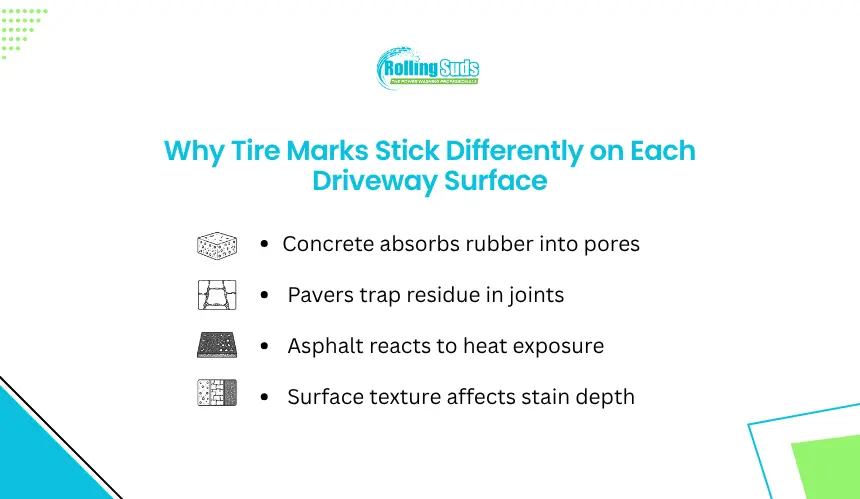
Tire marks are not simply dirt sitting on top of a driveway. They are often a combination of rubber transfer, friction-generated residue, and embedded surface contaminants. The way these marks bond to the surface depends largely on the material composition and texture of the driveway.
Concrete Absorbs Rubber Residue Into Its Pores
Concrete contains microscopic pores that can trap rubber particles when tires generate heat and friction during turning, braking, or acceleration. As the residue settles into these pores, the marks become more difficult to remove with basic rinsing alone.
Older concrete surfaces may be even more susceptible because years of weather exposure can increase surface porosity. In these cases, rubber residue can penetrate deeper below the surface layer, requiring stronger cleaning methods or pressure-assisted removal.
Pavers Trap Marks Around Joints and Texture
Paver driveways typically have textured surfaces and joint spaces that create additional areas where rubber residue can accumulate. Instead of remaining on a flat surface, tire marks may settle into grooves, edges, and gaps between individual pavers.
This uneven structure often makes cleaning more time-consuming because residue must be removed from multiple angles. Joint sand can also limit how aggressively the surface can be cleaned without disturbing the stability of the paver system.
Asphalt Can Soften or Stain If Treated Too Aggressively
Unlike concrete and pavers, asphalt contains petroleum-based binders that remain more sensitive to heat, chemicals, and high-pressure cleaning. Tire friction can leave visible marks on the surface, particularly during hot weather when asphalt becomes more flexible.
Aggressive cleaning methods may remove the tire marks but can also damage the driveway surface by stripping protective materials or creating premature wear. For this reason, asphalt typically requires a more controlled approach that balances cleaning effectiveness with surface preservation.
Basic Tire Mark Removal Methods for Fresh Surface Marks
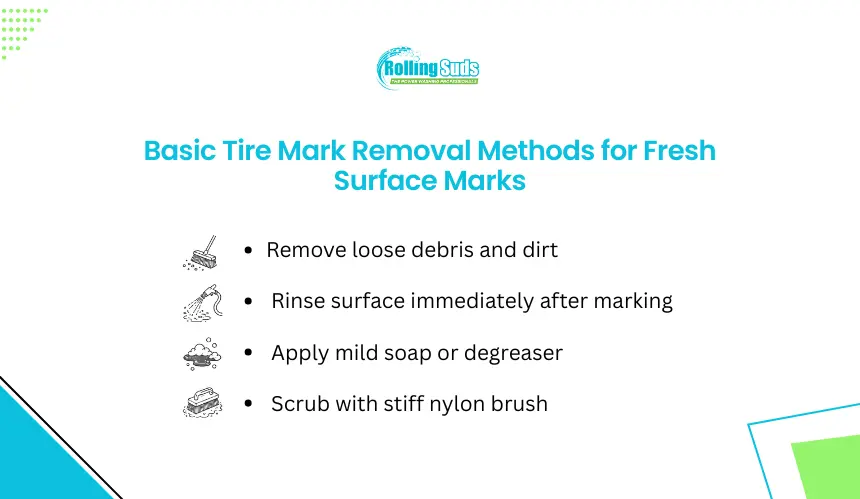
Fresh tire marks are generally easier to remove because the rubber residue has not had sufficient time to bond deeply with the driveway surface. Starting with low-impact cleaning methods reduces the risk of unnecessary surface wear and helps determine whether stronger treatment is actually needed.
1. Sweeping and Rinsing Loose Residue
The first step is removing loose debris, dust, and surface contaminants that may be holding rubber particles against the driveway. A thorough sweep followed by a strong water rinse can eliminate light residue before it becomes embedded.
This approach is most effective shortly after the marks appear. Fresh rubber deposits often remain closer to the surface, making them easier to dislodge before exposure to vehicle traffic, sunlight, and moisture increases adhesion.
2. Using Dish Soap or Mild Degreaser
For marks that remain after rinsing, a mild cleaning solution can help break down surface residue. Dish soap and light-duty degreasers work by loosening contaminants that allow rubber particles to cling to the driveway.
Apply the solution directly to the affected area and allow a short dwell time so the cleaner can penetrate the residue. The goal at this stage is to soften the mark without exposing the surface to unnecessarily harsh chemicals.
3. Scrubbing With a Stiff Nylon Brush
Mechanical agitation is often necessary once a cleaning solution has loosened the residue. A stiff nylon brush provides enough scrubbing force to lift rubber particles while minimizing the risk of surface damage.
Work in overlapping circular motions to target the full width of the mark. Nylon bristles are generally preferred because they can remove residue effectively without the abrasion associated with metal brushes, which may scratch concrete, disturb paver finishes, or damage asphalt surfaces.
Degreaser and Cleaner Methods for Stubborn Tire Marks on Driveways
When tire marks remain visible after basic cleaning, the residue has usually bonded more firmly to the surface. At this stage, specialized cleaners and degreasers are often needed to break down the combination of rubber transfer, road oils, and accumulated surface contaminants.
In Los Angeles, prolonged sun exposure can bake rubber residue onto driveway surfaces, making marks more resistant to standard household cleaning methods. Properties located near major commuter corridors may also experience increased buildup from traffic-related dust and petroleum residues that contribute to darker staining.
Choosing a Cleaner Based on Surface Type
The effectiveness of a cleaner depends on both the driveway material and the nature of the residue. Concrete can generally tolerate stronger degreasing products because of its durability, while pavers often benefit from cleaners designed for masonry surfaces.
Asphalt requires greater caution. Solvent-heavy products can soften asphalt binders or affect the surface finish, making manufacturer-approved cleaners a safer option for stain removal.
Letting the Cleaner Dwell Without Drying
Cleaning chemicals need adequate contact time to penetrate and loosen embedded residue. Applying a product and immediately scrubbing often limits its effectiveness because the active ingredients have not had sufficient time to work.
The surface should remain damp during the dwell period. If the cleaner dries too quickly, particularly during hot weather, cleaning performance may decrease and residue may remain attached to the driveway surface.
Rinsing Thoroughly to Prevent Residue or Discoloration
After the cleaner has broken down the tire marks, thorough rinsing is necessary to remove both the dissolved residue and any remaining cleaning agents. Incomplete rinsing can leave behind chemical residue that attracts dirt or creates uneven surface appearance.
For textured concrete and paver installations, extra attention should be given to joints, grooves, and low areas where cleaning solutions can collect. Proper rinsing helps restore a more uniform surface appearance and prepares the driveway for any additional cleaning steps if needed.
Pressure Washing Methods for Concrete, Pavers, and Asphalt
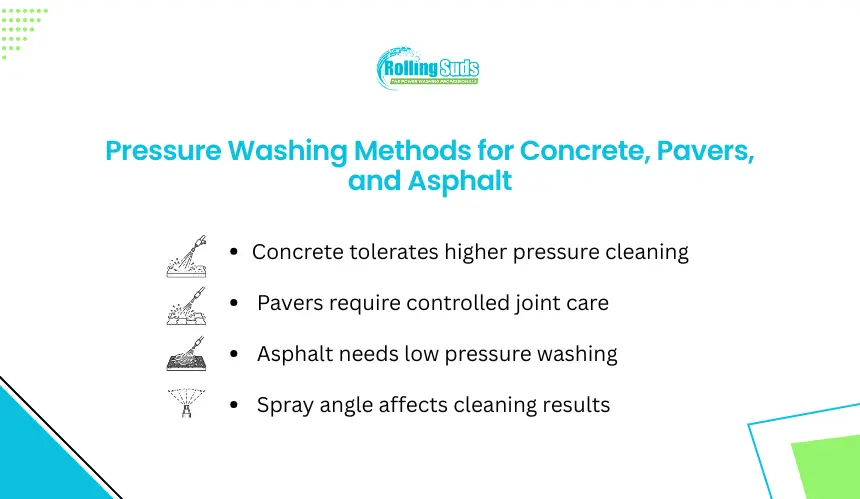
Pressure washing is often used when tire marks extend beyond what manual scrubbing and chemical cleaning can remove. The effectiveness of this method depends less on maximum pressure and more on matching water force, spray angle, and cleaning distance to the driveway material.
In Los Angeles, driveways frequently experience intense UV exposure that can harden surface residue over time, increasing the need for mechanical cleaning methods. Coastal areas may also accumulate airborne particles that combine with rubber deposits, creating more persistent surface staining.
Companies providing pressure washing in Los Angeles frequently adjust their cleaning approach based on whether the driveway is concrete, pavers, or asphalt. Surface type plays a major role in determining how much pressure can be used without causing damage.
Concrete Can Handle More Cleaning Pressure
Concrete is generally the most pressure-resistant of the three driveway materials. Its dense structure allows higher cleaning pressures to remove embedded rubber residue from surface pores without causing significant damage when proper techniques are used.
A consistent spray pattern and controlled working distance help lift tire marks evenly. Concentrating pressure in one spot for too long can create visible cleaning differences, particularly on older concrete surfaces.
Pavers Need Controlled Pressure Around Sand Joints
Paver driveways require a more balanced approach because the surface consists of individual units separated by joint material. While the pavers themselves may tolerate moderate pressure, excessive force can displace joint sand and weaken interlock stability.
Working at a slight angle rather than directly into the joints helps remove tire marks while preserving the integrity of the installation. Areas with decorative finishes may also require lower pressure settings to avoid altering the surface appearance.
Asphalt Requires Lower Pressure and Careful Distance
Asphalt is more vulnerable to pressure-related damage because its surface contains flexible binders that can wear prematurely under excessive force. High pressure concentrated too closely can leave visible lines, remove surface material, or accelerate deterioration.
For this reason, lower pressure combined with wider spray patterns is generally preferred. The objective is to lift the rubber residue from the surface without disrupting the asphalt matrix that provides structural protection and durability.
When Heat, Sealers, or Professional Cleaning May Be Needed For Removing Tire Marks
Some tire marks remain visible even after chemical treatment and pressure washing because the residue has penetrated deeper into the surface or interacted with existing coatings. In these situations, the challenge is no longer simple surface cleaning but addressing conditions that increase stain retention.
From hillside properties to densely developed residential neighborhoods, many Los Angeles driveways experience prolonged sun exposure that can cause rubber residue to bond more aggressively to the surface. This is one reason why professional driveway cleaning is commonly sought in Los Angeles when tire marks remain visible after routine cleaning attempts.
Heat-Set Tire Marks After Long Sun Exposure
Rubber residue becomes more difficult to remove when it remains on a driveway for extended periods during hot weather. Heat can increase the interaction between the rubber compounds and the surface, creating darker marks that resist standard cleaning efforts.
These heat-set marks are commonly found in areas where vehicles regularly stop, turn, or remain parked for long periods. The longer the residue remains exposed, the greater the likelihood that stronger restoration methods will be required.
Marks on Sealed or Coated Driveways
Driveway sealers are designed to protect the underlying material, but they can also influence how tire marks behave. In some cases, the residue remains on the sealer layer rather than penetrating the driveway itself. In others, the mark may partially bond to the coating.
Cleaning must account for the type and condition of the sealer. Using overly aggressive chemicals or excessive pressure may remove the stain but can also damage the protective coating, creating additional maintenance requirements.
Deep Rubber Transfer That Needs Professional Equipment
Certain tire marks involve more than surface-level residue. Heavy vehicles, repeated traffic patterns, and prolonged exposure can create deep rubber transfer that is difficult to remove with consumer-grade cleaning products and equipment.
Professional cleaning services may use commercial-grade surface cleaners, specialized degreasers, hot water systems, or restoration techniques designed for specific driveway materials. These methods can improve cleaning performance while reducing the risk of unnecessary surface damage, particularly on decorative concrete, premium pavers, and aging asphalt surfaces.
How to Prevent Tire Marks After Cleaning
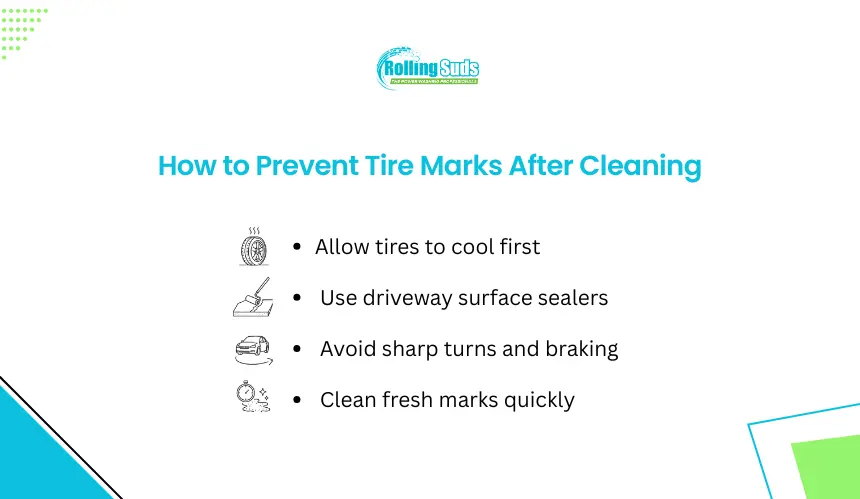
Removing tire marks is only part of the solution. Preventing new marks from forming can reduce future cleaning requirements and help maintain a cleaner driveway surface for longer periods.
- Allow hot tires to cool when possible: Tires that have been driven for extended periods generate heat, which can increase rubber transfer when the vehicle is parked or turned sharply on the driveway.
- Apply a suitable driveway sealer: A properly selected sealer can create a protective barrier that limits how deeply rubber residue penetrates the surface, making future cleaning easier.
- Reduce aggressive turning and braking: Sharp steering movements and sudden braking create additional friction between the tire and driveway surface, increasing the likelihood of visible tire marks.
- Remove marks early: Fresh rubber residue is generally easier to clean than marks that have been exposed to sunlight, moisture, and vehicle traffic for extended periods.
- Maintain routine surface cleaning: Regular washing helps remove dirt, oil residue, and contaminants that can combine with rubber deposits and contribute to darker, more persistent staining.
Tire marks do not have to become a permanent part of your driveway. If stubborn rubber residue refuses to come off, a professional tire mark remover can help restore a cleaner, more polished surface. Reach out today to bring back your driveway’s curb appeal.
Sources
Frequently asked questions
Can tire marks permanently stain a driveway?
Tire marks can become long-lasting if rubber residue bonds with porous concrete, textured pavers, or aged asphalt. Permanent staining is more likely when marks sit through heat, sunlight, moisture, and repeated traffic. Early cleaning improves removal results and reduces the need for stronger restoration methods.
What is the safest cleaner for tire marks on a driveway?
A mild degreaser or pH-neutral driveway cleaner is usually the safest starting point. Concrete may tolerate stronger cleaners, but asphalt and sealed pavers need surface-compatible products. Harsh solvents, acid cleaners, and abrasive chemicals can discolor coatings, soften asphalt binders, or damage decorative finishes.
Why do new tires leave darker marks on driveways?
New tires often contain fresh rubber compounds, plasticizers, oils, and manufacturing residues that transfer more easily under heat and friction. When a vehicle turns sharply or parks after driving, those compounds can press into the driveway surface and leave darker, more noticeable marks.
Can bleach remove tire marks from concrete?
Bleach is not the best option for tire marks because rubber residue is not primarily an organic stain. It may lighten surrounding discoloration but often fails to break down rubber transfer effectively. Degreasers, masonry-safe cleaners, agitation, and controlled pressure washing usually provide better results.
How long should a cleaner sit on tire marks before rinsing?
Most driveway cleaners need several minutes of dwell time to loosen rubber residue, but the surface should not dry during that period. Hot weather can shorten working time, especially in sunny areas. Always follow the product label because dwell time varies by cleaner strength and surface type.
Are tire marks harder to remove from sealed driveways?
Sealed driveways can be easier or harder to clean depending on the sealer condition. A healthy sealer may keep residue near the surface, while worn or softened coatings can trap rubber marks unevenly. Cleaning should protect the coating as well as remove the visible stain.