
July 28, 2026
What Areas of a Home Benefit Most From Exterior Washing?
Written and reviewed by the Pressure Washing of Los Angeles team
Last reviewed:
| Key Takeaways: Prioritize siding, roofs, gutters, hardscapes, decks, and exterior trim because these areas collect the most dirt, organic growth, moisture, and airborne residue. Match the cleaning method to the surface: use low-pressure washing for asphalt shingles and follow manufacturer guidance before power washing siding. Clean gutters and downspouts alongside exterior surfaces to maintain proper drainage and reduce moisture exposure around the roofline, siding, and foundation. Use professional pressure washing on textured concrete, asphalt, patios, and walkways when traffic residue, algae, or embedded grime cannot be removed through ordinary rinsing. |
|---|
A home’s exterior is constantly exposed to dirt, algae, mold, pollen, moisture, and airborne contaminants that accumulate at different rates depending on the surface. While many homeowners focus on visible stains, some of the most important areas to clean are those where buildup can gradually affect appearance, drainage, or material longevity.
Knowing which exterior surfaces benefit most from regular washing helps prioritize maintenance and prevent avoidable deterioration. This guide highlights the areas of a home that gain the greatest value from exterior washing and explains why each one deserves attention.
1. Siding and Exterior Walls
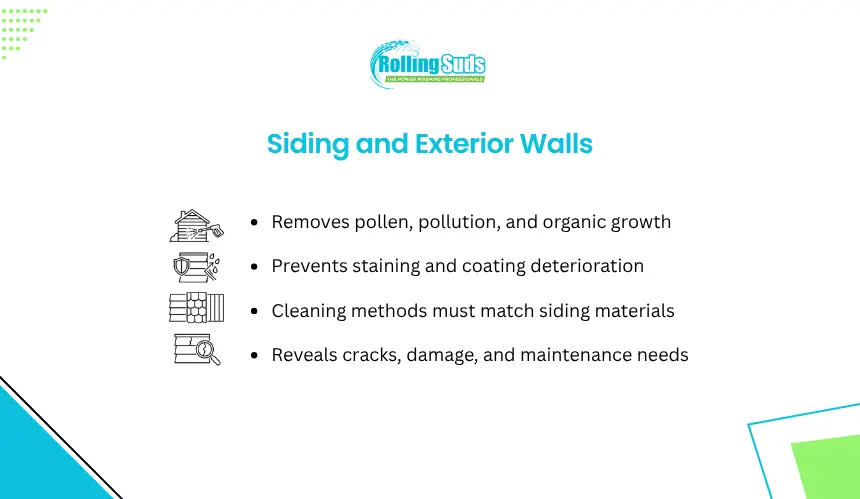
Siding and exterior walls typically cover the largest exposed surface of a home, making them the primary collection point for airborne contaminants and organic growth. Regular exterior washing removes these deposits before they permanently stain finishes or accelerate surface deterioration.
Dust, pollen, vehicle emissions, tree sap, cobwebs, and environmental pollutants gradually adhere to siding. In shaded or damp areas, algae, mold, and mildew can establish themselves on the surface, leaving discoloration and increasing moisture retention. If left untreated, these contaminants become more difficult to remove and may shorten the service life of exterior finishes.
Different siding materials also respond differently to accumulated buildup. Vinyl siding can develop green algae streaks, painted wood may trap moisture against the coating, fiber cement can accumulate biological growth in textured areas, while brick and stucco often collect dirt and organic staining within their porous surfaces. Cleaning methods should always match the material to avoid unnecessary wear.
Routine exterior washing restores the original appearance of walls while reducing contaminant buildup that can contribute to premature fading, staining, or coating degradation. It also provides a clearer view of the exterior, making it easier to identify issues such as cracked caulking, damaged siding panels, or areas requiring maintenance before they become larger repairs.
| Important: The Vinyl Siding Institute advises homeowners to check manufacturer restrictions before power washing because some products limit acceptable pressure levels or prohibit the method entirely. Directing water upward can also force moisture behind overlapping panels, where it may remain trapped instead of draining properly. |
|---|
2. Roof and Gutters
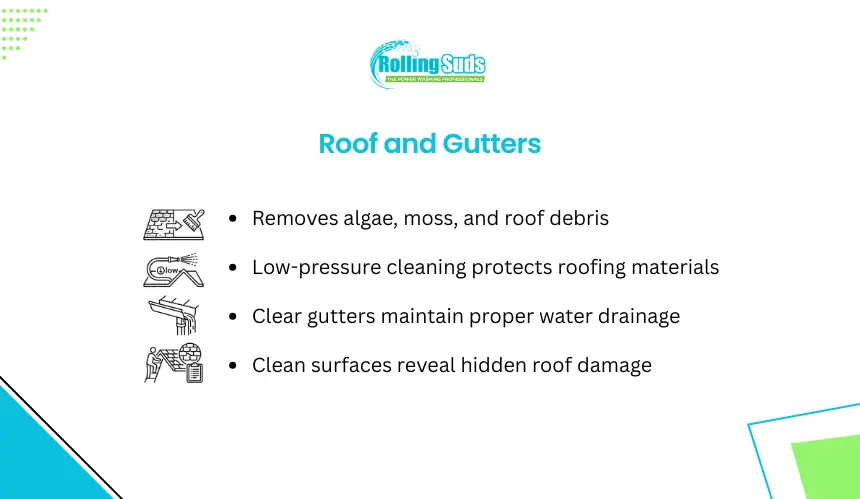
The roof and gutter system work together to direct rainwater away from the home. Because both are continuously exposed to leaves, moisture, and airborne debris, regular exterior washing helps maintain drainage performance while reducing surface contamination.
Roof Surfaces
Roofs often accumulate algae, moss, lichen, leaves, and fine organic debris, particularly in shaded or humid conditions. These growths retain moisture against roofing materials and can create dark streaks that diminish curb appeal. On asphalt shingles, algae primarily affects appearance, while moss and lichen can hold moisture and contribute to faster surface wear if left unchecked.
Cleaning should be appropriate for the roofing material. Soft washing is commonly used on asphalt shingles because it removes biological growth with low-pressure application, reducing the risk of granule loss that can occur with excessive pressure.
A clean roof also allows homeowners to identify damaged shingles, flashing issues, or debris accumulation that may require repair.
| Important: The Asphalt Roofing Manufacturers Association recommends applying an appropriate cleaning solution and rinsing asphalt roofing with low-pressure water rather than using aggressive mechanical washing. Its guidance also notes that algae discoloration may eventually return, so cleaning should be treated as periodic maintenance rather than a permanent cure. |
|---|
Gutters and Downspouts
Gutters collect leaves, twigs, roof granules, and sediment that gradually restrict water flow. During heavy rainfall, clogged gutters can overflow, allowing water to spill along fascia boards, siding, and the foundation instead of being directed through the downspouts.
Exterior washing removes surface staining from gutters while cleaning the surrounding roof edge where debris often collects. Combined with clearing blockages from gutters and downspouts, this supports efficient drainage and reduces prolonged moisture exposure around the home’s exterior.
Clean gutter systems also make routine inspections more effective by exposing loose fasteners, separated joints, or areas beginning to corrode.
3. Driveways, Walkways, and Hardscapes
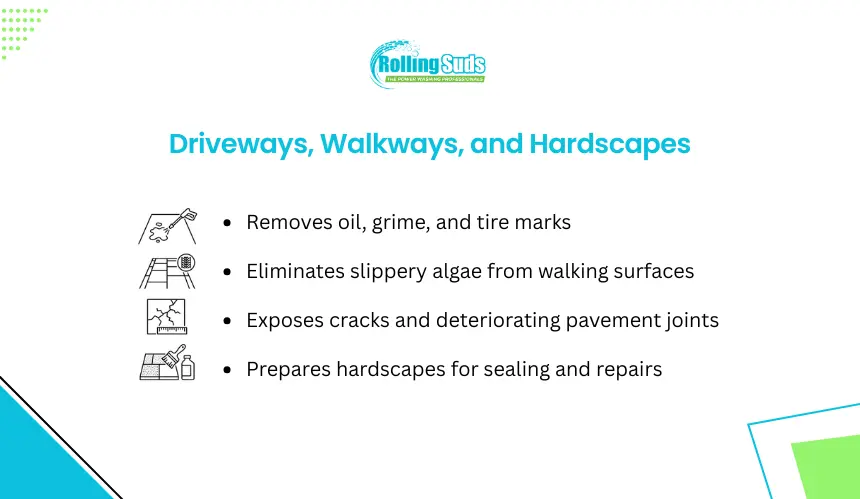
Hardscape surfaces experience constant foot and vehicle traffic, making them some of the fastest areas to show dirt, stains, and weather-related wear. Exterior washing removes contaminants that affect both appearance and surface safety while helping preserve the integrity of paving materials.
Concrete and Asphalt Surfaces
Driveways and walkways accumulate tire marks, oil drips, brake dust, dirt, and organic growth over time. In high-traffic neighborhoods such as Downtown Los Angeles and West Los Angeles, airborne dust and vehicle emissions can accelerate surface discoloration, especially on light-colored concrete.
Pressure washing removes embedded grime from the surface texture, improving traction by eliminating slippery algae and accumulated residue. It also exposes developing cracks, settlement, or deteriorating joints that may otherwise remain hidden beneath dirt, allowing timely maintenance before damage progresses.
| Important: California Air Resources Board findings show that road dust, tire wear, and brake wear account for a substantial share of traffic-related particulate emissions. In high-traffic areas of Los Angeles, these contaminants can become embedded in the textured surface of concrete and asphalt, making residential pressure washing in Los Angeles far more effective than ordinary rinsing for restoring a cleaner appearance in these conditions. |
|---|
Patios and Outdoor Living Areas
Patios, pool decks, and paved entertaining spaces are regularly exposed to food spills, fallen leaves, pollen, and weather-related debris. Stone, pavers, brick, and textured concrete can trap contaminants within joints and surface pores, making routine cleaning essential for maintaining both appearance and performance.
In outdoor living spaces throughout Beverly Hills and Culver City, where patios are frequently used for entertaining and year-round outdoor activities, periodic exterior washing helps remove built-up grime without damaging the surface when the appropriate cleaning method is used.
Keeping these areas clean also prepares them for maintenance tasks such as joint sand replacement, sealing, or minor repairs when needed.
4. Decks, Fences, and Outdoor Structures
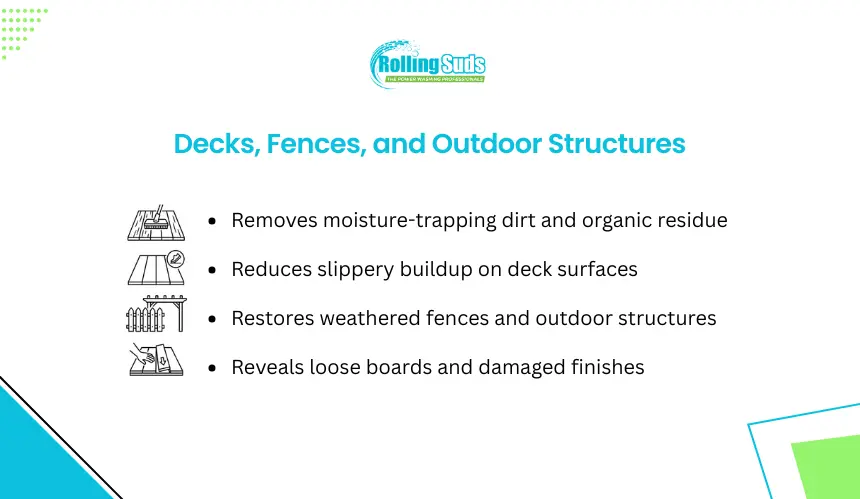
Decks, fences, and other outdoor structures are exposed to direct sunlight, seasonal moisture, irrigation overspray, and airborne debris. Regular exterior washing removes surface contaminants that can accelerate weathering while preserving the condition of materials that are difficult and costly to replace.
Decks
Wood and composite decks collect dirt, pollen, mildew, and organic residue that become embedded in the surface over time. In neighborhoods across the San Gabriel Valley, where trees can contribute significant leaf litter and pollen during parts of the year, these contaminants can accumulate between deck boards and retain moisture after irrigation or rainfall.
Cleaning removes this buildup before it promotes staining or creates slippery walking surfaces. For wood decks, washing also prepares the surface for staining or sealing by eliminating residues that can interfere with coating adhesion. This results in more uniform finish penetration and longer-lasting protective treatments.
Fences and Other Exterior Structures
Wood, vinyl, and composite fences, along with pergolas, gazebos, and retaining walls, are continuously exposed to dust, UV radiation, irrigation water, and biological growth. In areas such as Hollywood and North Hollywood, roadside dust and vehicle pollution can gradually dull fence surfaces, while shaded sections are more likely to develop algae or mildew.
Exterior washing restores the original appearance of these structures by removing accumulated contaminants without unnecessary abrasion. It also creates a cleaner surface for inspections, making it easier to identify loose boards, peeling finishes, rusting hardware, or early signs of wood decay before repairs become more extensive.
5. Windows, Doors, and Exterior Trim
Windows, entry doors, garage doors, and exterior trim are the finishing elements that define a home’s appearance. Although they cover less surface area than siding or roofing, these features quickly reveal accumulated dust, water spots, and environmental residue, making regular exterior washing an important part of complete property maintenance.
Windows and Glass
Exterior glass is exposed to airborne dust, pollen, mineral deposits from sprinkler overspray, bird droppings, and pollution. In many parts of Los Angeles, prolonged dry periods allow fine particles to settle on windows, while occasional rain can leave behind streaks as contaminants dry on the glass.
| Important: Fine particulate matter includes dust, combustion residue, and other airborne particles that can remain suspended before settling on exposed surfaces. When these deposits mix with sprinkler minerals or light rainfall, they can dry into bonded spots that require more than a basic water rinse to remove. |
|---|
Cleaning removes these deposits to improve visibility and maximize natural daylight entering the home. It also helps protect window frames and seals by preventing dirt from collecting around edges where moisture can linger after rainfall or washing.
Doors, Garage Doors, and Trim
Front doors, garage doors, shutters, soffits, fascia, and trim are constantly exposed to UV radiation, road dust, and everyday handling. These areas often collect grime around corners, vents, and decorative details that standard rainfall cannot remove.
Homes throughout Central Los Angeles and South Los Angeles frequently experience a combination of traffic-related dust and urban pollutants that settle on these exterior features, gradually reducing their finish quality and curb appeal.
Routine exterior washing restores a consistent appearance across the property’s visible surfaces while making it easier to detect peeling paint, deteriorating caulk, warped trim, or other maintenance issues before they require more extensive repairs.
Restore curb appeal and remove stubborn exterior buildup with Pressure Washing of Los Angeles, powered by Rolling Suds of Beverly Hills. We provide residential and commercial exterior washing throughout the Greater Los Angeles area, using surface-appropriate methods for homes, businesses, hardscapes, roofs, and outdoor structures. Contact us today to schedule professional exterior cleaning.
Sources
Frequently asked questions
How often should a Los Angeles home be exterior washed?
Most Los Angeles homes benefit from exterior washing every 12 to 24 months, but traffic exposure, shaded walls, irrigation overspray, nearby trees, and visible algae can shorten that interval. Inspect high-exposure surfaces annually rather than following a rigid schedule, and clean when buildup begins affecting traction, finishes, drainage, or appearance.
Can I pressure wash my driveway under Los Angeles water restrictions?
Pressure washing a driveway is not automatically compliant with current Los Angeles water rules. LADWP prohibits washing down hard surfaces, except with water brooms, and does not allow runoff into streets or gutters. Before scheduling service, confirm that the contractor uses an approved, water-efficient method and contains or redirects wastewater appropriately.
What should I do before an exterior washing appointment?
Close all windows and doors, move vehicles and outdoor furniture, secure lightweight décor, and keep pets indoors. Point out damaged screens, loose siding, unsealed outlets, irrigation controls, security cameras, and delicate surfaces before work begins. Clear access so hoses can be routed without damaging planters, lighting, or landscape edging.
How can plants and landscaping be protected during exterior washing?
Landscaping can be protected by pre-wetting plants, controlling cleaning-solution strength, diverting downspout discharge, and rinsing foliage afterward. Identify sensitive flowers and newly planted shrubs in advance. Avoid leaving airtight plastic coverings over plants in Los Angeles heat because trapped temperatures and restricted airflow can damage leaves.
Should exterior washing be completed before painting or sealing?
Exterior washing should usually occur before painting, staining, or sealing because dust, chalk, grease, mildew, and loose residue interfere with coating adhesion. The surface must then dry fully before the finish is applied. Drying time varies with material porosity, shade, humidity, and the amount of water absorbed during cleaning.
Will pressure washing completely remove oil, rust, or white concrete stains?
Pressure alone may remove surface dirt but cannot guarantee complete removal of oil, rust, efflorescence, or deeply absorbed stains. These contaminants often require a material-specific degreaser, acidic masonry cleaner, poultice, or controlled dwell time. Request a test area first because treatment strength and expected improvement depend on surface condition and porosity.