May 7, 2026
Pressure Washing Before Painting: Why It Matters at Home
Written and reviewed by the Pressure Washing of Los Angeles team
Last reviewed:
| A Quick Answer: Pressure washing is essential before painting your home because it removes surface contaminants that prevent paint from bonding properly, directly affecting adhesion, finish quality, and long-term durability. Without thorough cleaning, even high-quality exterior paint is more likely to peel, blister, or wear unevenly within a short period of time. |
|---|
In environments like Los Angeles, exterior surfaces are constantly exposed to airborne dust, traffic pollution, moisture fluctuations, and organic growth. These elements build up gradually and often go unnoticed, yet they form a barrier between paint and the underlying surface. Applying paint over this residue seals in problems rather than solving them, leading to premature coating failure.
This article explains how proper washing supports adhesion, improves paint performance, and plays a critical role in achieving professional, long-lasting exterior results, especially under regional environmental conditions.
How Dirty Surfaces Interfere With Paint Adhesion
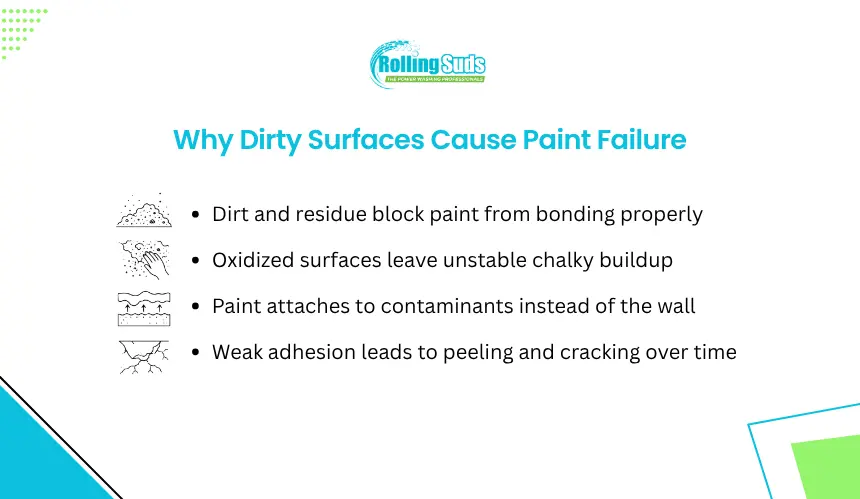
A paint job is only as strong as what it is sticking to. If the surface is coated with fine dust, residue, or biological film, paint cannot form a reliable bond. The result is not just an appearance issue. It becomes a performance issue that shows up as early failure, even when premium paint is used.
What Actually Blocks Paint From Bonding
Exterior contaminants create a physical separation between the paint film and the substrate. Some are obvious, like mud splatter or cobwebs, but the real problems are usually subtle. Fine dust settles into texture, chalking from oxidized old paint creates a powder layer, and airborne oils or soot can leave a thin film that feels dry but behaves like a release agent.
When paint is applied over these layers, the coating anchors to the contaminant instead of the actual wall material. That bond is weaker because the contaminant is not structurally stable.
Over time, wind-driven grit, small impacts, and temperature cycling pull the paint away from the surface because it never truly “grabbed” the substrate.
How Adhesion Problems Show Up After The Paint Dries
Adhesion failure often appears after the paint looks finished. That is what makes it frustrating. Early symptoms include small edge lifts around trim lines, hairline cracks near seams, or peeling on sun-exposed areas where expansion and contraction are stronger.
Another common sign is flaking that occurs in sheets, which typically indicates the paint is separating cleanly from a layer beneath it rather than wearing down gradually.
This is also why “touch-ups” do not hold when the surface underneath was never properly prepared. The paint is not failing because it is weak. It is failing because it is attached to an unstable layer.
Common Exterior Buildup Found On Los Angeles Homes
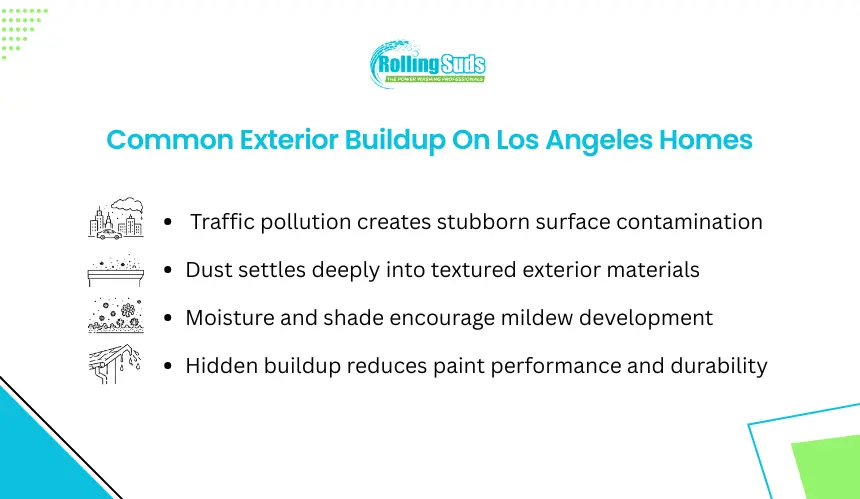
Outdoor surfaces accumulate residue in ways that homeowners rarely notice day to day. In Los Angeles, the combination of dust, traffic-related pollutants, and seasonal moisture patterns can create stubborn surface buildup that standard rinsing does not remove.
Recognizing what commonly settles on exteriors helps explain why pressure washing is treated as a preparation step, not a cosmetic upgrade.
Dust, Pollution, And Surface Residue
Different parts of a home collect contamination at different rates. Horizontal ledges, window sills, soffits, and trim edges trap dust and soot, while textured stucco holds fine particles deep within surface pores. Over time, these materials create a thin but persistent layer that paint cannot bond to evenly.
Older painted surfaces may also develop oxidation, leaving behind a chalky film that transfers to the hand when touched. This powdery residue is one of the most common reasons paint fails to adhere uniformly because it prevents direct contact with the underlying surface.
Grime buildup is especially noticeable near driveways and street-facing walls, where wind and traffic continuously lift and redeposit particles. These uneven conditions cause some areas of a home to absorb paint differently than others, which affects both appearance and long-term weathering.
Mildew And Moisture-Related Growth
Organic growth does not require constant rain or humidity. It commonly develops where shade limits evaporation, irrigation overspray keeps surfaces damp, or gutters direct water toward siding and stucco. These conditions allow mildew and biofilm to establish themselves quietly.
The most important issue is not just visible staining. Even faint discoloration can signal embedded spores that paint cannot safely encapsulate. If these materials remain, they continue breaking down the coating from beneath the surface, particularly in cooler or shaded areas where moisture lingers longer.
This is often where frustration sets in for homeowners. Fresh paint is expected to feel like a reset. When stains or patchy discoloration return too soon, it feels like the project failed, even though the real problem began with what was left on the surface before painting.
Why Pressure Washing Improves Paint Durability And Lifespan
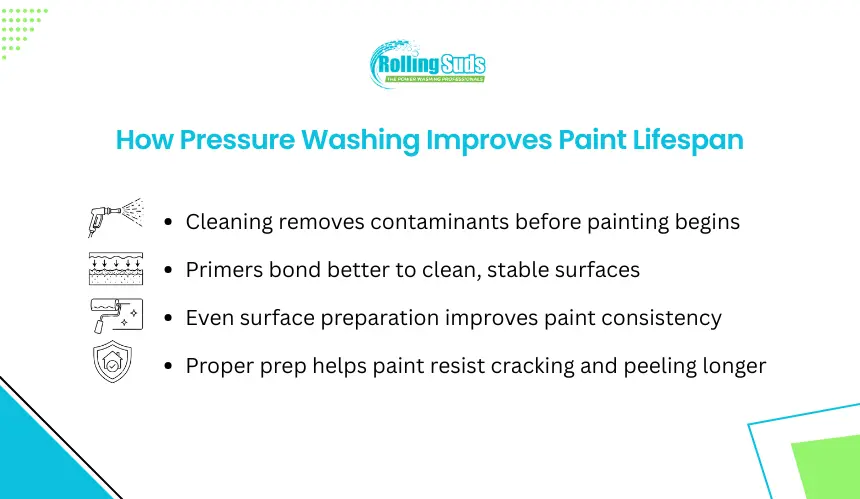
Durability is not something paint “adds” after application. It is something the surface either allows or prevents. Pressure washing improves longevity by ensuring the substrate is clean, receptive, and consistent, which makes the coating behave predictably over time.
How Cleaning Supports Uniform Coating Performance
A clean surface improves how paint wets out and levels during application. When residue is removed, paint spreads and adheres evenly instead of forming thin spots over slick contaminants and thick spots over dusty texture. This matters because uneven film thickness creates weak points. Thin areas weather faster, fade sooner, and break down under UV exposure, while overly thick areas can cure poorly and become brittle.
Cleaning also helps primers do their job. Primers are designed to lock onto the substrate and create a stable bridge for topcoats. When the surface is properly cleaned, primer can penetrate and stabilize micro-pores instead of being blocked by chalking or grime.
What Long-Term Benefits Homeowners Actually Notice
Over the years, properly prepped paint tends to hold color more consistently, resist early cracking, and maintain a smoother appearance without sudden failure patches. It also helps reduce the “surprise repaint” cycle, where one wall begins peeling years earlier than expected and forces partial repainting. For homeowners, that translates into fewer disruptions, fewer repairs, and more confidence that the investment will last.
The emotional payoff is real here. When paint holds up, the home feels cared for and stable. When it fails early, it feels like money and effort vanished overnight.
When Pressure Washing Should Be Done Before Painting
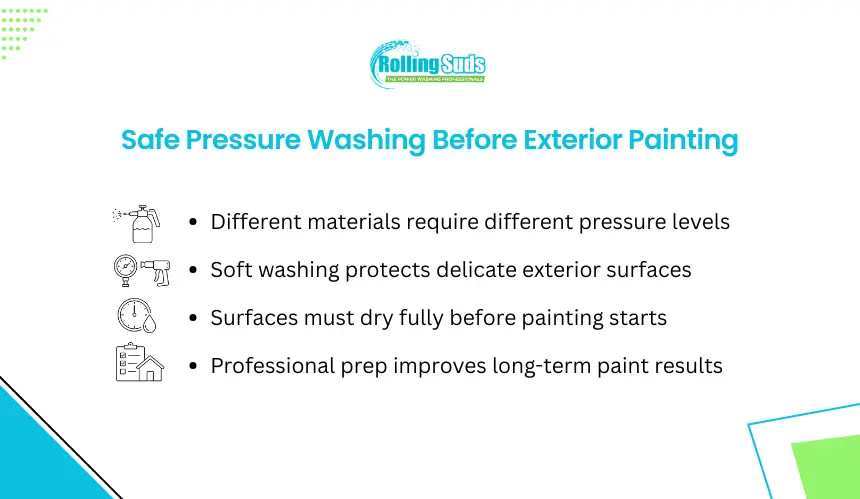
Pressure washing is most effective when it is planned into the project timeline. The goal is to clean thoroughly, allow proper drying, and then proceed with surface repairs and coatings in the correct order.
What Is The Correct Prep Sequence Before Painting
A practical sequence is: wash first, let surfaces dry fully, then perform scraping and repairs, then prime where needed, and finally paint. Washing first matters because it removes loose contaminants that would otherwise interfere with repair materials and primers. It also helps reveal hidden issues, like hairline cracking, failing caulk, or soft wood, that may not be obvious when the surface is dirty.
This order also reduces rework. If repairs are done before washing, the wash can compromise fresh patch material or strip away poorly adhered repairs, forcing repeat labor.
How Long Should A Home Dry After Washing
Drying time depends on the material and conditions. Porous stucco and unsealed wood hold moisture longer than painted siding. Shaded areas also dry more slowly than sun-facing walls. The practical rule is not to rely on how it looks from a distance. Surfaces can appear dry while moisture remains inside pores.
A careful approach is to wait until the surface feels dry to the touch in multiple areas, including shaded zones and lower sections near landscaping. Painting too soon can trap moisture and create issues even when the surface was cleaned correctly.
Is Pressure Washing Safe For All Exterior Surfaces?
Pressure washing is safe when it is matched to the material and executed with control. The risk is not the concept of washing itself. The risk is using the wrong pressure, nozzle, angle, or distance for the surface.
What Pressure Levels And Methods Fit Different Materials
Stucco typically requires moderation because aggressive pressure can etch the surface and create weak spots for paint. Wood siding can splinter if the stream is too concentrated or if the nozzle is held too close.
Bricks can tolerate more pressure, but mortar joints can be damaged if they are aged or already compromised. Vinyl siding can flex and allow water intrusion behind panels if the spray is aimed upward or pushed into seams.
This is why many projects benefit from soft washing techniques in certain areas, especially where biological film needs chemical treatment rather than brute force. The method should be chosen based on the surface and the type of buildup, not a one-pressure-fits-all approach.
What Mistakes Cause Damage And How To Avoid Them
Damage usually comes from three mistakes: getting too close, using a narrow high-pressure tip unnecessarily, or spraying at an angle that drives water behind materials.
The safest approach is controlled distance, steady movement, and respecting edges, vents, and seams. It also helps to protect vulnerable areas like light fixtures, door thresholds, and older caulk lines.
The purpose of prep is to set the home up for success. If washing creates gouges or water intrusion, it turns a prep step into a repair problem.
Why Professional Pressure Washing Delivers Better Paint Results
Homeowners often feel torn here. Doing it personally feels cost-effective, but the fear of damage or poor preparation is real. Professional pressure washing tends to deliver better paint results because it combines correct technique, surface judgment, and process consistency across the entire exterior.
What Professionals Do Differently Than Basic DIY Washing
Professionals typically begin with surface assessment, not spraying. They identify oxidation, mildew zones, failing caulk, and fragile areas that require lower pressure or different treatment.
They also adjust equipment settings based on the material, which prevents surface scarring while still achieving deep cleaning.
They also focus on paint readiness. That means removing what must come off and leaving intact surfaces stable. This preparation mindset is different from casual washing, which often prioritizes visible cleanliness without ensuring coating compatibility.
How Professional Consistency Helps The Entire Paint System
Consistency matters because paint performance depends on uniform conditions. If one side is thoroughly cleaned and another side is lightly cleaned, the paint can behave differently across the home. That can create uneven sheen, different weathering rates, and premature failure in select areas.
Professionals reduce that variability by applying systematic coverage, controlled dwell times for treatments, and even cleaning across elevations, trim details, and textured areas.
For homeowners, the biggest benefit is confidence. The project feels less like a gamble when the foundation is handled with proven process control.
Preparing For A Paint Project Starts With The Surface
Exterior painting changes how a home looks and how it feels to live in, which is why preparation matters just as much as the paint itself. Pressure washing transforms painting from a surface-level improvement into a lasting upgrade by creating a clean, stable foundation that coatings can properly bond to.
When surfaces are prepared correctly, paint applies more evenly, cures as intended, and maintains its appearance far longer. When preparation is rushed or skipped, problems may not appear right away, but they often surface months later as peeling, discoloration, or uneven wear.
In Los Angeles, where dust, pollution, and moisture exposure are ongoing, surface readiness plays a direct role in how long a paint job truly lasts.
Ready To Start With The Right Foundation?
Before picking colors or scheduling painters, make sure your home is properly prepared. Rolling Suds LLC specializes in professional exterior cleaning that sets the stage for long-lasting paint results. A thorough pressure wash now can save you from premature repainting later and help your home look its best from the very first coat.
Sources
Frequently asked questions
How long does pressure washing add to a painting timeline?
Pressure washing itself is usually completed within a few hours, but drying time is the main factor to consider. Most exterior surfaces are ready for painting within one to three days, depending on material type, shade exposure, and weather conditions in <strong>Los Angeles</strong>. Scheduling this step early helps keep the overall project on track.
Can pressure washing remove stains that would otherwise show through paint?
Pressure washing can eliminate deep-set dirt, mineral deposits, and organic staining that may bleed through new paint. Without proper cleaning, these marks can resurface as shadowing or discoloration, particularly on lighter paint colors, even after multiple coats.
Is pressure washing necessary for homes that were painted recently?
Yes. Exterior surfaces begin collecting dust, pollution, and surface oils almost immediately after painting. Even if the previous paint job is relatively new, pressure washing ensures the next coat adheres to a clean surface rather than to early-stage buildup that may not be visible.
Does pressure washing affect paint warranties or manufacturer recommendations?
Most paint manufacturers include surface cleaning as part of their recommended preparation process. Skipping this step can sometimes impact warranty coverage if paint failure occurs, since improper surface preparation is considered a preventable cause.
Can pressure washing reveal hidden issues before painting begins?
Yes. Pressure washing often exposes underlying problems such as hairline cracks, failing caulk, loose paint edges, or minor surface damage that may not be visible when dirt and residue are present. Identifying these issues early allows for proper repairs before painting, helping prevent future failures.
Why is surface preparation necessary before painting or sealing?
Clean, debris-free surfaces allow primers and coatings to bond properly, ensuring long-lasting, smooth, and durable finishes.
Can mobile power washing damage delicate surfaces?
Trained technicians adjust pressure, water temperature, and nozzle type to clean safely without harming wood, stucco, or composite materials.