
June 15, 2026
How Long Does Residential Pressure Washing Take?
Written and reviewed by the Pressure Washing of Los Angeles team
Last reviewed:
| Key Takeaways: Most residential pressure washing jobs take 1 to 4 hours, but small patios, walkways, or short driveways may take less than an hour. Full exterior cleaning can take 3 to 6+ hours because siding, decks, fencing, walkways, and concrete surfaces require different cleaning methods. Heavy algae, mildew, oil stains, oxidation, or embedded dirt can extend the timeline because pretreatment and extra rinsing may be needed. Surface type affects cleaning speed: concrete is usually faster, while wood, stucco, painted surfaces, and siding require slower, controlled washing. Homeowners should allow a flexible service window because setup, water access, weather, drainage, and property layout can all affect completion time. |
|---|
Residential pressure washing can take anywhere from 30 minutes to several hours, depending on the size of the property, the surface material, and the level of dirt or staining involved. Many homeowners underestimate how factors like mold buildup, driveway size, siding condition, and equipment setup affect total cleaning time.
This blog explains how long residential pressure washing typically takes, what impacts the timeline, and what homeowners should realistically expect before scheduling service.
Typical Time Estimates for Residential Pressure Washing
What Factors Affect Residential Pressure Washing Time?
Pressure washing timelines vary because every property presents different surface conditions, layouts, and cleaning requirements. Two homes with similar square footage can require completely different cleaning durations based on buildup severity, material type, drainage conditions, and accessibility.
1. Property Size and Total Cleaning Area
Larger properties require more cleaning passes, longer hose coverage, and additional rinse time. A narrow driveway and compact patio can often be cleaned quickly, while multi-surface projects involving siding, retaining walls, backyard concrete, pool decks, and fencing increase total labor time significantly.
In parts of the San Gabriel Valley, hillside properties in areas like Altadena and South Pasadena often include tiered walkways, stepped hardscapes, and long retaining walls. These layouts slow cleaning progress because technicians must reposition equipment frequently and manage uneven drainage flow during washing.
2. Surface Material and Cleaning Method
Different materials require different pressure levels, nozzle selections, and cleaning techniques. Concrete typically allows faster surface cleaning because it tolerates higher pressure and wider spray patterns. Wood decking, painted surfaces, stucco, and vinyl siding require slower, controlled washing to prevent surface damage.
Older stucco homes commonly found across the San Gabriel Valley often collect fine dust residue from nearby freeway traffic and dry seasonal winds. Removing this buildup safely usually requires soft washing methods instead of aggressive high-pressure cleaning, which extends the overall service time for residential pressure washing in San Gabriel Valley.
3. Mold, Algae, and Embedded Surface Buildup
Heavy organic buildup increases cleaning time because contaminants must be treated before pressure washing begins. Algae, mildew, oxidation, tree sap, and oil staining often require detergent application and dwell time before rinsing can start.
Properties near mature tree-lined neighborhoods in Arcadia and San Marino frequently develop shaded moisture zones on north-facing driveways and backyard concrete. These damp areas tend to accumulate darker mildew staining that requires slower cleaning passes and repeat treatment cycles.
4. Access, Setup, and Water Management
Preparation directly affects project duration. Moving outdoor furniture, accessing backyard areas, protecting electrical fixtures, and connecting water sources all add operational time before surface cleaning begins.
Homes with narrow side-yard access, decorative landscaping, or limited drainage pathways often require slower workflow management to prevent overspray, runoff accumulation, or surface flooding during the pressure washing process.
Estimated Time by Common Residential Pressure Washing Projects
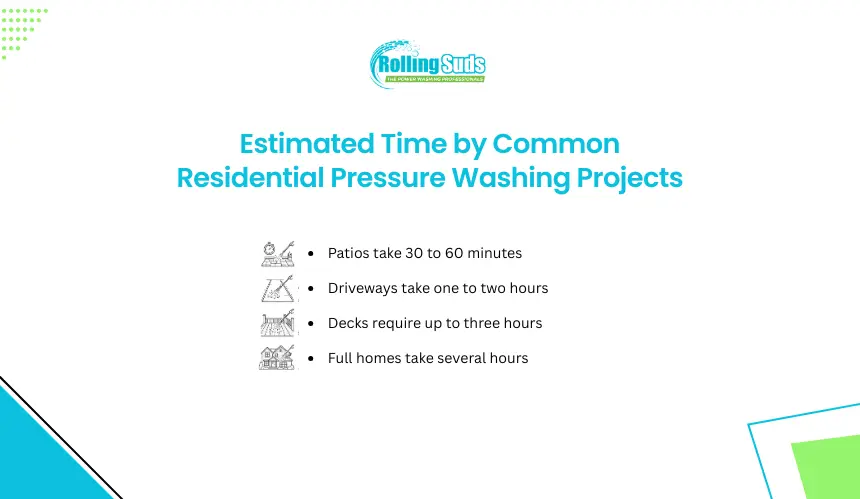
Pressure washing timelines become easier to estimate when the project is broken down by surface type and cleaning scope. Smaller residential surfaces can often be completed quickly, while full-property exterior cleaning requires additional labor, equipment repositioning, and surface-specific treatment.
| Cleaning Area | Typical Time Estimate |
|---|---|
| Small patio or walkway | 30 minutes to 1 hour |
| Standard concrete driveway | 1 to 2 hours |
| Deck or wood fence | 1 to 3 hours |
| Exterior house siding | 2 to 4 hours |
| Full residential exterior cleaning | 3 to 6+ hours |
A standard driveway cleaning generally moves faster because concrete allows consistent surface cleaning with fewer pressure adjustments. Oil stains, tire marks, and embedded dirt may extend the process if chemical pretreatment is required before washing begins.
Decks and fences usually take longer than concrete surfaces because wood requires lower pressure and more controlled spray angles. Older wood surfaces may also need slower cleaning passes to avoid splintering, striping, or surface damage.
House washing timelines depend heavily on siding material and contamination levels. Vinyl siding with light dust buildup can often be cleaned efficiently using soft washing methods, while stucco or painted exterior walls with oxidation, algae, or mildew buildup require additional rinse cycles and detergent dwell time.
Full residential exterior cleaning projects take the longest because they combine multiple surfaces into a single service visit. A property that includes siding, walkways, pool decking, fencing, garage floors, and backyard concrete requires separate cleaning approaches for each material, which increases total operational time.
Sources
Frequently asked questions
Can residential pressure washing be completed in one visit?
Most residential pressure washing projects can be completed in one visit when the scope includes standard siding, driveways, patios, or walkways. Larger properties may need longer scheduling windows if multiple surfaces require separate cleaning methods, pretreatment, or careful runoff control around landscaping, exterior outlets, or delicate hardscape materials.
Does soft washing take longer than pressure washing?
Soft washing can take longer during the treatment phase because cleaning solutions need dwell time to loosen algae, mildew, and organic staining. However, it can reduce repeated high-pressure passes on siding, stucco, and painted surfaces. The total time depends on buildup severity, surface sensitivity, and rinse requirements.
How much time should homeowners set aside for a pressure washing appointment?
Homeowners should usually leave a flexible window of several hours, even if the cleaning area seems small. Setup, water connection, surface inspection, moving around the property, pretreatment, and final rinsing all affect the appointment length. Clear access before arrival can prevent avoidable delays.
Will a heavily stained driveway take longer to pressure wash?
A heavily stained driveway usually takes longer because oil spots, tire marks, rust stains, and embedded grime often need targeted pretreatment before surface cleaning. Concrete may tolerate stronger pressure, but stain removal still depends on chemical reaction time, water flow, surface porosity, and how deep the contamination has penetrated.
Can weather affect how long pressure washing takes?
Weather can affect both cleaning speed and detergent performance. Direct sun may dry cleaning solutions too quickly, while wind can increase overspray control time. Cool, damp conditions may slow drying after rinsing. Professional cleaners adjust workflow based on temperature, sunlight, wind direction, and drainage conditions.