June 8, 2026
Residential Pressure Washing Checklist: What to Expect
Written and reviewed by the Pressure Washing of Los Angeles team
Last reviewed:
| Key Takeaways: Prepare the property before pressure washing by moving furniture, closing openings, protecting plants, and confirming water access. Match the cleaning method to the surface because concrete, siding, stucco, painted wood, and older materials react differently to pressure. A professional inspection should check surface condition, drainage, runoff paths, organic growth, stains, and high-traffic buildup before cleaning begins. During service, proper pre-rinsing, detergent dwell time, controlled pressure, soft washing, and final rinsing help prevent streaks, residue, and surface damage. After pressure washing, homeowners should check for even cleaning, missed spots, water entry, fixture damage, and wait for surfaces to dry before judging final results. |
|---|
Unclear expectations often lead to missed areas, surface damage, or poor results during residential pressure washing. Homeowners frequently overlook preparation steps, underestimate how different materials react to pressure, or assume all stains will be removed in one pass. In dense urban environments like Los Angeles, factors such as traffic residue, coastal moisture, and air pollution can further complicate exterior cleaning outcomes.
A structured checklist eliminates these risks by defining what should happen before, during, and after the service. This guide breaks down the exact process, helping homeowners prepare their property, understand cleaning methods, and evaluate results with clarity.
Why a Residential Pressure Washing Checklist Matters Before Service Begins
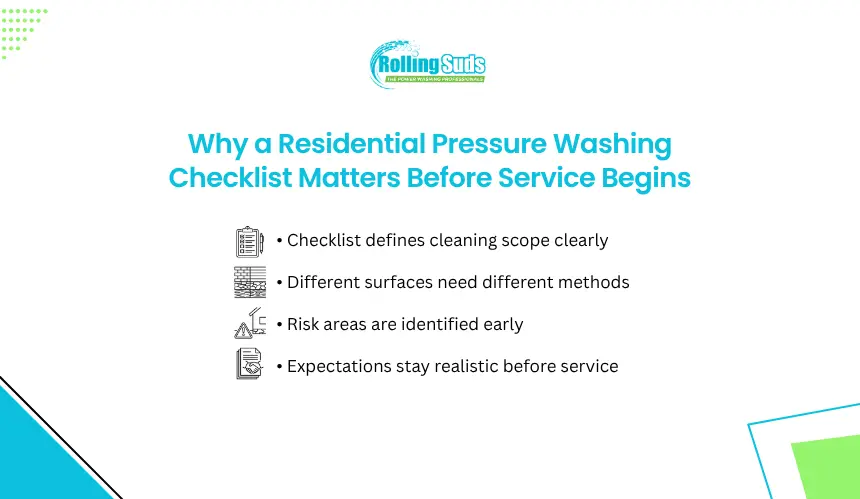
A checklist defines scope, controls risk, and aligns expectations before residential pressure washing is applied. Without it, critical variables like surface type, pressure levels, and chemical use are often misjudged, leading to uneven results or preventable damage.
It Helps Identify Surfaces That Need Different Cleaning Methods
Exterior materials respond differently to pressure and cleaning agents. Concrete and stone tolerate higher pressure, while vinyl siding, painted wood, and stucco require controlled flow or soft washing. Misclassification leads to etching, paint stripping, or water intrusion. A checklist ensures each surface is mapped to the correct method before work begins.
It Reduces Property Risk Before Water and Pressure Are Used
High-pressure water can force moisture into gaps, dislodge loose fixtures, and stress aging materials. Electrical outlets, window seals, vents, and trim edges are common failure points. Identifying these areas in advance allows technicians to adjust pressure, angle, and distance, reducing the likelihood of structural or cosmetic damage.
It Sets Clear Expectations for Results
Pressure washing removes surface-level contaminants such as dirt, algae, mildew, and traffic film. However, oxidation on siding, deep rust stains, or long-term discoloration often require separate treatment or restoration.
In regions like Los Angeles, airborne pollutants and coastal residue can bond to surfaces over time, making some stains partially permanent. A checklist defines what outcomes are realistic before the service starts.
What Homeowners Should Do Before Pressure Washing Day
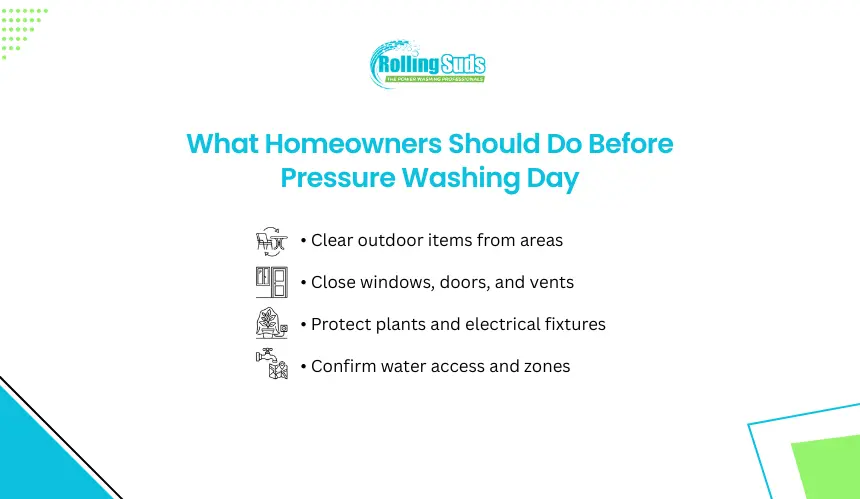
Preparation directly affects cleaning efficiency, safety, and final results. When access is clear and vulnerable areas are secured, technicians can apply the correct pressure and coverage without interruption.
1. Clear Outdoor Items From Cleaning Areas
Any object left in place creates blocked zones and uneven cleaning patterns. Furniture, planters, grills, vehicles, mats, and decor trap dirt underneath and prevent full surface contact. Removing these items exposes hidden buildup and allows consistent washing across driveways, patios, siding lines, and walkways.
2. Close Windows, Doors, Vents, and Exterior Openings
Pressurized water can enter through small gaps, especially around aging seals. Basement windows, garage edges, crawlspace vents, and door frames are common entry points. Sealing these areas prevents interior moisture issues, drywall damage, and insulation exposure during high-volume rinsing.
3. Protect Plants, Electrical Fixtures, and Delicate Items
Cleaning solutions and high-flow water can affect nearby landscaping and sensitive fixtures. Plants should be pre-rinsed or lightly covered to dilute chemical exposure. Outdoor outlets, lighting units, cameras, and doorbells need inspection to avoid water contact.
In properties across Los Angeles, where compact yards and close property spacing are common, this step becomes critical to prevent overspray impact on adjacent areas.
4. Confirm Water Access and Service Areas
Technicians require stable water supply, open pathways, and defined cleaning zones. Homeowners should verify outdoor spigots, unlock gates, secure pets, and confirm which surfaces are included. Clear communication at this stage prevents missed sections and ensures the service aligns with the intended scope.
What the Pressure Washing Team Should Inspect on Arrival
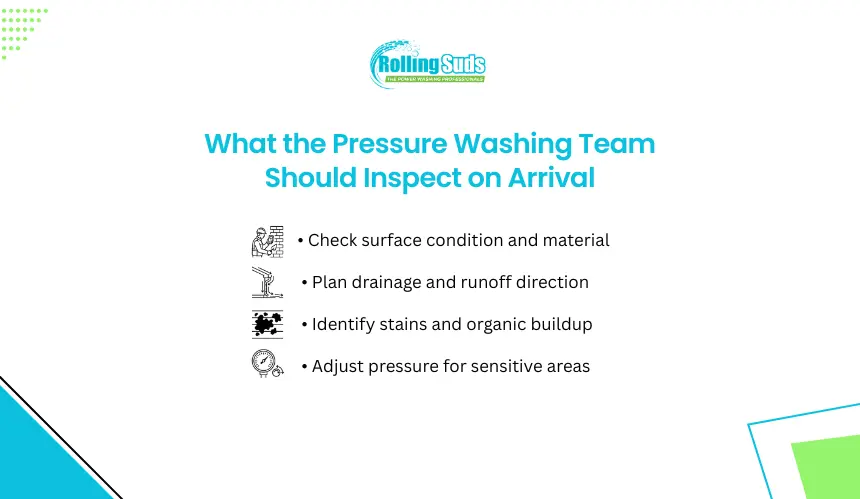
A professional inspection defines how the cleaning will be executed, not just where. It determines pressure levels, solution use, and risk zones before equipment is activated.
Surface Condition and Material Type
Technicians evaluate structural integrity and material sensitivity before applying pressure. Cracked concrete, oxidized vinyl, peeling paint, and aging wood require controlled handling to avoid surface damage.
In Los Angeles, coastal moisture and periodic humidity shifts can promote surface-level buildup and hidden moisture retention behind siding. Under these conditions, house washing and siding cleaning in Los Angeles requires careful pressure control and method selection to prevent forcing water into seams or aggravating underlying material weaknesses.
Drainage, Runoff, and Nearby Landscaping
Water flow direction affects both cleaning efficiency and property safety. Poor drainage can push contaminated runoff toward foundations, soil beds, or entry points. Sloped driveways and compact outdoor layouts require careful planning, especially in urban properties where runoff can easily spread across adjacent surfaces or re-contaminate cleaned areas.
Stains, Organic Growth, and High-Traffic Buildup
What Happens During the Residential Pressure Washing Process
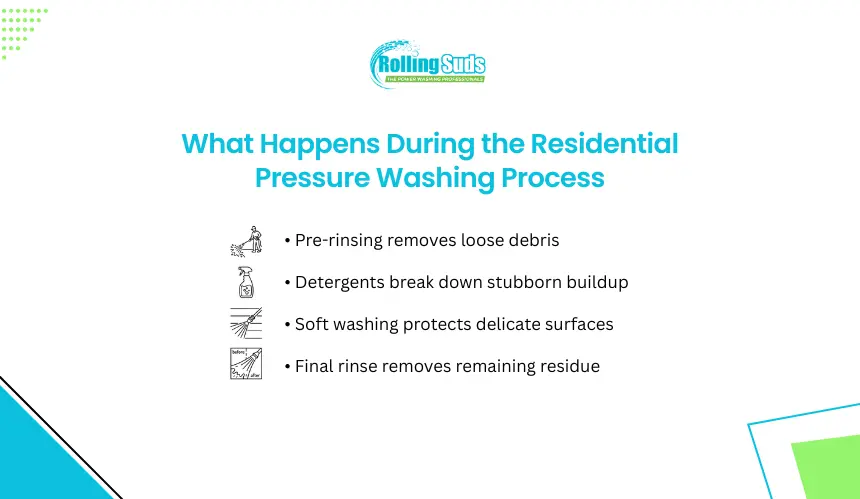
Once inspection is complete, the cleaning process follows a controlled sequence to ensure effective removal without damaging surfaces. Each stage is designed to loosen contaminants, apply the right treatment, and restore surface appearance with consistent coverage.
1. Pre-Rinsing and Surface Preparation
Initial rinsing removes loose debris such as dust, dirt, and pollen while cooling down surfaces that may have heated under sun exposure. This step prevents rapid evaporation of cleaning solutions and ensures better surface absorption. It also reduces the risk of streaking by clearing top-layer contaminants before treatment begins.
2. Detergent or Cleaning Solution Application
Cleaning agents are applied based on the type of buildup present. Organic growth like algae and mildew requires chemical treatment with dwell time to break down root structures, while grease and traffic residue need targeted formulations. In areas like Los Angeles, where air pollution and vehicle emissions contribute to surface grime, this step plays a critical role in achieving deeper cleaning results beyond surface-level rinsing.
3. Controlled Pressure or Soft Washing
Pressure levels are adjusted based on material sensitivity. Hard surfaces such as concrete can handle higher pressure, while siding, painted areas, and wood require lower pressure or soft washing techniques. Incorrect pressure can lead to surface etching, water intrusion, or paint removal, making this stage highly dependent on technician control and experience.
4. Final Rinse and Detail Review
The final rinse removes loosened contaminants and residual cleaning agents. Technicians check for missed spots, uneven cleaning, or areas requiring additional treatment. This stage ensures that surfaces are left clean without streaks, residue, or chemical traces that could affect long-term surface condition.
What Homeowners Should Check After Pressure Washing Is Complete
Post-cleaning evaluation ensures the service delivered measurable results without introducing new issues. This step helps identify whether the cleaning was thorough, consistent, and aligned with expected outcomes.
1. Look for Even Cleaning Across Main Surfaces
Uniformity indicates proper pressure control and coverage. Surfaces such as siding panels, driveway sections, and patio areas should show consistent color without patchiness.
In Los Angeles, driveways often collect tire marks and traffic residue due to frequent vehicle use, making consistency a key indicator after driveways and sidewalks in Los Angeles, where uneven cleaning becomes immediately visible.
2. Check for Residue, Streaks, or Missed Spots
Residual detergent, streak lines, or shadowing often result from insufficient rinsing or rushed application. These are commonly visible along edges, corners, and areas previously blocked by objects. Identifying these early allows for immediate correction before residues settle or dry into visible marks.
3. Review Delicate Areas for Damage or Water Entry
Sensitive zones such as window seals, door frames, vents, electrical fixtures, and painted trims should be inspected closely. Signs of water intrusion, peeling, or loosened components indicate excessive pressure or incorrect spray angles, which can lead to long-term structural or cosmetic issues.
4. Let Surfaces Dry Before Final Judgment
Wet surfaces can mask true results by temporarily darkening materials like concrete, wood, and siding. Final evaluation should be done after complete drying, as this reveals remaining stains, uneven cleaning, or areas that may require additional treatment or maintenance.
Sources
Frequently asked questions
How long does residential pressure washing usually take?
Most residential pressure washing services take 1 to 4 hours, depending on property size, surface type, buildup level, and access. A small driveway or patio may finish quickly, while siding, walkways, decks, and multiple exterior zones require more setup, detergent dwell time, controlled rinsing, and post-cleaning review.
Can pressure washing damage older siding or painted surfaces?
Older siding, peeling paint, oxidized vinyl, and weathered wood can be damaged if high pressure is used incorrectly. These surfaces usually need soft washing, wider spray angles, and lower pressure. A proper inspection helps determine whether the surface can be cleaned safely or needs repair before washing.
What stains may not come off with regular pressure washing?
Rust stains, oil saturation, paint oxidation, mineral deposits, and deep concrete discoloration may not fully disappear with standard pressure washing. These marks often bond below the surface layer. Targeted stain treatment, degreasers, rust removers, or surface restoration may be needed for stronger correction.
Should outdoor furniture and plants be moved before the service?
Furniture, planters, grills, mats, and decor should be moved before cleaning so blocked areas do not stay dirty. Sensitive plants should be rinsed or lightly covered when detergents are used. This protects landscaping and allows technicians to clean patios, walkways, and siding without leaving uneven borders.
Is soft washing better than pressure washing for house exteriors?
Soft washing is usually safer for siding, stucco, painted trim, and delicate exterior materials because it relies on cleaning solutions and low-pressure rinsing. Pressure washing is better suited for durable surfaces like concrete, stone, and some masonry. The right method depends on material condition and contaminant type.
How soon can homeowners use outdoor areas after pressure washing?
Most walkways, patios, and driveways can be used once standing water has drained and surfaces are no longer slippery. Concrete may dry within a few hours, while wood decks and shaded areas can take longer. Waiting until full drying also makes it easier to inspect results accurately.
Does Los Angeles weather affect how often pressure washing is needed?
Los Angeles properties often collect traffic film, dust, pollen, and coastal residue faster than homes in low-exposure areas. Shaded walls may also develop algae or mildew after damp periods. Many homes benefit from exterior cleaning once a year, while high-traffic surfaces may need more frequent attention.