June 11, 2026
What Chemicals Are Used in Pressure Washing?
Written and reviewed by the Pressure Washing of Los Angeles team
Last reviewed:
| Key Takeaways: Pressure washing chemicals must match the stain type, such as mold, algae, grease, rust, oxidation, or mineral buildup. Sodium hypochlorite is commonly used for organic growth, while surfactants help the solution spread, cling, and penetrate buildup. Degreasers work best for oil, grease, traffic residue, and petroleum stains on porous concrete or commercial surfaces. Acid-based cleaners are used for rust, mineral deposits, hard water stains, and oxidation, but they require careful dilution. Proper dwell time, surface-safe strength, plant protection, and runoff control help prevent damage during chemical pressure washing. |
|---|
Pressure washing is not only about water pressure; the cleaning result depends heavily on the chemical used for the surface and stain type. Mold, algae, grease, rust, oxidation, and mineral buildup each require different cleaning agents to break them down effectively.
Using the wrong chemical can leave stains behind, damage siding or concrete, harm plants, or create unsafe runoff. This blog explains what chemicals are commonly used in pressure washing and why each one is selected.
Common Chemicals Used in Pressure Washing
Different pressure washing chemicals are designed to target specific types of buildup. Professional cleaning results typically come from matching the chemical formulation to the contaminant, surface material, and cleaning method rather than relying on water pressure alone.
1. Sodium Hypochlorite for Mold, Mildew, and Algae
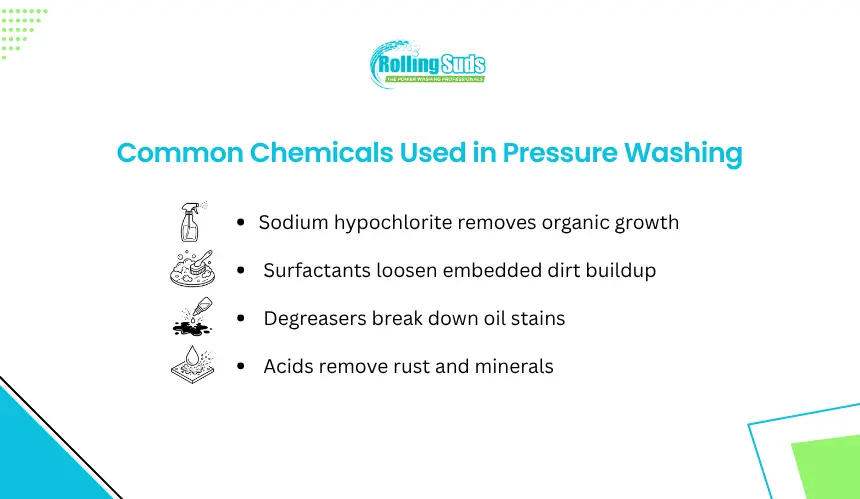
Sodium hypochlorite is one of the most widely used pressure washing chemicals for organic contamination. It is commonly applied during house washing, roof cleaning, and concrete treatment where mold, algae, mildew, moss, or bacteria are present.
The chemical works through oxidation. It breaks down organic growth at the cellular level, allowing stains and biological buildup to release from the surface before rinsing. This makes it highly effective for green algae on siding, black roof streaks, and mildew staining on fences or patios.
Pressure washing contractors often dilute sodium hypochlorite based on the cleaning target. Stronger mixes may be used for concrete or roof surfaces, while lower concentrations are safer for painted siding or softer materials.
2. Surfactants and Detergents for Loosening Dirt
Surfactants are added to pressure washing solutions to improve how water and chemicals interact with a surface. They reduce surface tension, allowing the cleaning mixture to spread evenly and penetrate embedded dirt, pollen, dust, and organic residue.
Many house washing detergents combine surfactants with cleaning agents so contaminants loosen before rinsing. This improves cleaning consistency on vinyl siding, stucco, brick, soffits, and gutters.
Some surfactants also increase dwell time by helping the solution cling to vertical surfaces instead of running off immediately. That extended contact allows the chemical reaction to work more effectively.
3. Degreasers for Oil, Grease, and Heavy Stains
Degreasers are formulated for petroleum-based contamination that standard detergents cannot fully remove. They are commonly used on garage floors, commercial concrete, loading areas, dumpsters, drive-thrus, and automotive surfaces exposed to oil or hydraulic fluids.
Most pressure washing degreasers use alkaline compounds that break apart grease molecules and lift them from porous surfaces. Hot water pressure washing systems are often paired with degreasers because heat accelerates the breakdown of heavy residue.
The required strength depends on the stain depth and surface porosity. Older oil stains embedded in concrete generally require stronger chemical action and longer dwell times than fresh surface spills.
4. Acid-Based Cleaners for Rust, Mineral Stains, and Oxidation
Acid-based pressure washing chemicals are used for inorganic staining that alkaline cleaners cannot remove. These cleaners target rust discoloration, fertilizer stains, hard water deposits, efflorescence, and oxidation on metal or painted surfaces.
Oxalic acid and citric acid are commonly used for rust treatment and wood brightening applications. Stronger acids, including muriatic acid, may be used on masonry or concrete in controlled conditions where mineral buildup is severe.
Because acids chemically react with surface minerals, improper use can etch concrete, damage paint, or discolor surrounding materials. Surface compatibility and dilution accuracy are critical when applying acid-based cleaners.
Which Chemicals Are Used for Pressure Washing on Different Surfaces?
Pressure washing chemicals are selected based on how a surface reacts to moisture, alkalinity, oxidation, and stain absorption. The same cleaning solution used on concrete can permanently damage wood, painted siding, or roofing materials if the chemical strength and dwell time are not adjusted correctly.
Concrete and Driveway Cleaning Chemicals
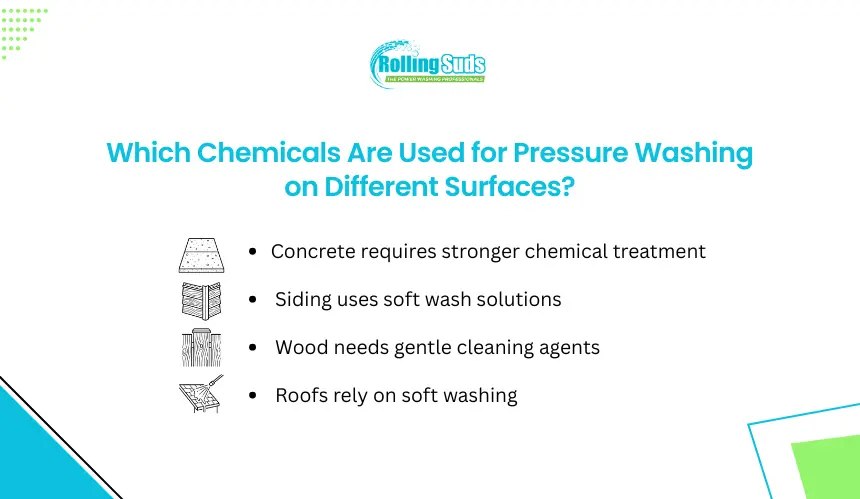
Concrete cleaning usually requires stronger chemical treatment because the surface is porous and absorbs contaminants deeply. Oil stains, tire marks, algae, rust discoloration, and organic buildup often penetrate below the visible surface layer.
Degreasers are commonly used for automotive residue and petroleum contamination, while sodium hypochlorite is applied to remove algae, mildew, and dark organic staining. Rust removers may also be necessary where irrigation systems or fertilizer runoff leave orange discoloration on driveways and sidewalks.
In areas like Hollywood, CA, concrete near high-traffic commercial corridors and hillside properties often collects layered pollution residue, gum stains, and organic buildup caused by irrigation overspray combined with dust from dry seasonal conditions. Those surfaces usually require multi-step chemical treatment rather than surface rinsing alone.
House Siding and Exterior Wall Cleaners
Exterior siding cleaners are formulated to remove atmospheric dirt, mold, algae, spider webs, and oxidation without damaging painted finishes or siding materials. Vinyl siding, stucco, fiber cement, brick, and painted wood all respond differently to chemical exposure.
Most exterior house washing solutions combine diluted sodium hypochlorite with surfactants to break down organic buildup while allowing even surface coverage. Lower-pressure application methods are typically used so the chemical performs most of the cleaning work instead of the aggressive water force.
Homes in Hollywood, CA, frequently develop visible grime accumulation from traffic exhaust, dry airborne particles, and shaded moisture retention around canyon-facing properties. Soft wash chemical applications are often preferred there because excessive pressure can damage aging stucco exteriors and painted architectural finishes common in older neighborhoods.
Wood Deck and Fence Cleaning Solutions
Wood cleaning chemicals are designed to remove organic staining and surface discoloration while limiting fiber damage. Strong bleach concentrations or excessive alkalinity can dry out wood, raise the grain, or strip protective finishes unevenly.
Oxygenated cleaners and mild wood detergents are commonly used to lift mildew, algae, dirt, and weather staining from decks, fences, pergolas, and exterior wood structures. Wood brighteners containing oxalic acid may also be applied afterward to restore a more uniform appearance and neutralize cleaning residues.
The chemical balance is especially important for cedar, redwood, and pressure-treated lumber because softer wood fibers react more aggressively to high-pH cleaners.
Roof and Soft Washing Chemicals
Roof cleaning typically relies on soft washing chemicals rather than high-pressure washing. Asphalt shingles, tile roofing, and coated roof systems can lose granules or protective layers when exposed to excessive pressure.
Sodium hypochlorite combined with surfactants is commonly used to treat black streaks, algae colonies, moss growth, and lichen buildup. The surfactant helps the solution cling to sloped roofing surfaces long enough for the organic contamination to break down before rinsing.
Roof cleaning in Hollywood, CA, often involves additional attention to shaded sections beneath palm trees and hillside moisture zones where algae and organic staining develop unevenly across sun-exposed roofing systems.
How Pressure Washing Chemicals Work During Cleaning
Pressure washing chemicals are designed to alter or break down contaminants before rinsing occurs. Instead of relying entirely on water force, the cleaning agent changes the physical or chemical structure of the buildup so it separates from the surface more efficiently.
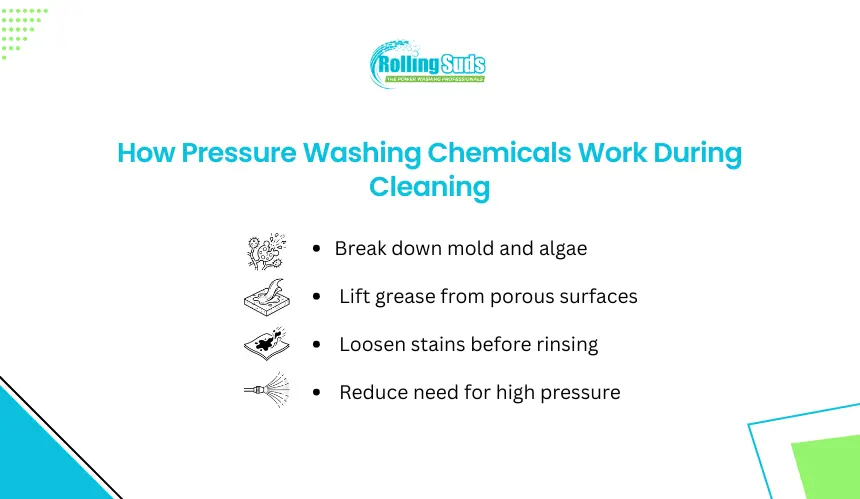
Breaking Down Organic Growth
Organic contamination, such as algae, mildew, moss, mold, and bacteria, attaches itself to exterior surfaces through microscopic growth patterns. Water pressure alone often removes only the visible layer while leaving spores and root structures behind.
Oxidizing agents like sodium hypochlorite attack the organic material at the cellular level. This chemical reaction weakens the contamination and destroys much of the biological residue responsible for regrowth and discoloration.
That process is especially important on shaded siding, roofing, and concrete, where moisture retention allows algae colonies to spread beneath the visible surface staining.
Lifting Grease and Embedded Grime
Oil, grease, and traffic residue bond differently than organic buildup because they repel water and penetrate porous materials. Degreasers use alkaline chemistry to separate petroleum-based compounds from the surface so they can emulsify and rinse away.
On concrete and commercial surfaces, grease molecules often settle below the top layer. Chemical dwell time allows the degreaser to penetrate deeper into the pores before agitation or rinsing occurs.
Hot water systems are frequently combined with degreasers because heat lowers oil viscosity, allowing the cleaning solution to break apart residue faster and more evenly.
Removing Stains Without Excessive Pressure
One of the primary functions of pressure washing chemicals is to reduce the amount of mechanical force required during cleaning. High pressure can etch concrete, strip paint, scar wood fibers, crack mortar joints, and force water behind siding systems.
When the correct chemical is matched to the contaminant, much of the stain loosens before rinsing begins. This allows contractors to use lower PSI levels while still achieving full surface cleaning.
Soft washing systems rely heavily on this principle. The chemical reaction performs most of the cleaning work, while low-pressure rinsing removes the loosened contamination with less surface stress.
What Equipment And Settings Do Beginners Need?
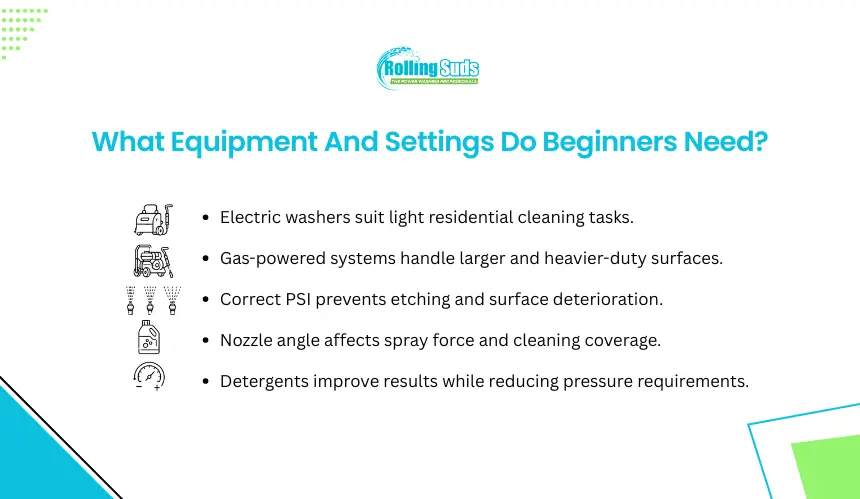
Selecting the right equipment ensures controlled cleaning without unnecessary risk. Overpowered machines or incorrect settings often lead to surface damage rather than improved results.
Types Of Pressure Washers (Electric Vs. Gas)
Electric pressure washers are suitable for light to moderate residential tasks. They offer consistent pressure with lower output, making them easier to control. Gas-powered units deliver higher PSI and GPM, making them effective for large areas or heavy-duty cleaning but requiring more operational experience. The choice depends on scale, frequency, and surface type rather than raw power preference.
Choosing The Right PSI And Nozzle Angle
Pressure levels must align with material tolerance. For example, wood surfaces typically require lower PSI to avoid fiber damage, while concrete can handle higher pressure for deep cleaning. Nozzle selection determines spray pattern:
- Narrow angles concentrate force for tough stains
- Wider angles distribute pressure for general cleaning
Incorrect nozzle selection can either reduce efficiency or concentrate excessive force on a small area, leading to etching.
Cleaning Solutions And Detergents (When To Use Them)
Water pressure alone cannot break down all contaminants. Detergents are essential for organic growth, grease, and oil-based stains. Chemical action loosens the bond between contaminants and surfaces, allowing lower pressure to achieve better results. This reduces mechanical stress on materials while improving cleaning efficiency.
Pro Tip: Using the correct detergent lets the cleaning solution do more of the work, so less pressure is needed and the risk of surface damage drops.
Step-By-Step Pressure Washing Process For Beginners
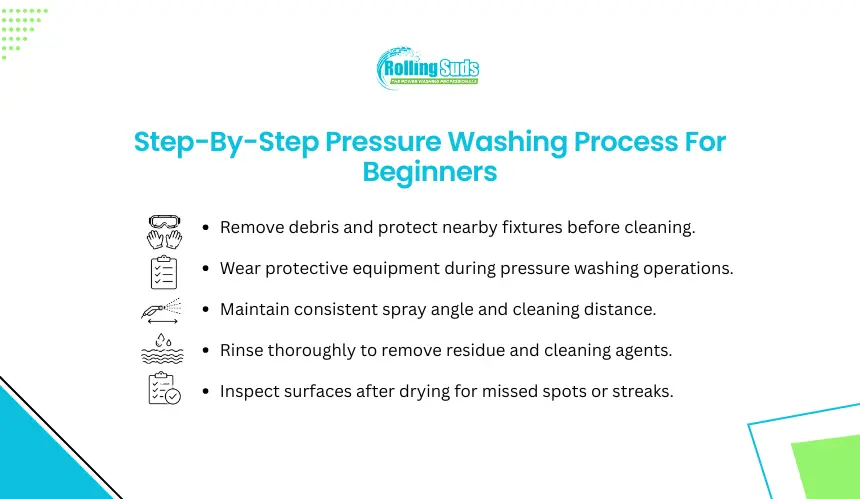
A structured process ensures consistent results and minimizes risk. Skipping preparation or using improper technique leads to uneven cleaning and potential damage.
Surface Preparation And Safety Setup
Preparation determines both safety and effectiveness. Remove loose debris, cover electrical fixtures, and secure nearby objects. Personal protective equipment, such as gloves and eye protection, prevents injury from debris and high-pressure spray. Proper setup reduces operational interruptions and protects surrounding areas from unintended impact.
Proper Washing Technique (Angle, Distance, Movement)
Spray angle and distance directly affect cleaning quality. Holding the nozzle too close increases surface stress, while excessive distance reduces effectiveness. A consistent sweeping motion ensures even coverage and prevents streaking. Working from top to bottom allows gravity to assist in removing contaminants, improving efficiency and reducing rework.
Rinsing, Drying, And Post-Clean Inspection
Rinsing removes residual debris and cleaning agents. Incomplete rinsing leaves streaks or chemical residue that can damage surfaces over time. After drying, inspect for missed areas or uneven cleaning patterns. Addressing these immediately ensures uniform results and prevents the need for repeated full cleaning cycles.
Pro Tip: Professional cleaning standards recommend testing a small, inconspicuous area before full application. This reduces the risk of unexpected surface reactions and allows adjustment of pressure or technique in real conditions.
What Are The Most Important Pressure Washing Dos And Don’ts For Homeowners?
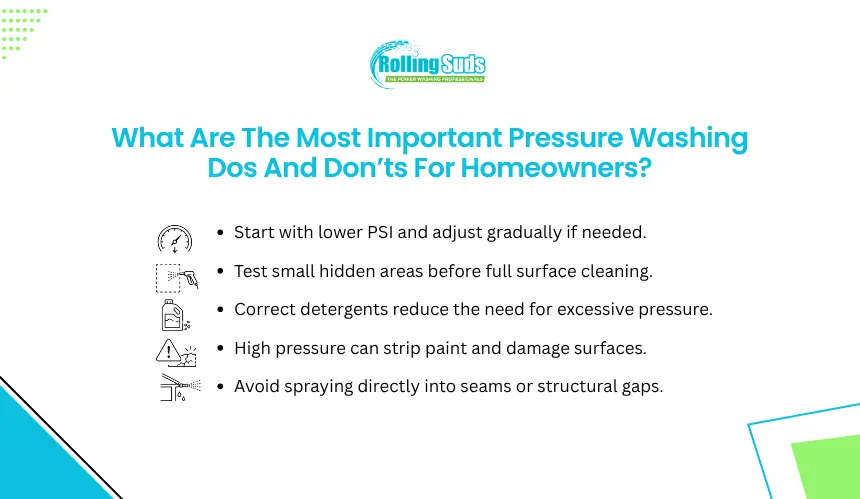
Understanding the fundamental rules sets the foundation for safe and effective cleaning. These practices determine whether the process protects or damages surfaces.
Core Dos That Ensure Safe And Effective Cleaning
Successful pressure washing depends on controlled application rather than maximum force. Always start with a lower PSI and increase gradually based on surface response. Testing a small, inconspicuous area allows adjustment before full cleaning. Using the correct detergent improves contaminant breakdown, reducing the need for excessive pressure. Maintaining consistent spray distance and movement ensures uniform results without streaking.
Critical Don’ts That Lead To Damage Or Poor Results
Applying high pressure without evaluating surface tolerance often leads to irreversible damage such as etching or paint removal. Using the wrong nozzle concentrates force unevenly, creating streaks or gouges. Skipping preparation steps, including debris removal and surface inspection, reduces cleaning effectiveness and increases risk. Direct spraying at joints, seams, or gaps can force water into structures, leading to hidden moisture issues.
How Do Surface Types Change Pressure Washing Approach?
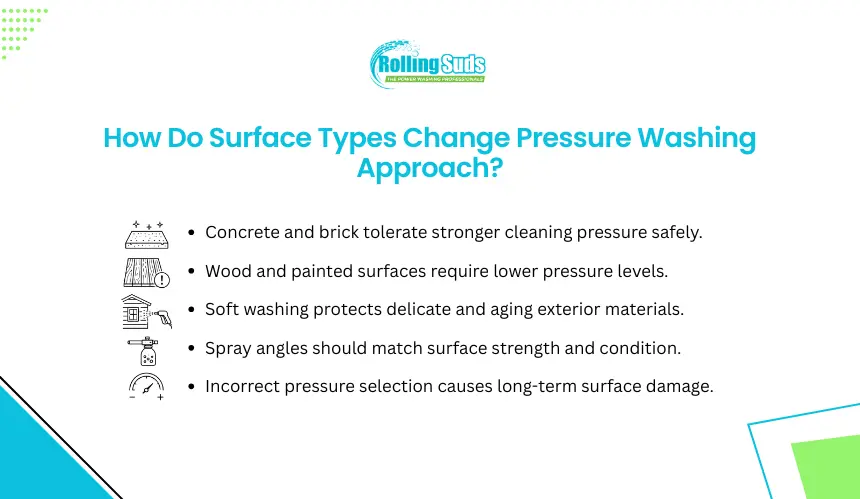
Different materials respond differently to pressure, making surface-specific adjustments essential for both effectiveness and safety.
Hard Surfaces Vs. Soft Surfaces (Pressure Tolerance Differences)
Concrete, brick, and stone can tolerate higher PSI due to their density and structural strength. These surfaces require a stronger force to remove embedded dirt and stains. In contrast, wood, vinyl siding, and painted surfaces are more vulnerable. High pressure can strip coatings, damage fibers, or create permanent marks. Matching pressure to material strength prevents unnecessary wear.
When Soft Washing Is The Better Alternative
Soft washing uses low pressure combined with cleaning solutions to remove contaminants without mechanical stress. It is the preferred method for roofs, painted surfaces, and aging materials where high pressure can cause structural or cosmetic damage. Chemical action breaks down organic growth, allowing safe removal without aggressive force.
Matching Pressure Levels And Techniques To Each Material
Each surface requires a calibrated approach based on its composition and condition. For example, weathered wood requires reduced pressure and wider spray angles to prevent splintering. Newer, sealed concrete can handle higher pressure with controlled nozzle selection. Incorrect matching leads to either ineffective cleaning or material degradation.
Pro Tip: Incorrect pressure selection is a common cause of surface damage in residential cleaning. Matching pressure to the surface helps avoid costly repairs.
Why Choosing the Right Pressure Washing Solution Matters
Exterior surfaces accumulate different types of contaminants, and each requires a specific chemical reaction to be removed effectively. Dirt, organic growth, oxidation, and grease do not respond to the same cleaning approach, which makes solution selection a determining factor in performance rather than an optional step.
Vinyl siding, painted surfaces, brick, and wood each have different absorption rates, surface coatings, and structural tolerances. A solution that works on concrete may cause oxidation on vinyl or strip protective coatings from painted siding. This mismatch leads to visible damage rather than cleaning improvement.
Organic stains such as mold and algae require oxidation-based agents to break down their structure at a molecular level. In contrast, grease and pollution residues need alkaline or solvent-based cleaners to dissolve bonded particles. Applying the wrong type results in surface rinsing without contaminant removal, which creates the illusion of cleaning without long-term effectiveness.
Plant exposure, runoff behavior, and environmental conditions also influence how a solution performs once applied. An improperly balanced mix can harm surrounding vegetation or leave chemical residues on surfaces, affecting both appearance and durability. The correct solution ensures controlled cleaning action, material safety, and consistent results across the entire exterior.
What Defines an Effective Pressure Washing Solution for Residential Surfaces
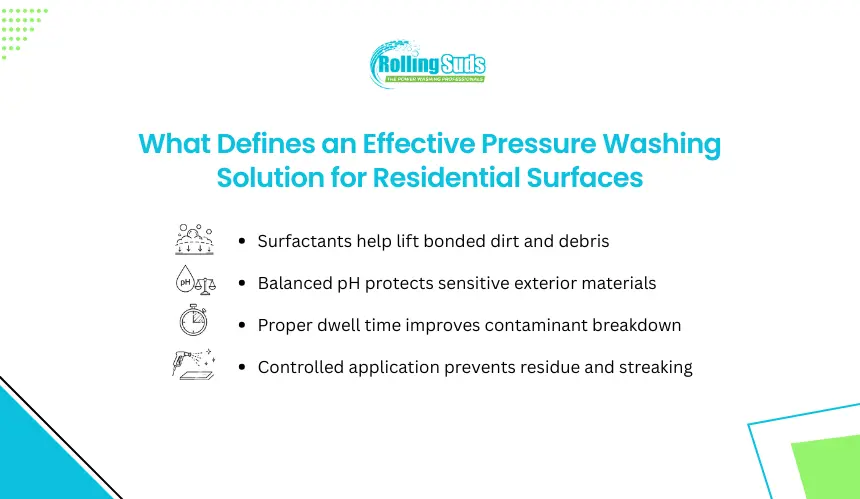
An effective pressure washing solution operates by targeting the specific bond between contaminants and the surface. Its performance depends on how well it breaks down organic matter, lifts particulate buildup, and remains stable during application without damaging the underlying material.
Chemical Composition and Cleaning Mechanism
Cleaning efficiency is driven by the interaction between active ingredients and the contaminant type. Surfactants reduce surface tension, allowing the solution to penetrate and lift dirt particles rather than pushing them across the surface. Sodium hypochlorite acts as an oxidizing agent, breaking down organic growth like mold and algae at a cellular level.
For non-organic contaminants such as grease or airborne pollutants, alkaline cleaners disrupt the molecular bonds holding residues in place, enabling removal during rinsing.
Surface Compatibility and Material Sensitivity
Each exterior material responds differently to chemical exposure based on porosity, coating, and structural composition. Solutions must be calibrated to avoid reactions such as oxidation on vinyl or degradation of painted finishes. pH balance plays a critical role here.
Highly alkaline or acidic solutions can alter surface chemistry if not adjusted correctly. Effective formulations maintain cleaning strength while remaining within safe thresholds for the specific material being treated.
Dwell Time and Reaction Efficiency
The cleaning process depends not only on the solution itself but also on the time it remains active on the surface. Dwell time allows chemical reactions to fully break down contaminants before rinsing. If removed too quickly, the solution fails to complete the breakdown process, reducing effectiveness.
Environmental factors such as temperature and sunlight influence evaporation rates, which in turn affect how long the solution can remain active. Proper dilution and application ensure sufficient contact time without drying prematurely or leaving residue.
Chemical Strength, Dilution, and Safety Considerations For Pressure Washing
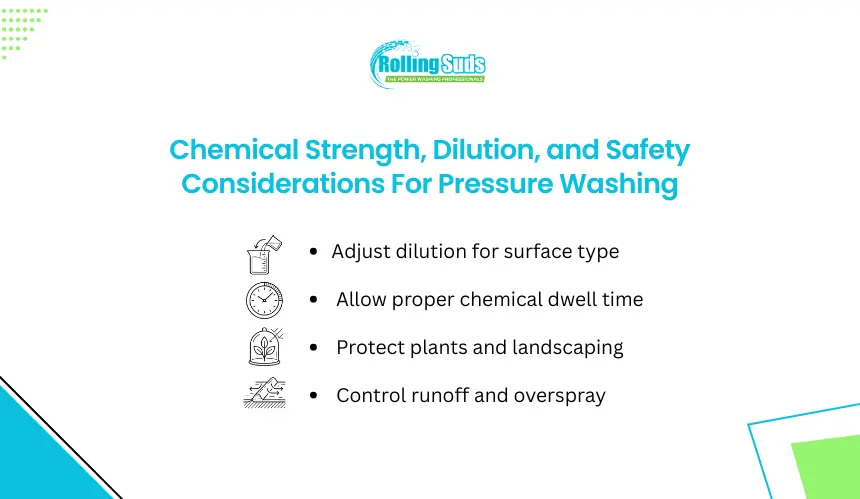
Pressure washing chemicals must be mixed and applied according to the surface condition, contamination level, and environmental exposure. Overconcentrated solutions can damage materials, while weak mixtures often leave behind staining, organic growth, or chemical residue that continues spreading after cleaning.
Dilution Depends on the Surface and Stain
Chemical dilution ratios change based on both the contaminant type and the material being cleaned. Concrete, masonry, and heavily stained surfaces generally tolerate stronger cleaning solutions because they are denser and less chemically sensitive than painted siding or finished wood.
Organic staining from algae or mildew may require higher sodium hypochlorite concentrations than standard dirt removal. Oil-contaminated concrete can also require stronger degreasing agents with extended dwell times to penetrate porous surfaces effectively.
Delicate materials such as painted stucco, sealed wood, composite decking, and window trim typically require lower concentrations to reduce the risk of discoloration, oxidation, or surface breakdown.
Dwell Time Affects Cleaning Results
Dwell time refers to how long a pressure washing chemical remains on the surface before rinsing. Many cleaning agents require controlled contact time to fully react with stains, biological growth, grease, or mineral deposits.
If chemicals are rinsed too quickly, contaminants may only partially loosen, leading to uneven cleaning or rapid stain return. Excessive dwell time, however, can dry the solution onto the surface and increase the risk of streaking, oxidation, or residue formation.
Environmental conditions also affect dwell performance. In areas like Hollywood, CA, strong afternoon sun, heat-reflective pavement, and dry seasonal airflow can cause pressure washing chemicals to evaporate faster before they fully break down stains or organic buildup.
A residential pressure contractor in Hollywood, CA, often adjusts dilution ratios, application timing, and rinse cycles to maintain proper chemical activity on hot exterior surfaces.
Plant, Paint, and Runoff Protection
Pressure washing chemicals can affect surrounding vegetation, coated surfaces, and drainage systems if containment and rinsing procedures are ignored. Sodium hypochlorite exposure may discolor plants, while strong acids can damage nearby metal fixtures, painted finishes, or stone surfaces.
Professional cleaning setups often include pre-wetting landscaping, controlled downstream application, surface-neutralizing rinses, and runoff management to limit environmental exposure. Sensitive areas around entryways, outdoor lighting, HVAC systems, and decorative finishes typically require additional protection before chemical application begins.
Runoff control is especially important in dense urban areas where exterior wash water can quickly move into public drainage systems or neighboring properties.
Sources
Frequently asked questions
Are pressure washing chemicals safe for pets after the surface dries?
Most pressure washing chemicals are safer for pets after the surface has been fully rinsed and allowed to dry. The main risk comes from wet chemical residue on patios, turf edges, walkways, or outdoor bowls. Pets should stay away from treated areas until rinsing is complete and no strong odor remains.
Can pressure washing chemicals damage windows or glass?
Certain chemicals can leave streaks, etching, or mineral-like spotting on glass if they dry before rinsing. Overspray from sodium hypochlorite, acidic cleaners, or alkaline detergents can also affect window seals, screens, and frames. Controlled application and immediate rinsing around the glass reduce the risk of visible residue.
What chemical is best for black streaks on exterior surfaces?
Black streaks are often caused by algae, mildew, oxidation, or pollution residue, so the best chemical depends on the source. Sodium hypochlorite is commonly used for biological staining, while oxidation or mineral-based discoloration may require a different cleaner. Surface testing helps prevent treating the wrong stain type.
Why do some stains come back after pressure washing?
Stains often return when the visible buildup is rinsed away, but the underlying spores, oil residue, or mineral source remain active. Organic growth can regrow in shaded, damp areas, while oil can resurface from porous concrete. Proper chemical dwell time and surface-specific treatment reduce early stain return.
Can pressure washing chemicals remove old oil stains from concrete?
Old oil stains can be reduced, but complete removal is not always guaranteed. Concrete absorbs petroleum residue into its pores, especially when stains have been exposed to heat and traffic for a long time. Alkaline degreasers, hot water, agitation, and repeat treatment usually produce the best results.
Is chemical pressure washing different from soft washing?
Chemical pressure washing can use cleaning agents with higher water pressure, while soft washing relies mainly on chemicals and low-pressure rinsing. Soft washing is usually preferred for roofs, painted siding, stucco, and delicate exterior materials because it reduces the risk of surface damage while still removing biological buildup.
How much PSI is safe for beginner pressure washing tasks?
Safe PSI levels depend on the surface being cleaned. For general residential use, 1200–2000 PSI works for softer materials like wood and siding, while 2500–3000 PSI is suitable for concrete and driveways. Starting with lower pressure and gradually increasing reduces the risk of surface damage and allows better control.