July 2, 2026
How Soft Washing Works on Organic Growth Like Algae and Mildew
Written and reviewed by the Pressure Washing of Los Angeles team
Last reviewed:
| Key Takeaways: Soft washing removes algae and mildew by treating the biological growth behind the stains, not just the visible discoloration. Low-pressure cleaning helps protect sensitive surfaces such as roofs, siding, stucco, painted wood, and composite materials from unnecessary damage. Shade, moisture, poor airflow, coastal humidity, organic debris, and porous surfaces can cause algae and mildew to return faster after cleaning. Pressure washing is still the better option for durable surfaces with oil stains, tire marks, chewing gum, embedded dirt, or heavy buildup. For many Los Angeles properties, the best exterior cleaning approach may combine soft washing for delicate surfaces and pressure washing for hard surfaces. |
|---|
Algae and mildew can spread across exterior surfaces long before property owners recognize the extent of the buildup. These organic contaminants often leave stains, retain moisture, and continue growing if only the surface discoloration is addressed.
Soft washing works differently by targeting the biological growth responsible for the problem rather than relying on high pressure alone. This approach is commonly used on surfaces that require effective cleaning without unnecessary wear.
This blog explains how soft washing works on algae and mildew, why it differs from pressure washing, and what factors influence long-term results.
Why Organic Growth Develops on Exterior Surfaces
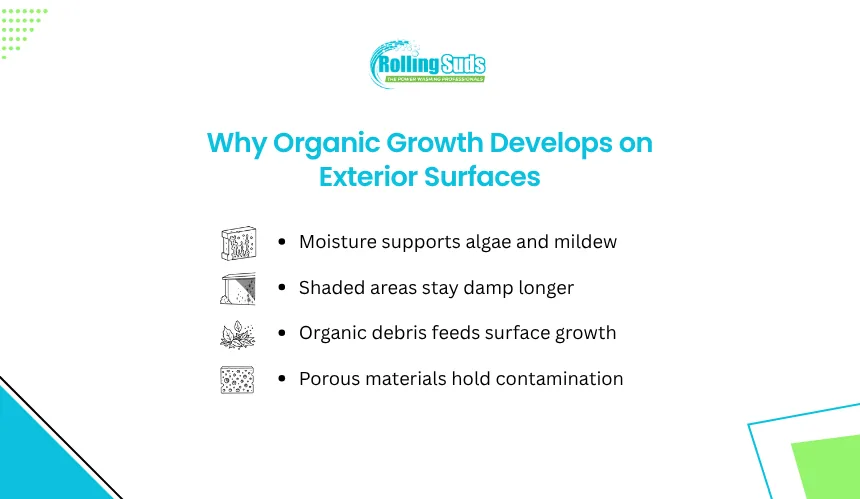
Organic growth does not appear randomly. Algae and mildew develop when environmental conditions provide enough moisture and nutrients to support their growth. Understanding these conditions explains why certain areas of a property experience recurring staining and buildup.
What Conditions Allow Algae and Mildew to Grow?
Moisture is the primary requirement for biological growth. Shaded areas, humid weather, poor airflow, and surfaces that remain damp after rainfall create favorable conditions for algae and mildew. Pollen, dust, leaves, and other organic debris can also provide a food source that supports continued growth.
North-facing walls, roof sections beneath overhanging trees, and areas near gutters often retain moisture longer than sun-exposed surfaces. As a result, these locations commonly develop visible green, black, or dark discoloration over time.
Which Exterior Surfaces Are Commonly Affected by Organic Growth?
Organic buildup can develop on a wide range of building materials. Some surfaces retain moisture more easily, making them more vulnerable to biological contamination.
Commonly affected areas include:
- Asphalt shingle roofs
- Vinyl siding
- Painted wood surfaces
- Stucco exteriors
- Composite decks
- Fences
- Concrete walkways and driveways
Surface texture and porosity can influence how quickly algae and mildew establish themselves.
How Soft Washing Removes Algae and Mildew
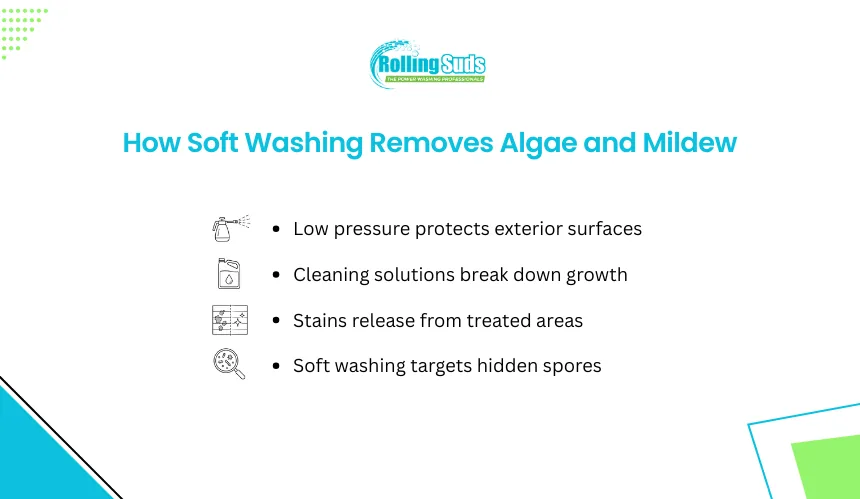
Soft washing is designed to address the source of organic contamination rather than simply removing visible discoloration. The process combines specialized cleaning solutions with controlled water pressure to eliminate biological growth while protecting exterior materials.
What Role Does Low-Pressure Water Application Play?
Soft washing uses significantly lower water pressure than conventional pressure washing. Instead of relying on force, the process distributes cleaning solutions evenly across the surface and gently rinses away loosened contaminants.
Lower pressure reduces the risk of damaging painted finishes, roofing materials, siding, wood surfaces, and other components that may be vulnerable to aggressive cleaning methods. This allows contaminants to be removed without unnecessarily stressing the surface.
How Do Cleaning Solutions Break Down Organic Contaminants?
Soft washing solutions are formulated to target living organisms such as algae, mildew, mold spores, bacteria, and organic residue. These treatments penetrate the contamination layer and disrupt the biological material responsible for staining.
As the organisms break down, the visible discoloration gradually releases from the surface. The cleaning process addresses both surface buildup and microscopic contaminants that may not be visible to the naked eye.
Why Does Soft Washing Clean Beyond Visible Stains?
Surface stains are often only a symptom of deeper biological activity. Simply removing discoloration without treating the organisms themselves can allow growth to return quickly.
Soft washing works at the source by reducing active contaminants and residual spores that remain attached to exterior materials. Because the underlying growth is treated rather than merely washed away, surfaces typically remain cleaner for longer periods compared with methods that rely solely on high-pressure water.
Why Soft Washing Is Different From Pressure Washing for Organic Growth
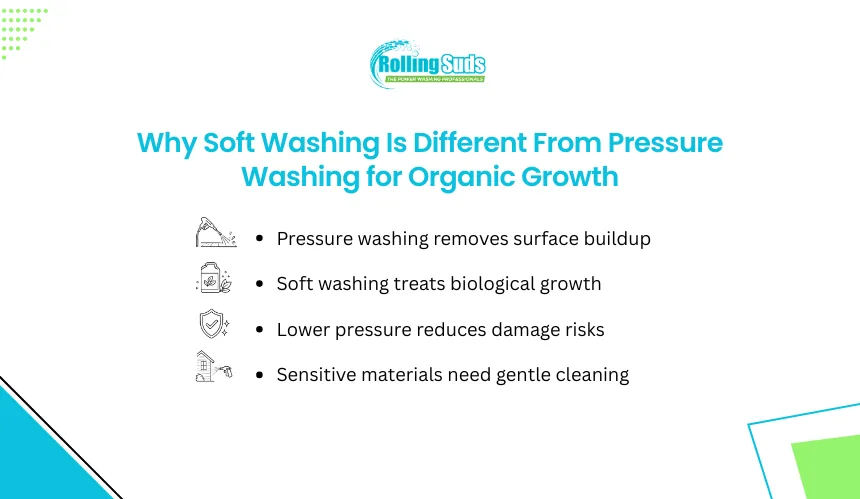
Although both cleaning methods are used on exterior surfaces, they operate differently. The distinction becomes especially important when dealing with algae and mildew because removing stains and eliminating biological growth are not the same objective.
Surface Cleaning Versus Biological Treatment
Pressure washing primarily depends on water force to remove dirt, debris, and visible buildup from a surface. While this approach may improve appearance immediately, it does not necessarily address the microorganisms responsible for organic staining.
Soft washing focuses on biological treatment. The cleaning process targets algae cells, mildew colonies, mold spores, and other organic contaminants before they are rinsed away. This difference affects how quickly growth returns after cleaning.
Why Does Soft Washing Reduce the Risk of Surface Damage?
High water pressure can strip paint, dislodge granules from asphalt shingles, force water behind siding, or erode softer materials. Certain exterior components are designed to withstand weather exposure, not concentrated water impact.
Because soft washing uses controlled pressure, it minimizes mechanical stress on the surface. This makes the method suitable for materials that require a more measured cleaning approach.
When Is Soft Washing Commonly Preferred?
Soft washing is often selected for surfaces where preservation is as important as cleaning effectiveness. Materials with protective coatings, textured finishes, or moisture-sensitive components typically benefit from lower-pressure treatment.
Common applications include:
- Asphalt shingle roofs
- Vinyl siding
- Stucco exteriors
- Painted wood surfaces
- Composite decking
- Outdoor trim and soffits
The choice between soft washing and pressure washing ultimately depends on the type of contamination and the characteristics of the surface being cleaned.
Soft washing does not replace pressure washing. It gives exterior cleaning professionals another method for treating surfaces where high pressure is not the best fit.
Pressure washing remains highly effective for durable areas such as concrete, brick, pavers, driveways, and walkways, while soft washing is often used for organic growth on more sensitive exterior materials.
Los Angeles homes often deal with shaded exterior walls, coastal moisture, dust, and traffic-related residue that affect different surfaces in different ways. For durable areas such as driveways, patios, walkways, and pavers, residential pressure washing remains a practical cleaning option alongside soft washing for more sensitive materials.
Factors That Affect Soft Washing Results
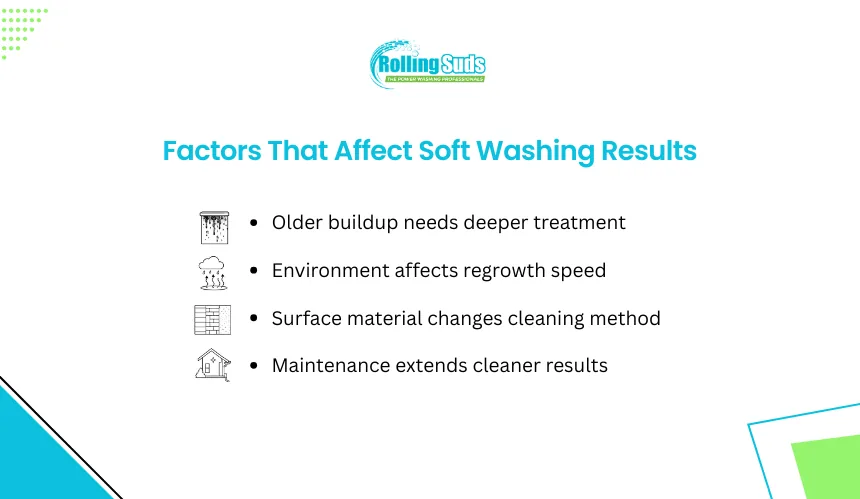
Soft washing effectiveness depends on more than the cleaning process itself. Environmental conditions, surface characteristics, and the extent of contamination all influence how thoroughly organic growth is removed and how long the results last.
1.Severity and Age of the Buildup Affect Results
Light surface growth is generally easier to remove than contamination that has been developing for years. Older algae and mildew colonies can become deeply established, allowing stains and biological residue to penetrate surface textures and pores.
Heavier buildup may require additional dwell time, multiple treatment applications, or more extensive rinsing to fully address the contamination.
2.Environmental Conditions Around the Property
The surrounding environment directly affects how quickly algae and mildew return after cleaning. Properties with limited sunlight, dense landscaping, poor drainage, or constant moisture exposure often experience faster regrowth.
In Los Angeles, environmental conditions can vary significantly between neighborhoods. Coastal communities may experience marine moisture and morning fog, while areas with mature trees and shaded yards can retain moisture longer after irrigation or rainfall. Dust accumulation and airborne debris can also contribute to the organic material that supports future growth.
Several environmental factors can influence long-term performance:
- Overhanging tree branches
- Accumulated leaves and organic debris
- High humidity or coastal moisture
- Areas with restricted airflow
- Frequent water runoff or drainage issues
Addressing these conditions can help extend the time between cleanings.
3.Surface Material Affects the Cleaning Process
Exterior materials vary in texture, porosity, and moisture retention. Smooth surfaces may release contaminants more easily, while porous materials can allow organic growth to establish deeper below the visible surface.
Roof shingles, stucco, painted wood, composite materials, and masonry each respond differently to cleaning treatments. Professional cleaning methods are typically adjusted according to the material being treated.
4.Maintenance Habits Influence Long-Term Results
Cleaning removes existing contamination, but ongoing maintenance affects how long surfaces remain clean. Routine debris removal, gutter maintenance, trimming vegetation, and managing excess moisture can reduce the conditions that encourage biological growth.
Preventive maintenance does not eliminate future growth entirely, but it can slow the cycle of recurring algae and mildew buildup and support longer-lasting cleaning results.
What Property Owners Can Expect After Soft Washing
Soft washing delivers both immediate and long-term outcomes. While appearance is often the first change property owners notice, the process also affects how quickly organic growth returns and how exterior surfaces are maintained over time.
What Immediate Changes Are Visible After Soft Washing?
Most surfaces show a noticeable reduction in discoloration, streaking, and surface staining once the cleaning process is complete. Areas affected by algae and mildew typically regain a cleaner and more uniform appearance.
Results may continue to improve over time as residual organic material breaks down and weather exposure naturally rinses away remaining traces of contamination. The extent of visual improvement depends on the surface condition and the severity of the buildup before treatment.
Does Soft Washing Slow the Return of Algae and Mildew?
Because soft washing targets the biological source of contamination, surfaces often remain clean longer than they would after methods focused solely on surface debris removal.
Regrowth is still possible because environmental exposure continues after cleaning. However, reducing active algae, mildew, and microscopic spores can lengthen the interval between future cleaning services.
How Does Soft Washing Support Long-Term Exterior Maintenance?
Recurring organic buildup can increase cleaning frequency and make exterior maintenance more difficult over time. Removing contamination before it becomes heavily established allows surfaces to be maintained with fewer corrective measures.
Soft washing can become part of a broader property maintenance strategy that includes moisture management, debris removal, gutter care, and periodic exterior cleaning. Combined with appropriate maintenance practices, the process helps preserve the overall appearance and condition of exterior surfaces
When Soft Washing May Not Be the Right Option
Soft washing is designed for organic growth and surfaces that benefit from low-pressure treatment, but it is not the ideal solution for every cleaning situation. Heavy oil stains, embedded dirt, tire marks, chewing gum, and years of buildup on hard surfaces often require higher-pressure cleaning methods.
Concrete driveways, sidewalks, pavers, retaining walls, and other durable materials can often tolerate pressure washing more effectively. In these situations, cleaning professionals select the method based on the type of surface and the nature of the contamination rather than relying on a single approach.
For many Los Angeles properties, combining soft washing and pressure washing provides a more comprehensive exterior cleaning strategy because different areas of the property experience different types of buildup.
Organic growth does not have to take over your property’s appearance. Whether your surfaces need soft washing for algae and mildew or pressure washing for tougher buildup, Pressure Washing of Los Angeles, powered by Rolling Suds of Beverly Hills, provides tailored exterior cleaning solutions designed for different surface types. Contact the team today to restore and protect your home’s curb appeal.
Sources
Frequently asked questions
How long does soft washing last before algae comes back?
Soft washing results can last several months or longer, depending on shade, moisture exposure, nearby trees, surface porosity, and maintenance habits. Homes with dense landscaping, coastal moisture, or poor drainage may see organic growth return faster than dry, sun-exposed surfaces with regular debris removal.
Is soft washing safe for plants around the house?
Professional soft washing usually includes plant protection steps such as pre-rinsing landscaping, controlling runoff, using proper solution ratios, and rinsing plants after treatment. These precautions reduce the chance of chemical stress on grass, shrubs, flowers, and nearby soil while still allowing the cleaning solution to treat algae and mildew.
Can soft washing remove black streaks from roof shingles?
Soft washing is commonly used for black roof streaks caused by algae growth, especially on asphalt shingles. The low-pressure process treats the organisms behind the staining without the surface force that can loosen granules or shorten roof material performance when aggressive pressure is used.
Does sealing a walkway help prevent organic stains after rain?
Soft washing can prepare exterior surfaces by removing algae, mildew, dirt film, and organic residue that may interfere with paint adhesion. Surfaces should be cleaned, rinsed, and allowed to dry properly before painting so coatings bond more evenly and avoid trapping moisture beneath the finish.
Can soft washing help with mildew smell outside the home?
Soft washing may reduce musty odors when the smell comes from mildew, algae, or damp organic buildup on exterior surfaces. Odor issues can return if moisture problems, clogged gutters, shaded walls, or poor airflow remain unresolved, so cleaning works best alongside moisture control.