
June 11, 2026
Does Pressure Washing Remove Mold Permanently?
Written and reviewed by the Pressure Washing of Los Angeles team
Last reviewed:
| Key Takeaways: Pressure washing can remove visible mold stains, but it does not permanently stop mold if moisture, shade, and organic buildup remain. Mold often returns on porous surfaces like concrete, stucco, brick, wood, and pavers because spores and moisture can stay below the surface layer. Long-term mold control requires more than water pressure; proper cleaning solutions, drainage fixes, airflow improvement, and surface sealing help reduce regrowth. Soft washing is often safer and more effective for delicate or porous surfaces because it uses low pressure with mold-targeting cleaning agents. Professional exterior cleaning makes sense when mold keeps returning, covers large areas, or appears near moisture-prone areas like foundations, gutters, shaded patios, and irrigation zones. |
|---|
Mold stains often disappear after pressure washing, but pressure washing alone usually does not remove mold permanently. Spores can remain inside porous surfaces or return when moisture, shade, and organic buildup continue creating favorable growth conditions. Many homeowners confuse surface cleaning with long-term mold control, which is why recurring mold on siding, concrete, decks, and masonry is common.
The effectiveness of pressure washing depends on the surface material, the cleaning method used, and whether the underlying moisture source is addressed. This blog explains why mold returns, when pressure washing works well, and what actually helps reduce regrowth over time.
Why Mold Comes Back After Pressure Washing
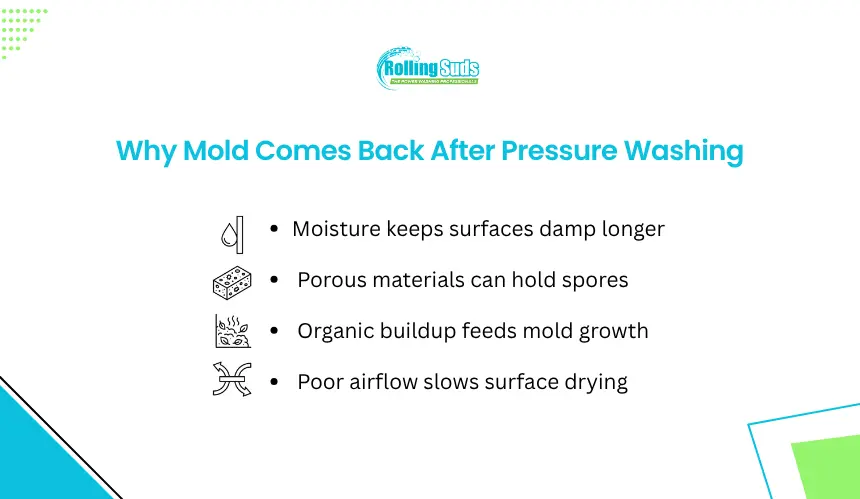
Pressure washing removes visible contamination from exterior surfaces, but mold regrowth usually occurs when the surrounding environmental conditions remain unchanged. Exterior mold is driven by moisture exposure, organic residue, airflow limitations, and surface porosity. If those conditions continue after cleaning, spores can reactivate and spread again.
Moisture Creates the Right Growth Conditions
Mold requires consistent moisture to survive and reproduce. In neighborhoods across East Los Angeles, homes built close together often experience reduced airflow between side yards, block walls, and narrow exterior pathways. Those confined areas dry slowly after irrigation runoff or seasonal marine layer moisture, allowing mold and mildew to return quickly on stucco, fencing, and concrete surfaces.
In parts of Central Los Angeles, older properties with aging gutter systems and shaded courtyard layouts frequently develop recurring moisture retention around walkways, detached garages, and exterior staircases.
Even after pressure washing removes visible staining, damp surfaces can restart microbial growth cycles within a short period if moisture exposure continues.
Spores Can Remain in Porous Surfaces
Porous materials absorb water and organic particles below the visible surface layer. Wood decking, brick, stucco, concrete, and unsealed pavers often contain microscopic pores where mold spores can remain protected during standard pressure washing.
This becomes especially relevant in many older Los Angeles stucco homes, where textured exterior finishes trap moisture and airborne debris from nearby traffic corridors.
High-pressure washing may clean the visible surface while leaving embedded spores inside the material itself. Once humidity or overnight condensation returns, dormant spores can reactivate beneath the outer layer.
Dirt and Organic Matter Feed Mold Growth
Mold growth accelerates when exterior surfaces collect organic residue such as pollen, leaves, dust, tree sap, algae buildup, and soil particles. These materials act as a nutrient source that supports microbial activity.
Properties near high-traffic corridors in Central Los Angeles often accumulate a layer of fine airborne grime mixed with moisture and organic debris, particularly on shaded siding and retaining walls.
In residential sections of East Los Angeles, mature landscaping and tightly packed backyard spaces can increase debris accumulation around fences, patio slabs, and masonry surfaces. Even after pressure washing removes visible mold stains, residual organic buildup inside cracks and textured surfaces can continue supporting regrowth if not fully treated.
What Helps Prevent Mold From Returning
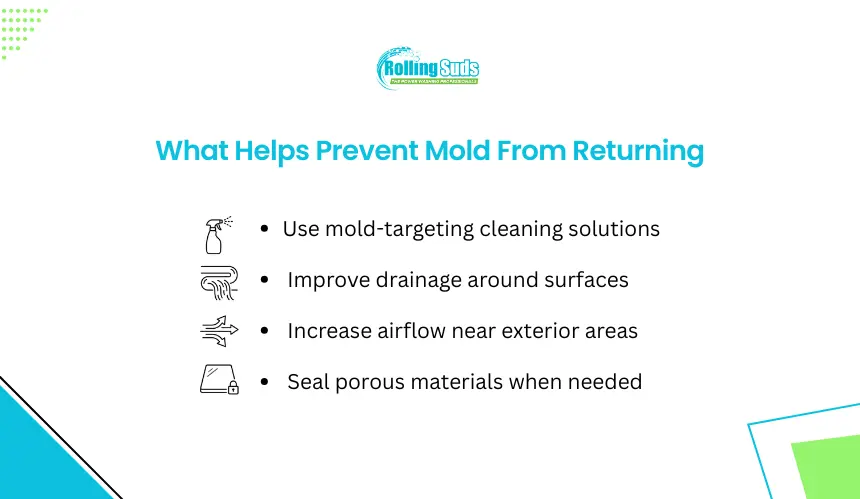
Removing visible mold does not stop future growth unless the surface environment also changes. Long-term mold prevention depends on moisture control, surface protection, organic debris management, and proper cleaning chemistry. Without those corrective measures, exterior surfaces often redevelop staining even after thorough pressure washing.
In many parts of Los Angeles, exterior surfaces are exposed to a combination of coastal moisture, irrigation overspray, airborne dust, and prolonged sun exposure that accelerates surface deterioration and organic buildup.
Regular pressure washing in Los Angeles is often used to control mold staining on stucco walls, concrete driveways, shaded patios, and retaining walls affected by recurring moisture retention.
1. Use the Right Cleaning Solution
Water pressure alone does not fully neutralize mold spores. Many exterior cleaning professionals combine pressure washing or soft washing with mold-targeting detergents, sodium hypochlorite mixtures, surfactants, or antimicrobial cleaning agents designed to break down organic growth at the microbial level.
This process becomes especially important on stucco, wood, painted siding, and textured masonry, where spores can remain below the visible surface. Cleaning solutions help reduce biological residue that high-pressure water may not fully remove. The effectiveness of the treatment depends on proper dwell time, dilution balance, and surface compatibility.
2. Improve Drainage and Airflow
Recurring mold problems are frequently tied to trapped moisture rather than inadequate cleaning. Surfaces that remain shaded or wet for extended periods create ideal conditions for mildew, algae, and fungal growth.
Improving drainage around patios, walkways, foundations, and exterior walls reduces water retention that feeds mold colonies. Trimming dense vegetation, clearing clogged gutters, redirecting sprinkler spray, and increasing airflow around enclosed exterior spaces can significantly slow regrowth cycles. Faster surface drying limits the moisture exposure that mold requires to spread.
3. Seal Porous Materials When Needed
Porous materials absorb moisture more easily, making them more vulnerable to recurring mold contamination. Concrete, pavers, brick, wood, and certain stucco finishes can retain water beneath the surface even after cleaning.
Applying a breathable sealant or protective coating helps reduce water penetration and organic buildup inside the material structure. In many exterior environments, sealing also improves resistance to staining, moisture absorption, and surface deterioration caused by repeated mold exposure.
Surface sealing is most effective after the material has been fully cleaned and dried to prevent trapping residual moisture underneath the coating.
Pressure Washing vs. Soft Washing for Mold
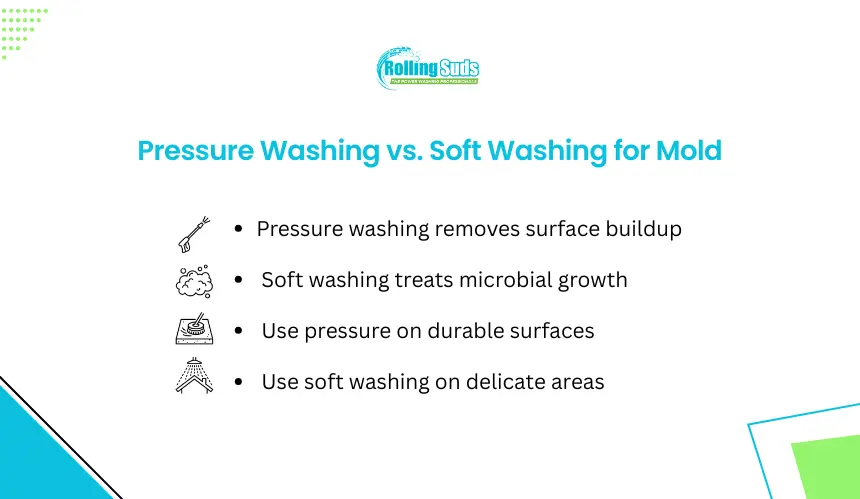
Pressure washing and soft washing are often grouped together, but they function differently and produce different results depending on the surface and contamination type. Choosing the wrong method can reduce cleaning effectiveness or damage exterior materials.
Mold removal performance depends on water pressure, cleaning chemistry, surface durability, and how deeply the organic growth has penetrated the material.
Pressure Washing Relies on Force
Pressure washing uses high-pressure water to remove dirt, algae, mold stains, oxidation, and surface buildup through mechanical force. The method works best on durable materials that can tolerate aggressive cleaning without structural damage.
Concrete driveways, stone walkways, brick surfaces, and heavily soiled patios are common candidates because they withstand higher PSI levels more effectively. However, excessive pressure on painted surfaces, aging wood, stucco, roof shingles, or vinyl siding can force water beneath the material surface, strip protective coatings, or create surface erosion. In some cases, improper pressure washing can increase future moisture intrusion rather than reduce it.
Soft Washing Treats Growth Chemically
Soft washing uses low-pressure water combined with specialized cleaning agents designed to break down mold, mildew, algae, bacteria, and organic staining at the biological level. Instead of relying on force alone, the process targets microbial contamination through chemical treatment and controlled surface saturation.
This method is commonly used on roofing systems, painted exteriors, stucco, fencing, and delicate siding materials where high pressure may cause cracking, etching, or water penetration. Soft washing also allows cleaning solutions to remain on the surface long enough to break down spores and organic residue more effectively than rapid high-pressure rinsing alone.
The Right Method Depends on the Surface
Surface composition largely determines which cleaning method produces safer and longer-lasting results. Dense materials such as concrete and stone generally respond well to pressure washing because contaminants remain closer to the surface. More delicate or porous materials often benefit from soft washing because the cleaning agents can penetrate uneven textures without aggressive force.
In many residential properties, both methods are used together depending on the cleaning zone. A pressure washing contractor may pressure wash concrete walkways while soft washing stucco walls, painted siding, roof sections, or shaded exterior areas affected by recurring mold growth. Selecting the appropriate method reduces surface damage risk while improving overall mold treatment effectiveness.
Understanding Mold And Mildew On Exterior Surfaces
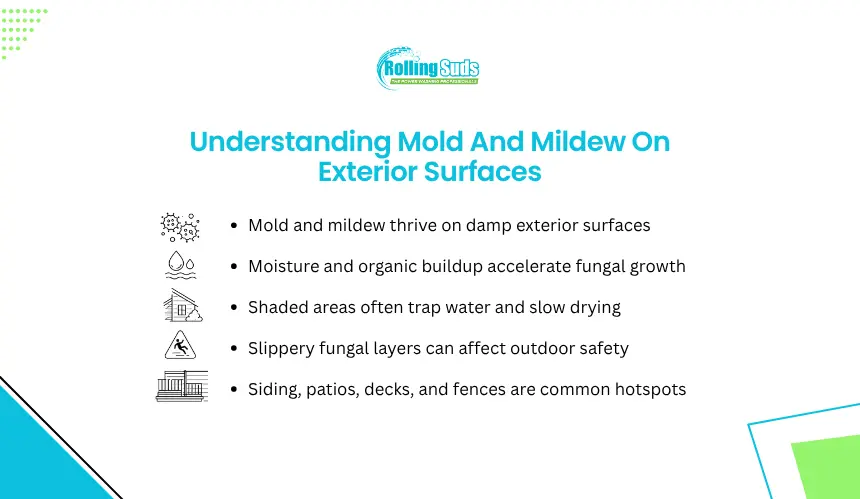
Mold and mildew are fungi that thrive on damp, shaded surfaces where moisture and organic material accumulate. They are commonly found on exterior siding, decks, fences, and patios.
While they may appear as simple discoloration or streaks, these growths indicate underlying moisture retention, which can gradually affect surface longevity and aesthetics.
What Causes Mold And Mildew To Form On Homes
Mold and mildew develop when moisture interacts with organic matter such as leaves, dirt, or algae on surfaces. Areas with limited sunlight, high humidity, or poor drainage provide an ideal environment for these fungi.
Over time, they create a thin, often slippery layer that not only looks unsightly but can also harbor bacteria and spores, affecting the outdoor environment around the home.
Common Areas Where Mold And Mildew Appear
Exterior surfaces that are frequently damp are most susceptible. Vinyl and fiber-cement siding, concrete driveways, stone patios, wooden decks, and fence panels are typical hotspots.
Porous surfaces tend to trap moisture, making them more prone to rapid growth, while smoother surfaces allow some natural drying, slowing the accumulation. Recognizing these areas helps homeowners prioritize cleaning before problems worsen.
Surfaces Where Pressure Washing Is Most Effective
Not all exterior materials respond equally to pressure washing. Choosing appropriate surfaces ensures both effective mold removal and preservation of the material integrity.
1. Hard Exterior Surfaces
Concrete driveways, brick walls, and stone patios are ideal candidates. These surfaces tolerate higher water pressure and respond well to the mechanical cleaning action. Pressure washing removes embedded dirt and fungal spores efficiently, often restoring the original color and texture.
2. Vertical And Structural Surfaces
Siding materials such as vinyl or fiber cement also benefit from pressure washing, provided that pressure settings are controlled. Correct technique prevents damage to paint or siding seams while removing fungal buildup. Even textured or grooved surfaces can be cleaned thoroughly when applied at the right angle and distance.
Identify the Type and Extent of Mold on the Wood
Before cleaning begins, the condition of the wood should be evaluated. Surface mold can often be removed successfully, while extensive growth or moisture damage may indicate a larger problem that requires professional assessment.
What Is the Difference Between Surface Mold and Deep Mold Growth?
Surface mold usually appears as small black, green, white, or gray patches that remain on the outer layer of the wood. It commonly develops on furniture, trim, wooden walls, or unfinished lumber exposed to humidity.
Deep mold growth occurs when moisture penetrates the wood fibers for an extended period. Signs may include persistent musty odors, discoloration that remains beneath the finish, soft spots, warping, or deterioration of the material. Mold embedded inside porous wood is more difficult to remove because spores can spread below the visible surface.
When Should Professional Mold Removal Be Considered?
Professional remediation may be necessary when mold covers large areas, repeatedly returns after cleaning, or affects structural wood components. Water damage from leaks, flooding, or prolonged humidity can create conditions where mold extends beyond what is visible.
Professional inspection is also recommended if the wood shows signs of decay, loss of strength, or widespread contamination in enclosed spaces such as crawl spaces, basements, attics, or wall cavities. Addressing the moisture source is essential because mold will continue to grow if excess moisture remains present.
For properties in Los Angeles, outdoor wooden surfaces are frequently exposed to coastal moisture, marine layer humidity, and irrigation overspray, which can contribute to recurring mold growth on backyard structures.
Homeowners with affected decks may also consider professional decks and patios cleaning in Los Angeles when mold, mildew, and organic buildup extend across larger exterior wood surfaces.
Prepare the Area and Gather Safe Cleaning Supplies
Proper preparation reduces the risk of spreading mold spores and prevents unnecessary damage to the wood surface. Selecting the right products and tools also helps preserve paint, stain, or protective finishes during the cleaning process.
What Safety Precautions Should Be Taken Before Cleaning Mold?
Mold spores can become airborne during cleaning. Wearing gloves, protective eyewear, and an N95 mask helps limit exposure. Opening windows or improving airflow can reduce spore concentration in enclosed areas.
Items near the affected wood should be removed or covered to prevent contamination. If cleaning is performed indoors, isolating the work area can help keep spores from spreading to nearby rooms and surfaces.
Which Cleaning Solutions Are Safe for Wood Surfaces?
Mild dish soap mixed with warm water is often suitable for light surface mold. White vinegar is another commonly used option because its acidity can help break down mold without being overly harsh on many wood finishes.
Hydrogen peroxide may be used for more stubborn areas, but testing any solution on a small, hidden section first helps confirm that the finish will not discolor or react negatively. Strong bleach mixtures can damage certain types of wood and may introduce excess moisture into porous materials.
Which Tools Should Be Used and Which Should Be Avoided?
Soft-bristle brushes, microfiber cloths, and non-abrasive sponges provide enough cleaning action without scratching the surface. Vacuum cleaners equipped with HEPA filters can help remove loose spores before wet cleaning begins.
The following tools should generally be avoided:
- Wire brushes that can gouge wood fibers
- Steel wool that may damage protective coatings
- High-pressure washers that force moisture deeper into the wood
- Abrasive pads that can remove stain or finish layers
Using gentle tools allows mold to be removed while preserving the appearance and integrity of the wood surface.
When Professional Mold Removal or Exterior Cleaning Makes Sense
Professional exterior cleaning may be necessary when mold problems go beyond normal surface staining or continue returning after repeated washing.
- Large mold-covered areas often require specialized treatment methods based on the surface material and contamination depth.
- Roofing, stucco, painted siding, wood fencing, and older masonry can be damaged by incorrect pressure settings or aggressive cleaning.
- Persistent mold near foundations, shaded patios, gutters, or irrigation zones may indicate ongoing moisture retention problems.
- Professional cleaning companies can combine soft washing, mold-treatment solutions, pressure control, and surface protection more effectively than standard DIY cleaning.
- Long-term mold prevention usually requires both exterior cleaning and correction of the moisture conditions causing regrowth.
Sources
Frequently asked questions
Can pressure washing make mold worse if done incorrectly?
Incorrect pressure washing can push water into siding gaps, stucco cracks, wood grain, or masonry pores, creating more moisture behind the surface. That trapped moisture can support future mold, mildew, and algae growth. Using the right PSI, nozzle angle, cleaning solution, and drying time reduces that risk.
How often should exterior surfaces be cleaned to control mold?
Most exterior surfaces benefit from annual cleaning, but shaded patios, damp walkways, stucco walls, and areas near landscaping may need cleaning every 6 to 12 months. Properties with irrigation overspray, poor airflow, or heavy organic debris usually require more frequent maintenance to prevent mold stains from becoming embedded.
Is bleach safe for removing mold from outdoor surfaces?
Bleach-based solutions can treat mold on some exterior surfaces when properly diluted, but they can damage plants, discolor materials, and irritate surrounding areas if misused. Professional soft washing often uses controlled sodium hypochlorite mixtures with surfactants, proper rinsing, and surface-specific application methods to reduce damage risk.
Why does mold keep growing on concrete after cleaning?
Concrete is porous, so it can absorb moisture, dirt, pollen, and organic residue below the visible surface. If the slab stays damp from shade, drainage issues, or irrigation runoff, mold and mildew can return even after cleaning. Sealing concrete after proper washing can reduce water absorption and future staining.
Should I pressure wash mold before painting or sealing?
Mold should be removed before painting or sealing because coatings can trap spores, moisture, and organic residue beneath the surface. Proper cleaning, drying, and surface preparation help paint, sealants, and protective coatings bond correctly. Skipping this step can lead to peeling, staining, or recurring mold under the finish.
Can pressure washing permanently remove mold and mildew?
Pressure washing effectively removes visible mold and mildew from exterior surfaces, but it does not alter the underlying conditions that allow growth, such as moisture accumulation or shade. For long-term results, combine pressure washing with proper drainage, ventilation, and periodic maintenance to minimize recurrence.
Is pressure washing safe for painted or older home exteriors?
Yes, when done with the correct pressure settings and nozzles. Professional operators adjust water pressure based on material type to prevent paint peeling, siding damage, or water intrusion. Testing a small area first is recommended to ensure the surface tolerates the cleaning method.