
June 19, 2026
What Affects Commercial Building Washing Cost in Los Angeles?
Written and reviewed by the Pressure Washing of Los Angeles team
Last reviewed:
| Key Takeaways: There is no honest price for commercial building washing until someone has looked at the building. Height, access, surface material, soil level, water access and runoff rules drive the number. Add-ons such as sidewalk cleaning, graffiti, oil, gum or rust treatment are scoped separately. Photos, approximate size, number of stories, surface types and access limits get you the most accurate quote. |
|---|
Commercial building washing costs in Los Angeles vary widely from one property to the next, and square footage alone does not set the price. Building height, surface materials, access, contamination and site-specific requirements all change the amount of labor and equipment a job needs.
This guide explains what drives commercial building washing cost in Los Angeles, so you know what a contractor is pricing and what to send when you ask for a quote. It does not list prices; a fair number depends on the building in front of us.
How Contractors Price Commercial Building Washing
A commercial quote starts with the washable surface area, then adjusts for how hard that surface is to reach, what it is made of and how dirty it is. Specialized access equipment, heavy stain removal, runoff control or multi-story work each add time.
Most commercial contractors evaluate a property based on surface area, building complexity, labor requirements, and access conditions rather than square footage alone.
What Moves a Quote Up or Down
The same building can be quoted very differently depending on:
- Light routine cleaning versus heavy, long-neglected buildup
- Ground-level work versus lifts or other access equipment
- Durable concrete and masonry versus delicate stucco, paint or coated panels
- Open, easy water access versus none on site
- Open daytime access versus after-hours or phased work around tenants
A tall facade with ledges, columns and awnings takes far longer than a flat wall on the same footprint, which is why we price from the surfaces, not the lot size.
Properties located near major traffic corridors such as Interstate 5, Interstate 10, and heavily traveled commercial districts often accumulate greater amounts of vehicle exhaust residue, airborne pollutants, and grime, increasing cleaning time and overall project costs.
Why Los Angeles Pricing Can Be Higher Than Average
Commercial washing in Los Angeles usually costs more than national averages due to local operating conditions.
Labor rates are among the largest contributors. Contractors must account for California wage requirements, workers’ compensation costs, insurance premiums, and safety compliance standards.
Access logistics can also increase costs. Properties located in dense commercial districts may require traffic control measures, restricted work schedules, after-hours service, or specialized lift equipment to avoid disrupting tenants, customers, or pedestrians.
Environmental regulations create another pricing factor. In many situations, contractors must implement water recovery systems, runoff containment measures, and approved wastewater disposal practices to comply with local stormwater requirements. These procedures add labor, equipment, and operational costs that are often reflected in the final proposal.
As a result, two buildings with similar square footage can receive significantly different quotes depending on location, access constraints, and cleaning requirements.
What Factors Have the Biggest Impact on Commercial Building Washing Costs?
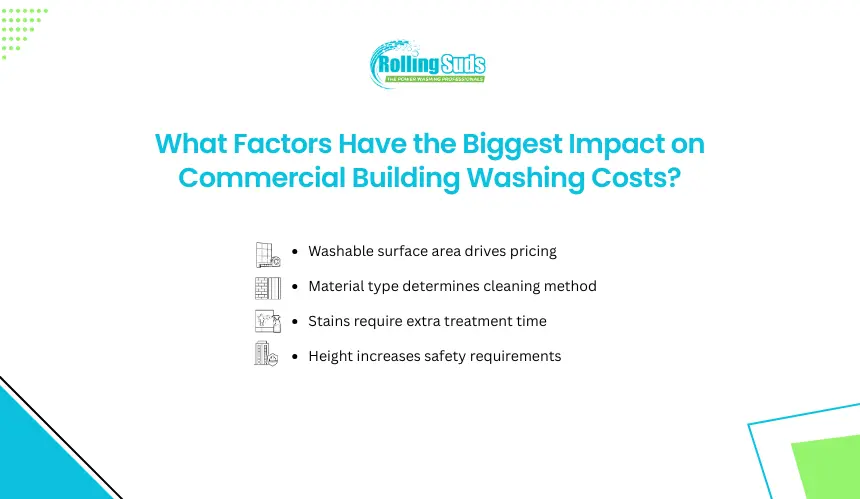
While average price ranges provide a starting point, contractors build estimates around the conditions of a specific property. The largest cost differences typically come from cleaning complexity, labor requirements, and operational risk rather than the building’s size alone.
1. Building Size and Washable Surface Area
Commercial washing estimates are based on the actual surfaces that require cleaning, not simply the property’s footprint.
Two buildings on the same size lot can take very different amounts of labor. The one with taller walls, architectural features, multiple elevations and attached structures has far more to clean. Decorative facades, columns, overhangs, loading docks, awnings and exterior stairwells all add washable area.
Larger projects can be more efficient per area cleaned because setup happens once. The total still rises as more surfaces need treatment.
2. Surface Material and Cleaning Method
Different building materials require different cleaning techniques, which directly affects labor, equipment, and chemical usage.
Concrete and masonry can often tolerate higher-pressure cleaning methods that remove dirt efficiently. In contrast, painted surfaces, EIFS (Exterior Insulation and Finish Systems), stucco, metal panels, and certain architectural coatings typically require soft washing methods that rely on specialized cleaning solutions and lower pressure.
A contractor may need to adjust water pressure, dwell times, detergents, and rinsing procedures based on the substrate being cleaned. Properties with mixed materials frequently require multiple cleaning approaches during the same project, increasing labor time and operational complexity.
3. Soil Level, Stains, and Urban Buildup
The amount and type of contamination on a building can significantly influence pricing.
Light dust and seasonal dirt can often be removed during routine maintenance cleaning. More aggressive contaminants require additional treatment cycles, specialized detergents, and longer cleaning times.
Common issues that increase project costs include:
- Traffic film from vehicle emissions
- Bird droppings and nesting residue
- Grease accumulation near restaurants
- Mold and mildew growth
- Mineral staining from irrigation systems
- Rust discoloration
- Graffiti shadows and paint residue
Buildings that receive regular maintenance typically cost less to clean because contaminants have not had time to bond deeply with the surface.
4. Height, Access, and Safety Requirements
Access conditions are often one of the most influential pricing variables in commercial exterior cleaning.
Ground-level retail properties can usually be serviced using standard equipment and small crews. Multi-story buildings often require boom lifts, scissor lifts, rope-access technicians, extended water-fed pole systems, or specialized safety equipment.
Additional costs may also arise when contractors must:
- Work around active pedestrian traffic
- Coordinate with tenants or property managers
- Schedule overnight or weekend service
- Secure restricted-access areas
- Establish safety zones around equipment
From a contractor’s perspective, higher buildings create greater labor exposure, equipment costs, insurance considerations, and operational planning requirements. These factors frequently explain why two properties with similar square footage can have substantially different washing costs.
How Much Does Building Washing Cost for Different Types of Commercial Properties?
Property type often influences pricing as much as building size. Different commercial facilities accumulate different contaminants, require different cleaning frequencies, and present unique access challenges. As a result, contractors frequently develop pricing strategies based on how a property is used rather than relying solely on square footage calculations.
Retail Storefronts and Shopping Centers
Retail properties are typically among the most frequently cleaned commercial buildings because appearance directly affects customer perception and foot traffic.
Small storefronts are usually the simplest commercial jobs. Multi-tenant retail centers take more planning because of the number of units, facade design, walkways and common areas in the scope.
Several factors influence pricing for retail properties:
- Large glass storefronts and entry areas
- Decorative architectural finishes
- Covered walkways and awnings
- High pedestrian visibility
- Gum and stain removal near entrances
Shopping centers located along heavily traveled commercial corridors often require more frequent maintenance because pollution, dust, and customer traffic accelerate surface buildup.
Office Buildings and Multi-Tenant Properties
Office buildings typically require a more comprehensive approach because property owners must maintain professional appearances for tenants, visitors, and prospective clients.
Office pricing depends on the number of stories, elevations and shared areas. Mid-sized and larger multi-story office properties usually need access equipment, which is often the biggest single factor.
Several characteristics affect office-building pricing:
- Multiple elevations and architectural features
- Parking structures and entry plazas
- Courtyards and shared outdoor spaces
- Tenant coordination requirements
- Limited work-hour windows
In many cases, office properties benefit from scheduled maintenance programs that reduce long-term cleaning costs by preventing heavy contamination from accumulating between service visits.
Warehouses, Industrial Buildings, and Loading Areas
Industrial properties often have lower aesthetic demands than retail or office buildings, but they frequently present more challenging cleaning conditions.
Warehouses and industrial campuses are priced around wall area, dock and yard surfaces, and how much the work has to fit around active operations.
Industrial environments commonly introduce contaminants that require additional labor and specialized cleaning solutions, including:
- Diesel exhaust residue
- Equipment-related grease deposits
- Loading dock stains
- Airborne dust accumulation
- Industrial process contaminants
Access matters here too. Large plain wall expanses clean efficiently, but active loading, truck traffic, security and safety protocols add labor.
For many industrial facilities, the final quote is heavily influenced by operational conditions rather than the building itself. A relatively simple warehouse with unrestricted access may cost significantly less to clean than a smaller facility with complex safety and scheduling requirements.
What Additional Services Can Increase Commercial Building Washing Costs?
Most commercial building washing quotes cover standard exterior surface cleaning. However, many properties require supplementary services to address specific maintenance issues, improve curb appeal, or satisfy property management requirements. Understanding these add-ons helps property owners compare proposals accurately and avoid unexpected costs after a project begins.
1. Sidewalk, Entryway, and Parking Lot Cleaning
High-traffic ground surfaces often accumulate contaminants much faster than building facades. While exterior walls may only require periodic cleaning, sidewalks, entry plazas, and parking areas are exposed to constant pedestrian and vehicle activity.
What affects the cost of these ground surfaces:
- Total area and how much of it is open during the visit
- Gum, oil and tire marks that need pre-treatment
- Whether runoff has to be recovered rather than rinsed
- Whether the work is done in the same visit as the building
Many contractors offer lower rates when these surfaces are cleaned during the same visit as the building exterior because equipment setup, water access, and labor resources are already on-site.
For retail centers and office complexes, bundling these services often provides a more comprehensive property appearance while reducing mobilization costs.
2. Gum, Oil, Graffiti, and Rust Removal
Specialized stain removal is typically priced separately because it requires more labor, targeted treatment methods, and specialized cleaning products.
What affects the cost of stain treatment:
- Gum: how many spots and how spread out they are
- Oil: stain age, size and how deep it has soaked into concrete
- Graffiti: paint type, size and whether the surface is porous or painted
- Rust: source, severity and whether the surface tolerates treatment
These contaminants often penetrate porous materials such as concrete, stucco, brick, and masonry. In many cases, complete stain removal requires multiple treatment cycles rather than a single washing process.
The final cost depends on factors such as stain age, surface material, affected area size, and restoration expectations.
3. Water Recovery and Environmental Compliance Requirements
Environmental compliance can significantly influence commercial cleaning costs, particularly for larger properties and heavily regulated sites.
Many commercial locations require contractors to prevent wastewater from entering storm drains. This may involve:
- Vacuum recovery systems
- Containment berms
- Filtration equipment
- Wastewater collection tanks
- Approved disposal procedures
Compliance work is scoped to the site. A small storefront may need simple drain protection, while large facilities with strict runoff requirements may need full recovery and collection, which adds equipment and time.
While these requirements increase project costs, they are often necessary to satisfy local stormwater regulations, property management standards, and environmental risk management policies. When reviewing proposals, property owners should confirm whether compliance measures are included in the quoted price or listed as a separate service item.
How to Get an Accurate Commercial Building Washing Estimate
Commercial building washing proposals can vary significantly because contractors assess different risk factors, cleaning requirements, and site conditions. A detailed quote is typically more accurate when the contractor has complete information about the property and the expected scope of work.
- Provide building specifications upfront: Share approximate square footage, number of stories, exterior materials, and any areas requiring special attention. Accurate property details reduce pricing assumptions and minimize quote revisions.
- Document visible contamination issues: Identify concerns such as grease buildup, mildew growth, graffiti, rust stains, bird droppings, or heavy pollution deposits. Specialized cleaning requirements often affect labor, equipment, and chemical usage.
- Disclose access limitations: Mention restricted parking, limited water access, active loading zones, tenant activity, security requirements, or areas that may require lifts and specialized equipment.
- Request a detailed scope of work: A professional estimate should clearly identify what is included, such as exterior walls, sidewalks, entryways, awnings, parking areas, stain treatment, or environmental compliance measures.
- Verify insurance and safety procedures: Commercial projects often involve elevated work, pedestrian traffic, and liability exposure. Confirm that the contractor carries appropriate insurance coverage and follows established safety protocols.
- Compare value rather than price alone: The lowest proposal may exclude stain treatment, water recovery, access equipment, or other services that can later increase project costs. Reviewing the full scope often provides a more accurate comparison than focusing solely on the final dollar amount.
For most Los Angeles commercial properties, the most reliable estimate comes from an on-site assessment where the contractor can evaluate building conditions, access requirements, and cleaning complexity firsthand.
Sources
Frequently asked questions
How often should a commercial building be washed in Los Angeles?
Most commercial buildings in Los Angeles benefit from exterior washing every <strong>6 to 12 months</strong>. Properties near busy roads, restaurants, industrial areas, or high-foot-traffic zones may need cleaning every <strong>3 to 6 months</strong> because exhaust residue, grease, dust, and surface stains build up faster.
Is soft washing better than pressure washing for commercial buildings?
Soft washing is better for delicate surfaces such as stucco, painted facades, EIFS, signage, and coated exterior panels. Pressure washing works well on durable surfaces like concrete, brick, sidewalks, and loading areas. The right method depends on surface strength, stain type, and the risk of material damage.
Does commercial building washing require water access on-site?
Most contractors prefer on-site water access because it keeps the project more efficient and cost-effective. If a property does not have accessible water hookups, the contractor may need to bring a water tank, which can increase labor, equipment, and transportation costs, especially for larger buildings.
Can commercial washing remove graffiti shadows completely?
Graffiti removal depends on how long the paint has been on the surface and how porous the material is. Smooth metal or painted surfaces usually clean more easily, while brick, stucco, and concrete may retain faint shadows. Older graffiti often requires chemical treatment, hot water, or multiple cleaning passes.
Will building washing disrupt customers, tenants, or employees?
A well-planned commercial washing project can usually limit disruption through early morning, evening, or weekend scheduling. Contractors may also section off work areas, control pedestrian access, and clean high-traffic entry points during slower business hours. Properties with tenants should coordinate notices before the cleaning date.
Why do some commercial washing quotes seem much cheaper than others?
Lower quotes may exclude items such as stain treatment, lift equipment, water recovery, after-hours labor, insurance coverage, or detailed surface preparation. A cheaper estimate can become more expensive if add-ons are billed later. Property owners should compare scope, safety procedures, and compliance measures before choosing.