July 24, 2026
What Makes Large-Scale Exterior Cleaning Different From House Washing?
Written and reviewed by the Pressure Washing of Los Angeles team
Last reviewed:
| Key Takeaways Large-scale exterior cleaning requires industrial equipment, specialized access systems, and surface-specific methods that residential washing typically does not need. Commercial projects depend on site assessments, safety controls, phased scheduling, and runoff planning to protect occupants and keep daily operations running. Most commercial buildings in Los Angeles benefit from exterior cleaning every 3 to 6 months, while high-traffic properties may require monthly or bi-monthly service. Property managers should choose contractors based on commercial experience, insurance coverage, maintenance options, and their ability to match pressure, detergents, and water temperature to each surface. |
|---|
Large-scale exterior cleaning and residential washing may use similar cleaning techniques, but they are designed for very different environments. As property size, surface diversity, and operational demands increase, the equipment, planning, safety measures, and maintenance strategy change significantly. Applying a residential approach to a commercial or industrial property can lead to inefficient results, unnecessary costs, or incomplete cleaning.
This article explains the key differences between large-scale exterior cleaning and residential washing, helping you understand which approach fits different property types and maintenance needs.
Large-Scale Exterior Cleaning vs. Residential Washing: The Biggest Differences
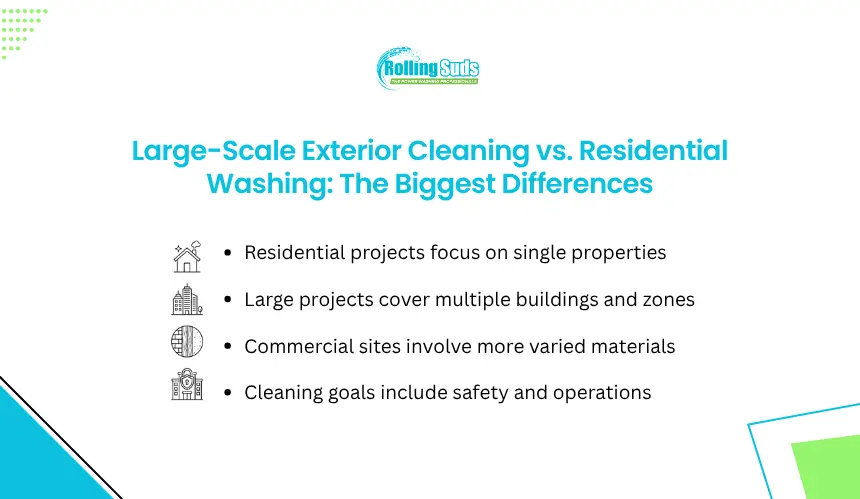
Although both services remove dirt, contaminants, and organic growth from exterior surfaces, the scale of the property changes nearly every aspect of the job. The differences extend beyond square footage to include the types of surfaces being cleaned, the objectives of the project, and the resources required to complete the work efficiently.
How Do Property Size and Cleaning Scope Differ?
Residential washing is typically limited to a single home and its surrounding features, such as a driveway, patio, deck, fence, or roof. The work is generally completed by a small crew within a relatively short timeframe.
Large-scale exterior cleaning involves significantly larger properties, including apartment complexes, office buildings, shopping centers, warehouses, schools, hospitals, and industrial facilities. Instead of focusing on one structure, crews may clean multiple buildings, extensive walkways, parking areas, loading zones, retaining walls, and other shared exterior spaces as part of a coordinated project.
The increased scope affects labor planning, equipment deployment, water management, and project scheduling from the outset.
What Types of Exterior Surfaces are Involved?
Homes usually feature a limited range of materials, such as vinyl siding, brick, stucco, asphalt shingles, concrete, and wood. Cleaning methods are selected around protecting residential finishes while removing common contaminants like algae, mildew, pollen, and accumulated dirt.
Large commercial and industrial properties often combine a much broader mix of materials, including:
- Architectural concrete
- Metal cladding
- Glass curtain walls
- Masonry facades
- Precast panels
- Decorative stone
- Loading docks
- Large concrete parking surfaces
Each material responds differently to pressure, detergents, water temperature, and dwell time. As a result, cleaning strategies are adjusted for individual surface characteristics rather than applying a single method across the entire property.
What are the Primary Goals of Each Type of Cleaning?
Residential washing is primarily focused on restoring curb appeal, preventing surface deterioration, and maintaining the appearance of a home. Homeowners often schedule cleaning to remove visible staining, prepare for painting, or protect exterior materials from long-term biological growth.
Large-scale exterior cleaning serves broader operational objectives. Property managers, facility operators, and commercial owners often prioritize:
- Maintaining a professional appearance across high-traffic properties
- Extending the service life of building materials and hardscapes
- Reducing slip hazards caused by algae, grease, or accumulated debris
- Supporting tenant satisfaction and customer experience
- Preserving property value while minimizing long-term maintenance costs
Because these properties accommodate employees, residents, customers, or the public every day, exterior cleaning becomes part of an ongoing facility maintenance strategy rather than an occasional cosmetic service.
Why Large-Scale Projects Require Different Equipment and Cleaning Methods
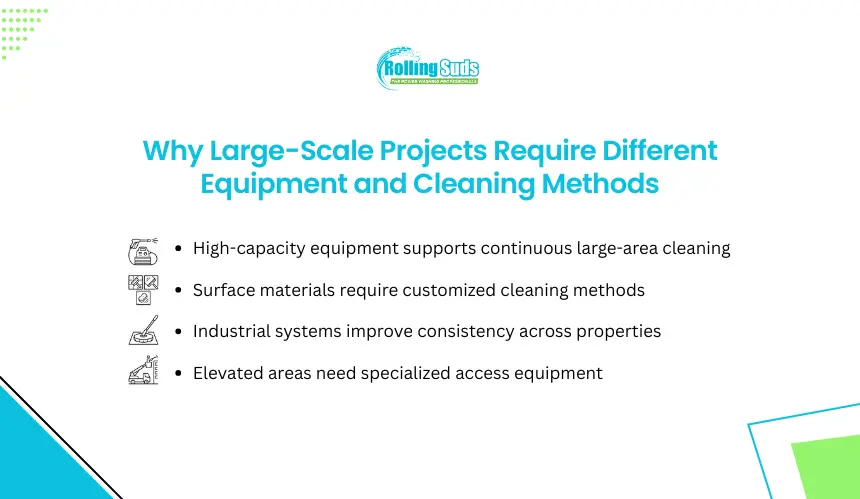
Cleaning a large commercial or institutional property is not simply a matter of bringing more pressure washers. As the project grows in size and complexity, the equipment, application methods, and access solutions must be selected to match the building materials, site conditions, and operational requirements.
High-Capacity Equipment is Necessary for Large Properties
Residential pressure washing systems are designed for smaller work areas with predictable water access and manageable cleaning times. Large-scale projects demand equipment that can operate continuously across thousands of square feet without sacrificing cleaning consistency.
Commercial crews often rely on high-output pressure washing systems, industrial pumps, large-capacity water tanks where needed, extended hose runs, and surface cleaners that can cover expansive concrete areas efficiently. These systems reduce downtime and maintain uniform results across parking structures, sidewalks, plazas, and building exteriors.
On larger properties throughout Los Angeles, where retail centers, office campuses, and mixed-use developments often require cleaning outside peak business hours, equipment reliability plays an important role in completing projects within limited maintenance windows.
Cleaning Methods Change for Different Surfaces
Large properties rarely consist of a single exterior material. A single project may include painted metal panels, architectural concrete, natural stone, stucco, glass, coated steel, and decorative masonry, each requiring a different cleaning approach.
Instead of relying on one pressure setting for every surface, contractors adjust factors such as:
- Water pressure
- Water temperature
- Cleaning agents
- Dwell time
- Rinsing technique
For example, delicate facade materials may require soft washing with specialized detergents, while heavily soiled concrete loading areas may benefit from hot water pressure washing to break down grease and embedded contaminants. Matching the cleaning method to the surface protects building finishes while improving cleaning effectiveness.
Access Equipment Become Part of the Cleaning Process
Residential projects are commonly completed from ground level or with standard extension ladders. Large facilities introduce access challenges that require specialized equipment to safely reach elevated or difficult locations.
Depending on the building design, crews may use boom lifts, scissor lifts, telescopic extension systems, or other elevated access solutions to clean upper-story facades, parking structures, canopies, covered walkways, and architectural features.
The access strategy is planned alongside the cleaning process because it influences crew movement, safety procedures, and project duration. Proper access also ensures that every section of the building receives consistent treatment instead of leaving difficult-to-reach areas untreated.
Planning, Safety, and Logistics Make Large-Scale Cleaning More Complex
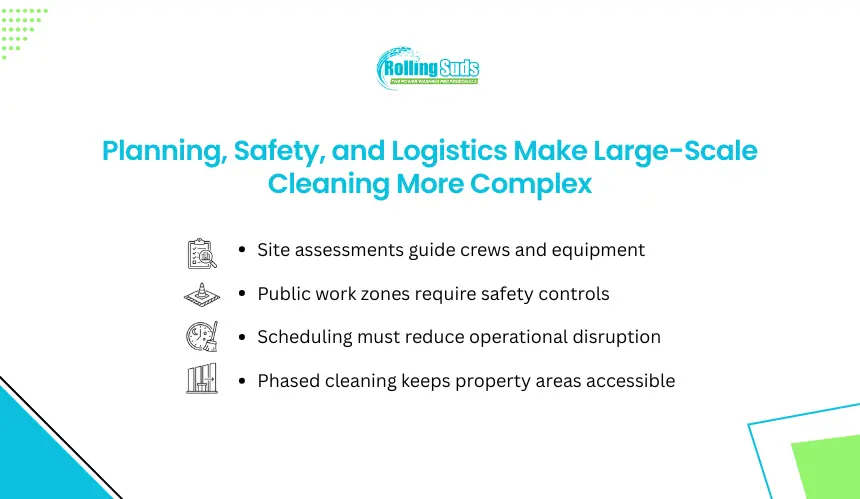
Once a project extends beyond a single building, the cleaning process becomes an operational exercise as much as a maintenance task. Success depends on coordinating people, equipment, site access, and safety requirements while minimizing disruption to the property’s daily activities.
Every Large-Scale Project Begins With a Site Assessment
A site assessment identifies the conditions that influence how the work will be performed before any equipment is unloaded. Rather than estimating the job by square footage alone, contractors evaluate factors such as building layout, surface conditions, drainage, accessibility, and areas with heavy contaminant buildup.
The assessment also helps determine crew size, equipment placement, cleaning sequence, and estimated project duration. For properties with multiple structures or phased maintenance schedules, this planning reduces unnecessary movement and improves overall efficiency.
Need a professional team that understands the demands of large commercial properties? Pressure Washing of Los Angeles powered by Rolling Suds of Beverly Hills delivers reliable commercial exterior cleaning services throughout the Los Angeles area, combining detailed site planning with efficient execution to keep properties clean, safe, and professionally maintained.
| Pro tip: Inspect window perimeters, door seals, expansion joints, vents, wall penetrations, and visible cracks before pressurized water is introduced. Vulnerable openings should be temporarily sealed or protected to prevent water from entering wall assemblies or occupied spaces. GSA cleaning guidance specifically recommends sealing through-cracks and using temporary protection around windows and doors before exterior washing begins. |
|---|
Safety Requirements Differ From Residential Washing
Residential cleaning typically involves limited public exposure and a controlled work area. Large-scale properties present a different risk profile because employees, customers, tenants, delivery vehicles, and pedestrians may continue using the site while cleaning is underway.
To manage these conditions, contractors often implement measures such as:
- Clearly marked work zones and pedestrian rerouting
- Equipment inspections before operation
- Fall protection for elevated work
- Surface-specific chemical handling procedures
- Runoff and environmental compliance practices where required
These protocols protect both workers and the public while reducing the likelihood of property damage or operational interruptions.
Scheduling Affects Large Exterior Cleaning Projects
Unlike residential washing, commercial cleaning schedules are often built around the property’s operating hours rather than the contractor’s availability. Retail centers, healthcare facilities, schools, hotels, and industrial sites frequently require work to be completed during evenings, weekends, or low-traffic periods.
Scheduling may also be divided into phases so that sections of the property remain accessible while others are being cleaned. This approach allows businesses to continue serving occupants and customers without shutting down normal operations, making logistics a critical component of successful large-scale exterior cleaning.
| Pro tip: Coordinate pressure washing with planned painting, sealing, facade repair, or metal restoration rather than treating each service as an unrelated project. Exterior surfaces should be cleaned first and allowed to dry fully before coatings are applied. Proper sequencing improves coating adhesion, avoids contaminating newly finished surfaces, and reduces duplicated setup or access costs. |
|---|
How Maintenance Needs Differ Between Residential and Large Properties
Cleaning frequency is determined by more than appearance. The size of the property, daily activity levels, surrounding environment, and surface exposure all influence how quickly contaminants accumulate and how maintenance programs should be structured. This is especially true for pressure washing, where maintenance intervals vary significantly between homes and commercial facilities.
How Do Environmental Conditions Affect Cleaning Frequency?
Residential properties generally experience localized buildup from dust, pollen, algae, mildew, and seasonal debris. While these contaminants can affect curb appeal and surface longevity, they usually develop at a gradual pace.
Large commercial properties are exposed to a wider range of contaminants. High pedestrian traffic, vehicle emissions, grease near loading areas, gum on sidewalks, airborne pollutants, and constant use accelerate surface deterioration. In urban environments like Los Angeles, exterior surfaces can also collect soot, construction dust, and road residue that require more frequent pressure washing to maintain a clean, professional appearance.
As a general guideline, most commercial buildings in Los Angeles benefit from professional exterior cleaning every 3 to 6 months, while high-traffic retail centers, restaurants, healthcare facilities, and properties near major roadways may require monthly or bi-monthly service to maintain safety, appearance, and surface condition.
Why Do Commercial Properties Follow Preventive Maintenance Schedules?
Many homeowners schedule exterior washing when visible staining becomes noticeable or before a special event or home improvement project. Commercial properties typically follow preventive maintenance plans that prioritize consistency over reactive cleaning.
Rather than waiting for heavy buildup, facility managers schedule recurring pressure washing to keep entrances, sidewalks, facades, parking structures, and common areas in good condition throughout the year. This proactive approach helps reduce deep staining, limits long-term surface wear, and allows cleaning to be performed before contaminants become more difficult to remove.
| Pro tip: Request dated photographs and notes showing surface conditions before, during, and after cleaning. Record recurring stains, damaged areas, products used, and sections requiring faster follow-up. This documentation creates a measurable baseline for adjusting future cleaning intervals, comparing contractor performance, supporting warranty reviews, and identifying deterioration that ordinary appearance checks may miss. |
|---|
How Does Pressure Washing Protect Large Buildings Over Time?
For commercial facilities, pressure washing is part of a broader property maintenance strategy rather than a standalone cleaning service. Routine cleaning removes contaminants that can gradually affect concrete, masonry, painted surfaces, and other exterior materials while preserving the property’s professional image.
For businesses seeking building pressure washing in Los Angeles, regular maintenance also supports operational goals by creating cleaner entrances, improving the appearance of customer-facing spaces, and reducing the need for more intensive restoration work. Consistent exterior care helps extend the service life of building materials while protecting the overall value of the property.
Choosing the Right Exterior Cleaning Service for Your Property
The right cleaning approach depends on how the property is used, the scale of maintenance required, and the complexity of the exterior surfaces. Matching the service to the property’s operational needs leads to more efficient cleaning, better surface protection, and a maintenance plan that remains practical over time.
When Is Residential Washing the Right Choice?
Residential washing is best suited for single-family homes and smaller residential properties where the cleaning scope is limited, and access is straightforward. It is typically the right option when the goal is to restore curb appeal, remove seasonal buildup, or prepare exterior surfaces for maintenance projects such as painting or sealing.
Homeowners generally benefit from residential washing when cleaning involves:
- House siding
- Driveways and walkways
- Patios and decks
- Fences
- Residential roofs
- Pool surrounds
These projects can usually be completed with residential-grade equipment and techniques designed for common household exterior materials.
When Does a Property Need Large-Scale Exterior Cleaning?
Large-scale exterior cleaning becomes the better solution when a property includes multiple buildings, extensive hardscapes, or areas that experience continuous public or commercial use. The work requires coordinated planning, specialized equipment, and maintenance strategies that extend beyond standard residential washing.
Properties that commonly require large-scale cleaning include:
- Office buildings
- Shopping centers
- Apartment communities
- Hotels
- Schools and universities
- Hospitals and healthcare campuses
- Warehouses and industrial facilities
- Parking garages and commercial parking lots
These environments benefit from scheduled maintenance programs that keep the property clean while supporting daily operations.
Questions to Ask Before Hiring an Exterior Cleaning Contractor
Before selecting a contractor, property owners and facility managers should evaluate whether the company has experience managing projects of similar size and complexity. A qualified washing contractor in Los Angeles should be able to explain how the work will be planned, what cleaning methods will be used for different materials, and how disruption to occupants or business activities will be minimized.
Key questions include:
- Have you completed projects similar to this property?
- How do you determine the appropriate cleaning method for each surface?
- What safety procedures will be followed during the project?
- Can the work be scheduled around normal business operations?
- Do you offer recurring maintenance programs for large commercial properties?
The answers provide a clearer picture of whether the contractor can deliver consistent results while protecting both the property and its day-to-day operations.
Sources
Frequently asked questions
Can commercial exterior cleaning damage painted facades or architectural finishes?
Damage usually occurs when pressure, water temperature, or detergent strength is mismatched to the material. Painted stucco, coated metal, EIFS, sealants, and decorative masonry often require controlled pressure or soft washing. A pre-cleaning test area helps confirm that the selected method will remove buildup without lifting coatings or altering the finish.
How is wastewater handled during large commercial pressure washing projects?
Wastewater management depends on the contaminants, drainage layout, and property conditions. Crews may use drain covers, berms, vacuum recovery systems, or filtration equipment to keep detergent, grease, sediment, and debris from entering storm drains. The site assessment should identify runoff paths and determine whether water recovery or containment is necessary.
Can exterior cleaning be completed while tenants or customers remain on the property?
Cleaning can usually continue on occupied properties when the work is divided into controlled zones. Contractors may reroute pedestrians, close individual entrances temporarily, protect parked vehicles, and schedule noisy or wet work during low-traffic periods. Clear communication with tenants, security teams, and facility staff reduces confusion and keeps essential access points available.
What information should a commercial pressure washing estimate include?
A detailed estimate should identify the surfaces being cleaned, approximate square footage, treatment methods, access requirements, cleaning agents, water sources, scheduling restrictions, and any runoff-control measures. It should also clarify whether spot treatment, gum removal, grease removal, elevated work, or recurring maintenance is included rather than leaving these services as unexpected add-on costs.
Is pressure washing safe around landscaping and outdoor fixtures?
Landscaping, electrical fixtures, signage, cameras, vents, and outdoor furniture require protection before cleaning begins. Crews may pre-wet plants, cover sensitive equipment, redirect spray patterns, and control detergent concentration near planted areas. Proper preparation reduces chemical exposure, prevents water intrusion, and protects fragile fixtures from high-pressure impact.
Should property managers request proof of insurance before hiring a contractor?
Property managers should verify general liability coverage and workers’ compensation before approving large-scale exterior cleaning. Elevated access, wet walkways, equipment movement, and active public areas create risks beyond ordinary residential work. Documentation helps confirm that the contractor is prepared for commercial operations and reduces the property owner’s exposure if an incident occurs.