May 6, 2026
Top 5 Common Surfaces Benefiting from Pressure Washing in Los Angeles.
Written and reviewed by the Pressure Washing of Los Angeles team
Last reviewed:
| A Quick Answer: The most common surfaces that benefit from pressure washing include driveways and walkways, home exteriors and siding, decks and patios, fences, and commercial storefronts. These areas collect pollution, moisture, and traffic-related grime faster than others, making routine pressure washing essential for safety, appearance, and surface longevity. |
|---|
Exterior surfaces across Los Angeles face constant exposure to dust, traffic pollution, sun, and moisture. Over time, this buildup does more than affect appearance. It can make surfaces slippery, accelerate material wear, and quietly reduce property value.
Property owners actively search for areas that actually benefit from pressure washing rather than treating it as a purely cosmetic service. This article will break down the specific surfaces where pressure washing delivers clear, practical benefits without unnecessary overlap or guesswork.
Understanding Why Pressure Washing Matters for Urban Properties
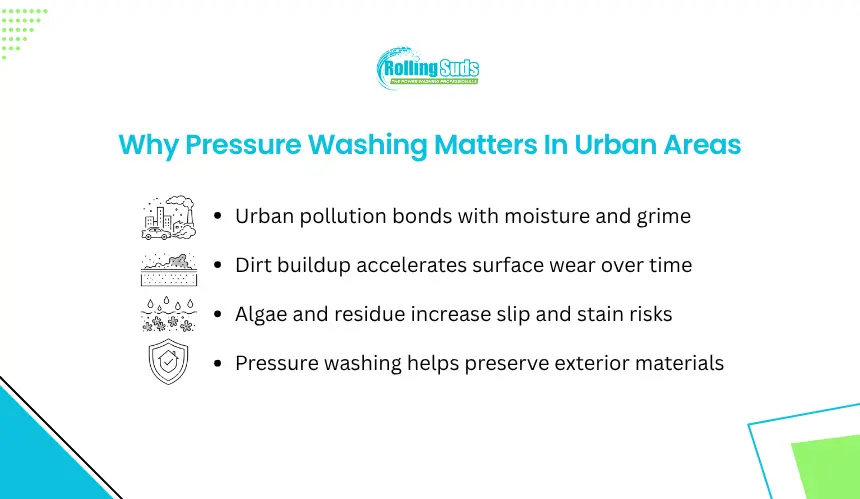
Urban environments place unique stress on exterior surfaces. High vehicle density, airborne pollutants, frequent foot traffic, and compact property layouts cause grime to accumulate faster and more unevenly than in suburban areas.
In a city like Los Angeles, exterior materials are constantly exposed to fine dust, exhaust particles, and moisture that settle into pores, seams, and textured finishes. This buildup often develops gradually, making it easy to overlook until surfaces begin to look worn or feel unsafe.
How Urban Exposure Accelerates Surface Wear and Buildup
Pressure washing matters in urban settings because contaminants do not just sit on the surface. Pollution residue bonds with moisture, creating films that encourage algae growth, discoloration, and surface breakdown. Concrete absorbs oil and grime, siding traps airborne particles, and high-traffic areas polish dirt into slick layers over time.
Targeted pressure washing removes these bonded contaminants before they cause permanent staining, material fatigue, or safety hazards, making it a practical maintenance step rather than a reactive cleanup solution.
| Did you know? The American Lung Association’s State of the Air 2024 reports that Los Angeles remains the city with the worst ozone pollution in the U.S., holding that position in 24 of the last 25 years of reporting. This highlights why airborne pollutants build up faster on exterior surfaces, making regular pressure washing especially important for maintaining cleanliness and material condition. |
|---|
1. Driveways and Concrete Walkways
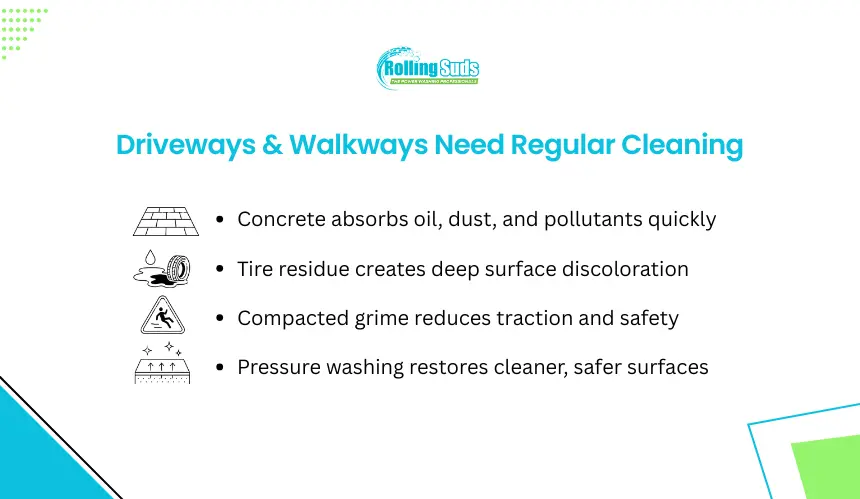
Driveways and walkways are among the most heavily used exterior surfaces on any property. They absorb constant foot traffic, vehicle movement, and direct exposure to environmental debris. Because these areas serve both functional and visual roles, buildup becomes noticeable quickly and often signals deeper surface issues rather than simple surface dirt.
Why Concrete Surfaces Accumulate Stains Faster
Concrete is a porous material by design, which allows liquids and fine particles to seep below the surface. Oil drips, tire residue, dirt, and moisture settle into these pores and darken over time. In dense urban areas like Los Angeles, airborne pollutants mix with vehicle fluids and dust, accelerating stain formation and making discoloration harder to remove with basic rinsing.
Functional Benefits of Pressure Washing Concrete
Pressure washing targets embedded grime rather than just surface-level debris. By lifting oil residue, compacted dirt, and pollution buildup from within the concrete, it restores surface traction and reduces slip risks. Regular pressure washing also helps slow long-term surface deterioration, preserving the integrity of driveways and walkways without the need for early resurfacing or replacement.
2. Home Exteriors and Siding
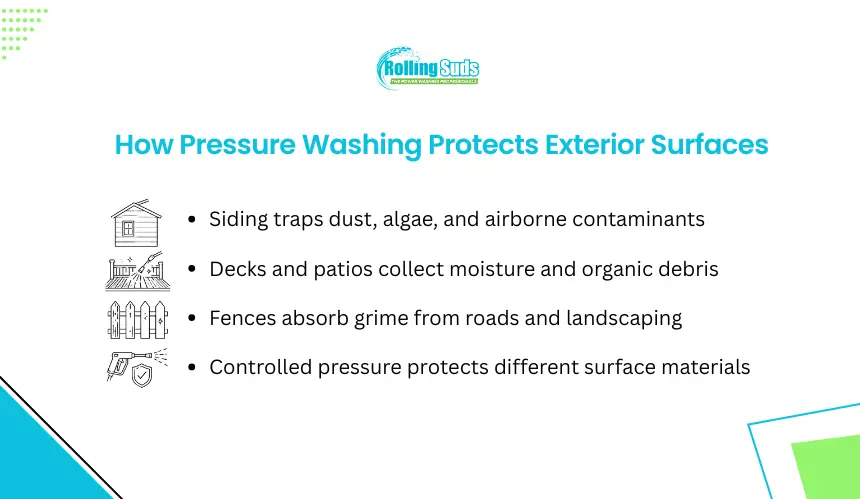
Exterior walls form the largest visible surface of a property, yet buildup on siding often goes unnoticed until discoloration becomes obvious. Unlike flat surfaces, siding traps dust and pollutants along textures, seams, and shaded areas. Over time, this accumulation affects both appearance and surface stability, making targeted cleaning an important part of exterior care rather than an optional upgrade.
Common Contaminants on Exterior Walls
Siding collects a mix of airborne dust, vehicle emissions, pollen, and moisture-related residue. Shaded sections are especially prone to algae and mildew growth, while sun-exposed areas often show uneven fading as contaminants cling to the surface.
In cities such as Los Angeles, pollution particles bond with moisture, allowing grime to adhere more tightly to exterior walls than in lower-traffic environments.
Material-Safe Washing Considerations
Different siding materials respond differently to cleaning pressure. Stucco, vinyl, wood, and painted surfaces each require controlled techniques to prevent surface erosion or water intrusion.
Professional pressure washing focuses on adjusting pressure levels and cleaning solutions based on material type, ensuring contaminants are removed effectively without compromising the structure or finish of the exterior surface.
3. Decks, Patios, and Outdoor Living Areas
Outdoor living spaces are designed for comfort and regular use, but constant exposure to the elements makes them vulnerable to surface breakdown. Decks and patios collect dirt, moisture, and organic debris that gradually affect both appearance and usability. Without proper cleaning, these areas can become slippery, discolored, and less inviting, even when the underlying structure is still sound.
Why Outdoor Surfaces Deteriorate Without Cleaning
Wood, composite decking, concrete, and stone surfaces all trap moisture differently. Leaves, dust, and organic residue settle into seams and textured finishes, creating ideal conditions for algae and mildew growth. In climates like Los Angeles, where sun exposure alternates with coastal moisture, this buildup accelerates surface fading, staining, and loss of traction if left untreated.
| Did you know? In Los Angeles, there is often little natural “rinsing” to slow that buildup. NOAA climate normals (1991–2020) for the downtown USC station show just 0.02 inches of rain in July and 0.00 inches in August, so grime and organic residue can bake onto decks and patios between cleanings. |
|---|
Pressure Washing as a Preservation Step
Pressure washing removes embedded debris that regular sweeping or rinsing cannot reach. Clearing contaminants from surface pores and joints, it helps restore traction and prepares decks or patios for sealing, staining, or continued use. This process supports surface longevity by reducing moisture retention and slowing material degradation rather than simply improving short-term appearance.
4. Fences and Property Perimeter Structures
Fences define property boundaries and contribute heavily to first impressions, yet they are often the least-maintained exterior feature. Because they sit at the edge of properties, fences absorb dust from roads, moisture from landscaping, and residue from nearby structures. Over time, this exposure leads to visible discoloration and surface wear that basic rinsing does not resolve.
Surface-Specific Challenges (Wood vs Vinyl vs Metal)
Each fence material reacts differently to environmental exposure. Wood fences absorb moisture and organic debris, which encourages algae growth and uneven darkening. Vinyl fences attract airborne dust that clings to textured surfaces, while metal fencing collects grime that can trap moisture against coatings.
Visual and Structural Benefits
Pressure washing removes embedded contaminants before they cause long-term surface damage. Restoring a fence’s original color improves overall property appearance while also revealing early signs of wear, such as splintering, coating breakdown, or corrosion. This allows maintenance to stay proactive, helping perimeter structures remain stable and visually consistent rather than deteriorating unnoticed.
5. Commercial Storefronts and Parking Areas
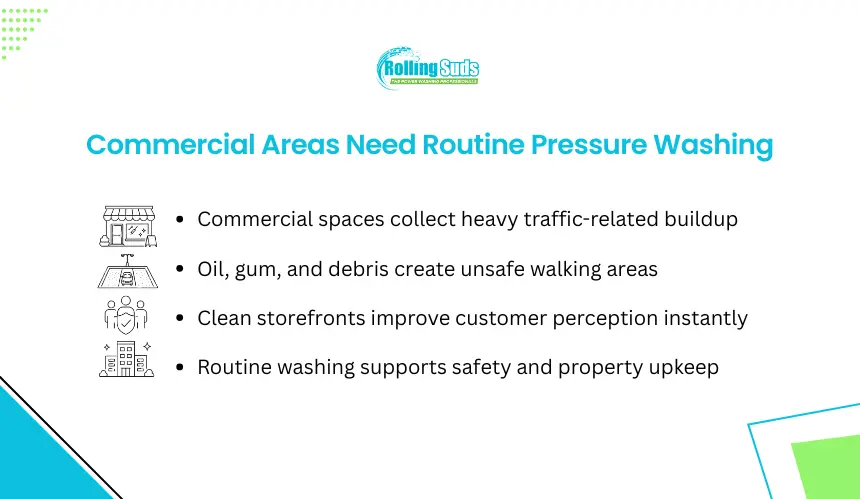
Commercial exterior spaces experience constant public exposure, making cleanliness directly tied to customer perception and safety. Storefronts and parking areas are often the first points of contact for visitors, yet they absorb more grime than any other exterior surface due to vehicle traffic, footfall, and environmental residue.
Why High-Traffic Commercial Areas Need Routine Washing
Parking lots and storefront walkways collect oil drips, tire residue, gum, spills, and fine dust that settles into concrete and asphalt surfaces. Foot traffic compresses this debris, making it harder to remove over time.
In dense commercial corridors across Los Angeles, airborne pollutants combine with vehicle emissions, allowing grime to bond quickly to exterior surfaces and create slippery or uneven walking conditions.
Business-Focused Advantages
Regular pressure washing helps businesses maintain a clean, professional appearance that builds customer trust before anyone steps inside. Removing surface contaminants also improves traction, reduces liability risks, and supports compliance with basic property safety standards.
Clean storefronts and parking areas signal active property care, reinforcing credibility and improving the overall customer experience without requiring major renovations.
How to Prioritize Which Surfaces to Clean First
Not all exterior surfaces require attention at the same time. Prioritizing pressure washing based on function, exposure, and risk helps property owners focus on areas where cleaning delivers the most immediate value.
A clear prioritization approach prevents unnecessary work while ensuring surfaces that affect safety, usability, and appearance are addressed first.
High-traffic areas such as driveways, walkways, and commercial entrances typically come first because buildup directly affects traction and safety.
Next, visually prominent surfaces like siding and storefronts follow, as discoloration here shapes first impressions. Outdoor living areas and perimeter structures often rank third, especially when moisture retention or organic buildup begins to impact surface condition.
If your exterior surfaces are starting to look worn or unsafe, Rolling Suds LLC is ready to help. From residential driveways to commercial storefronts, our professional power washing restores surfaces the right way using proven methods and equipment.
We also handle roof washing, house washing, and large-scale commercial cleaning with safety-focused techniques. Reach out today to refresh your property, protect your surfaces, and make a cleaner first impression that lasts.
Sources
Frequently asked questions
How often should pressure washing be scheduled for properties in high-pollution cities?
In high-pollution metro areas, exterior surfaces typically benefit from pressure washing once or twice a year. Traffic density, nearby construction, and proximity to busy roads can increase how quickly grime settles, making more frequent cleaning helpful for maintaining surface condition.
Is pressure washing safe for older homes and buildings?
Yes, when done correctly. Older properties often require lower pressure settings and surface-specific cleaning solutions. Professional services assess material age and condition first to avoid surface erosion, paint damage, or moisture intrusion.
Does pressure washing help with allergens like pollen and mold spores?
Pressure washing removes surface-level pollen, mold residue, and organic buildup that can cling to exterior materials. This can reduce outdoor allergen accumulation around entrances, patios, and windows, especially during peak seasonal cycles.
Can pressure washing improve property value or buyer perception?
Clean exterior surfaces improve curb appeal, which directly influences buyer perception and tenant interest. Well-maintained driveways, siding, and storefronts signal ongoing care and can make properties appear newer and better managed during inspections or showings.
Are eco-friendly cleaning solutions commonly used in professional pressure washing?
Many professional services use biodegradable and environmentally responsible detergents designed to break down safely after use. These solutions help protect landscaping, surrounding soil, and local drainage systems while still delivering effective cleaning results.